Building AI Pipelines with Hugging Face and Kedro - From ChatGPT to Production
Discover how to build robust AI systems using Hugging Face's open models and Kedro pipelines, moving beyond commercial AI to create customizable and transparent machine learning solutions.
Analytics and Real-time Database Workloads: Combining OLTP and OLAP Systems
Explore strategies for optimizing concurrent OLAP and OLTP workloads, focusing on ScyllaDB's workload prioritization features to achieve harmonious performance in distributed systems.

Data Contracts Implementation with DataHub - A Practical Guide
Master practical implementation of data contracts using DataHub's metadata platform to enhance data quality management and create a harmonized control plane across fragmented systems.
Data as Code - Project Nessie and Git-like Experience for Apache Iceberg Tables
Discover how Project Nessie enables multi-table transactions and Git-like workflows for Apache Iceberg tables, revolutionizing data lakehouse management and engineering practices.
Apache Pulsar - A Cloud-Native Alternative to Kafka for Event-Driven Applications
Discover how Apache Pulsar serves as a scalable messaging platform, offering unified data streaming, multi-tenancy, and seamless integration with container environments - all while providing an alternative to traditional message brokers.
Running Data Applications on Google Kubernetes Engine (GKE) - From Stateless to Stateful Workloads
Discover how Kubernetes has evolved to effectively manage stateful applications, from databases and big data to machine learning workloads on Google Kubernetes Engine.
CICD Pipelines for dbt - Choosing Between DIY and Cloud Solutions
Explore the trade-offs between building custom CICD pipelines for dbt projects versus using dbt Cloud's built-in solutions, focusing on Slim CI and documentation deployment strategies.

LANL's Journey Toward Computational Storage - Exploring Data Reduction Techniques for Petabyte-Scale Simulations
Explore LANL's innovative approaches to handling massive simulation data through computational storage techniques, focusing on efficient data reduction and analytics optimization for petabyte-scale operations.
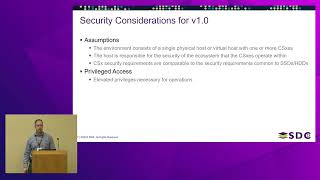
Standardizing Computational Storage - Latest Standards and Developments 2023
Explore the latest developments in Computational Storage standards, including SNIA and NVMe specifications, architecture models, programming interfaces, and terminology alignment between different standards organizations.
Applying AI/ML Methodologies to Categorize Storage Workloads
Discover how AI/ML techniques analyze and synthesize complex storage workloads, enabling efficient testing and validation of enterprise storage systems through automated workload categorization and reproduction.

Programming with Computational Storage - Overview and APIs
Discover how to leverage Computational Storage APIs for near-data processing, optimizing resource usage and overcoming traditional CPU architecture limitations in cloud and edge computing applications.

Leveraging Computational Storage for Simulation Science Storage System Design
Explore how computational storage innovations at Los Alamos National Laboratory overcome bottlenecks in simulation science, featuring implementations with ZFS offloads, flash key-value storage, and SQL-like processing.
Hardware-accelerated Data Integrity Check on Computational Storage Devices
Discover how hardware-accelerated data integrity checks on Computational Storage Devices enhance performance, reduce data transfer overhead, and enable scalable storage solutions through practical demonstrations.
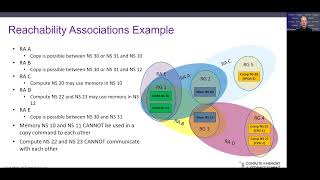
NVMe Computational Storage Standardization - Introduction to Command Sets and Architecture
Dive into NVMe Computational Storage standards, exploring command sets, architectures, and implementations for enhanced data processing capabilities in modern storage systems.
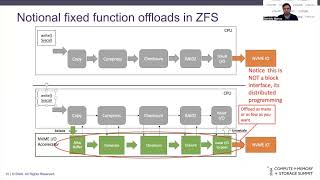
Improving Storage Systems for Simulation Science with Computational Storage
Explore how computational storage enhances HPC systems for simulation science, focusing on improved efficiency, transparent implementation, and real-world applications for petabyte-scale datasets.
Fabric Attached Memory: Hardware and Software Architecture for HPC Systems
Explore fabric-attached memory architecture and software solutions for handling large datasets in HPC clusters, focusing on AI and data analytics workloads using CXL and Arkouda-based applications.
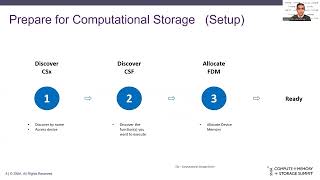
Computational Storage APIs - Programming and Implementation Guide
Explore Computational Storage APIs and their implementation across hardware architectures, focusing on performance optimization, interface definitions, and practical problem-solving applications.
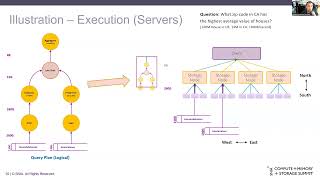
Decomposing Compute to Grow Computational Storage - Dynamic Query Partitioning in Storage Systems
Explore dynamic query partitioning in computational storage systems and learn how decomposable queries can optimize performance across storage device hierarchies for enhanced data processing capabilities.
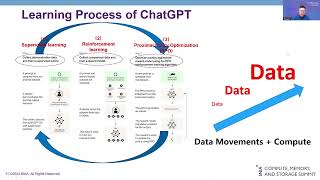
Overcoming Real-World Challenges Between Data and AI Infrastructure
Explore infrastructure innovations for managing AI workloads, optimizing data processing, and achieving lower latency in real-time analytics and predictive modeling across industries.
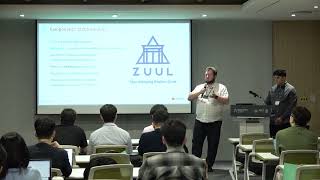
Setting Up CI Environment with Software Factory - A Complete Guide
Discover how Software Factory streamlines development workflows by integrating essential tools like Gerrit, Zuul, and Grafana, enabling efficient code management and monitoring for new projects.
Mutual Information-based Preference Disentangling and Transferring for Cross-Domain Recommendations
Explore mutual information-based techniques for disentangling and transferring user preferences across multiple non-overlapping domains in recommendation systems.