Harnessing Genome Dynamics for Phylogenetic Reconstruction
Explore advanced phylogenetic reconstruction techniques using genome dynamics, including horizontal gene transfer, gene content, and microsynteny-based approaches for prokaryotes and angiosperms.
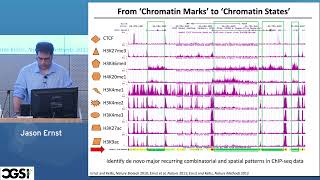
A Tutorial on Computational Methods for Modeling and Analyzing Epigenomic Data
Explore computational methods for modeling and analyzing epigenomic data, covering ChromHMM, multivariate Hidden Markov Models, and integrating multiple chromatin markers across cell types.
Lessons from the Largest Genome-Wide Association Study of Human Height
Explore insights from the largest genome-wide association study on human height, examining genetic variants, heritability, and the impact of rare variations on this complex trait.
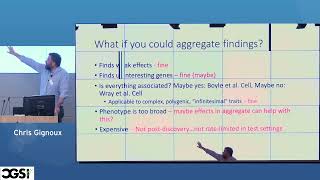
Applying Polygenic Scores at Biobank Scale - CGSI 2022
Explore applying polygenic scores at biobank scale, examining reporting standards, reproducibility, health disparities, and clinical applications in genomic risk prediction.
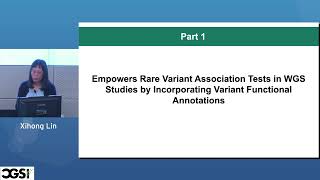
Overview of Rare Variant Analysis in Whole Genome Sequencing Association Studies
Explore rare variant analysis techniques for whole genome sequencing studies. Learn statistical methods, study designs, and powerful tools for uncovering genetic associations in large-scale genomic data.
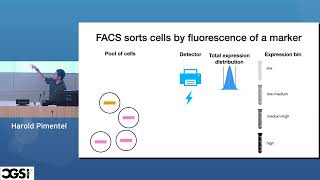
Inference Methods for High-Throughput CRISPR Screens - CGSI 2022
Explore inference methods for high-throughput CRISPR screens, focusing on regulatory gene discovery in human T cells and the architecture of immune networks.
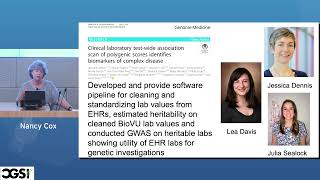
How Genetics Can Help Untangle Institutionalized Health Inequity
Explore how genetic research can address health inequities, focusing on case studies involving racial disparities in medical diagnoses and treatment decisions.
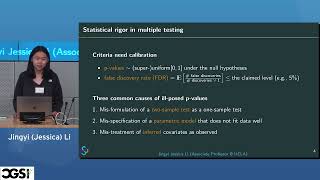
Statistical Rigor in Genomics Data Science
Explore statistical rigor in genomics data science, focusing on differential expression methods, p-value calibration, and high-throughput data analysis techniques for improved accuracy in genomic research.
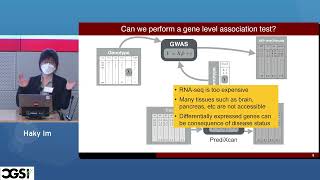
Integrating Multiple Omic Data to Improve Mechanistic Understanding and Prediction
Explore integrating multiple omic data to enhance mechanistic understanding and prediction in genomics. Learn techniques for improving data interpretation and predictive modeling in computational biology.
Designing DNA with Tunable Regulatory Activity Using Discrete Diffusion
Explore DNA Discrete Diffusion (D3) for engineering regulatory DNA sequences with targeted functional activity levels. Learn about its advantages, evaluation metrics, and applications in functional genomics.

gRNAde: Geometric Deep Learning for 3D RNA Inverse Design
Explore gRNAde, a geometric deep learning pipeline for 3D RNA inverse design. Learn about its architecture, use cases, and advantages over traditional methods in RNA sequence design.
Combinatorial Perturbation Prediction Using Causally-Inspired Neural Networks
Explore PDGRAPHER, a novel graph neural network model for phenotype-driven drug discovery. Learn how it predicts perturbagens to reverse disease effects, offering faster and more efficient therapeutic target identification.
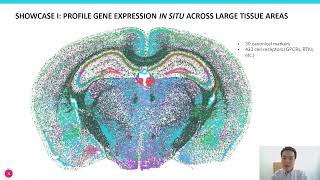
Illuminating Biology with Spatially Resolved, Single-cell Transcriptomics
Explore spatially resolved, single-cell transcriptomics to understand tissue organization and cellular heterogeneity in biological systems, presented by Vizgen co-founder Jiang He.
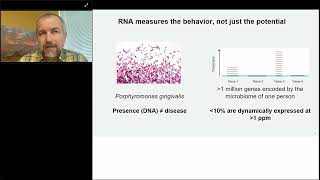
A Systems Medicine Platform Based on RNA Sequencing and Artificial Intelligence
Explore Viome Operating System (ViOS), an open-access platform integrating lab, computational, and logistics components for efficient clinical research and health improvement using big data and AI.
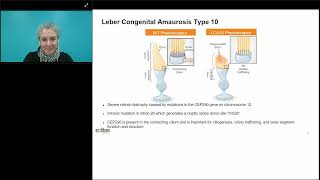
Assessing CRISPR On-Target Editing and Structural Changes with UDiTaS Using Tagify Reagents
Explore CRISPR editing assessment using UDiTaS™ and Tagify™ reagents. Learn about quantitative methods for measuring structural changes and small indels in genomic editing outcomes.
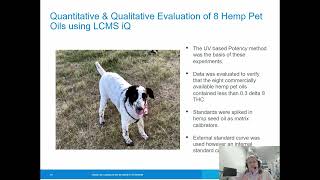
Quantitative and Qualitative Characterization of Cannabinoids in Hemp Pet Products
Explore LC MS analysis of CBD oils in pet hemp products. Learn quantitative and qualitative techniques, compare UV and MSD analysis, and understand LoD/LoQ determination for accurate cannabinoid characterization.

The Evolution of Precision Diagnostics in Advancing Treatment Strategies of Solid Tumors
Explore advancements in multi-omic approaches for comprehensive tumor analysis, accelerating precision medicine development while addressing challenges in diagnostic laboratory integration.
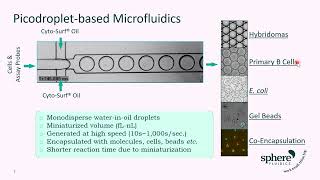
Picodroplets Enabling High Throughput Single Cell Screening and Isolation
Explore high-throughput single cell screening and isolation techniques using picodroplets. Learn about innovative technologies advancing cellular biology research and disease mechanism understanding.
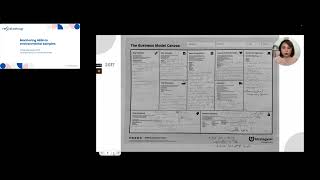
High-throughput Surveillance for Antibiotic Resistance Genes in Environmental Samples
Explore advanced molecular methods for monitoring antibiotic resistance genes in environmental samples, combining high-throughput quantification with data analysis and visualization techniques.
NextSeq 1000/2000 - Longer Reads and Extended Informatics
Explore key updates and features of NextSeq™ 1000/2000 sequencers and DRAGEN Bio-IT platform, focusing on longer reads and enhanced informatics capabilities.
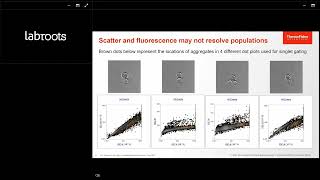
Automated Image Analysis Reduces User-to-User Variability in Flow Cytometry Gating Strategies
Discover how automated image analysis minimizes variability in flow cytometry data analysis, enhancing sample quality assessment and revealing morphological features beyond traditional parameters.