Gravitational Wave Data Analysis - Part 2
Explore advanced techniques in gravitational wave data analysis, focusing on signal processing and statistical methods for detecting and characterizing cosmic events.
Gravitational Wave Data Analysis - Part 1
Explore gravitational wave data analysis techniques, focusing on fundamental concepts and methodologies used in detecting and interpreting cosmic signals.
Introduction to Observational Astrophysics
Explore fundamental concepts and techniques of observational astrophysics, from celestial objects to data analysis methods.
The Retrospective View of Molecular Evolution
Explore molecular evolution's retrospective perspective, uncovering insights into genetic changes and evolutionary processes over time.
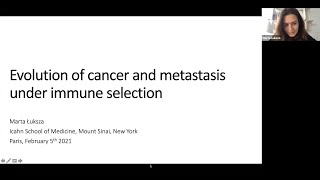
Cancer Evolution and Metastasis Under Immune Selection
Explore cancer evolution and metastasis, focusing on immune system interactions and their impact on tumor progression and spread.
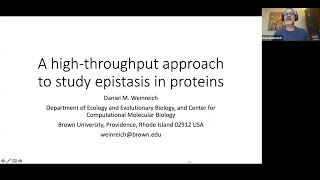
A High-Throughput Approach to Study Epistasis in Proteins
Explore high-throughput methods for investigating protein epistasis, focusing on innovative techniques and their implications for evolutionary biology.
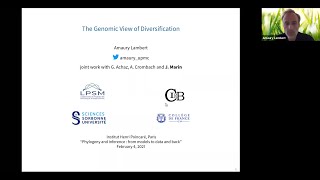
The Genomic View of Diversification
Explore genomic perspectives on species diversification, examining evolutionary processes and patterns through genetic data analysis.
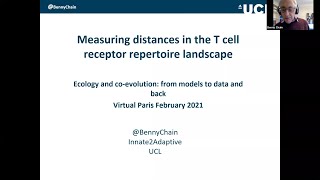
Capturing T Cell Receptor Similarities
Explore T cell receptor similarities and their implications in immunology research with insights from Benny Chain of University College London.
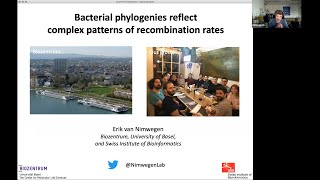
Bacterial Phylogenies Reflect Complex Patterns of Recombination Rates
Explore complex patterns of bacterial recombination rates and their impact on phylogenies in this insightful presentation by Erik Van Nimwegen.
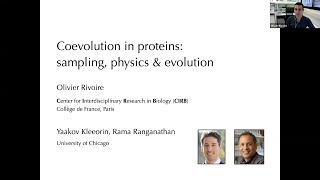
Models of Coevolution in Proteins: Sampling, Physics and Evolution
Explore protein coevolution models, examining sampling techniques, physical principles, and evolutionary dynamics in molecular biology.
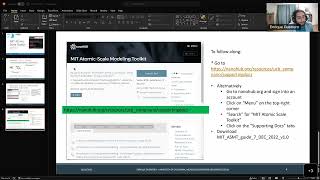
Teaching and Learning with the MIT Atomic Scale Modeling Toolkit - Classical and Quantum Atomic Modeling
Explore classical and quantum atomic modeling using MIT's toolkit. Perform molecular dynamics, Monte Carlo simulations, and quantum chemistry computations. Learn practical applications for various physics and chemistry courses.
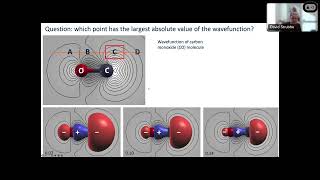
DFT with SIESTA, Data Visualization, and Sophomore-level CURE Using MIT Atomic-Scale Modeling Toolkit
Explore density functional theory, data visualization, and undergraduate research experiences using the MIT Atomic-Scale Modeling Toolkit for modern physics and condensed matter studies.
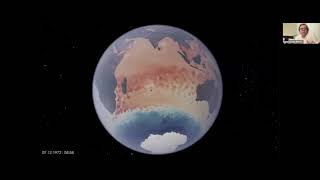
Earth Virtualization Engines (EVE) for Climate Change Modeling
Explore Earth Virtualization Engines (EVE) and their potential impact on climate change research with Bjorn Stevens from MPI Hamburg.
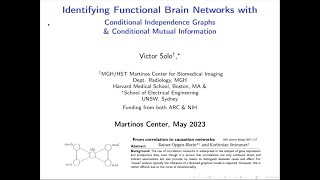
Identifying Functional Brain Networks with Conditional Independence Graphs
Explore advanced techniques for constructing functional brain networks using conditional independence graphs and partial correlation, addressing limitations of traditional correlation methods.
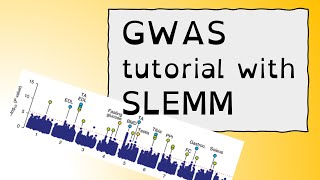
GWAS Tutorial with SLEMM: A Beginner's Guide
Comprehensive guide to GWAS using SLEMM software, covering data preparation and analysis. Learn essential functions and step-by-step instructions for conducting genome-wide association studies effectively.
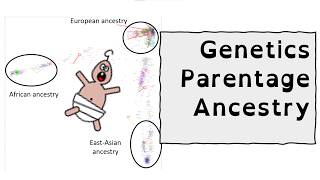
Parent-Child vs. Ancestry - Understanding Genetic Relationships
Unraveling genetic relationships: parent-child vs. ancestry. Explore how genetic coefficients differ between direct lineage and population-wide ancestry, debunking misconceptions and clarifying genomic analysis methods.
Astrophysics in the Age of Big Data
Explore how large datasets and machine learning revolutionize astrophysics, from classifying supernovae to studying exoplanet atmospheres, advancing our understanding of the universe.
HL-LHC Experiments - Lecture 2
Explore advanced particle physics concepts and experimental techniques for the High-Luminosity Large Hadron Collider, focusing on cutting-edge detector technologies and data analysis methods.
From Resummation to Parton Showers - Lecture 1
Explore resummation techniques and their connection to parton showers in particle physics, focusing on theoretical foundations and practical applications.
Collider Physics - Lecture 4
Explore advanced concepts in collider physics, focusing on particle interactions and experimental techniques in high-energy physics research.
Data Taking and Analysis with the IAXO Pathfinder System
Explore data acquisition and analysis techniques for the IAXO pathfinder system, focusing on innovative approaches in particle physics research.