
A Global Experiment to Characterize Oceanic Internal Wave Climates
Explore the SQUID program's global study of oceanic internal waves, their impact on deep-sea mixing, and implications for climate models and ocean circulation patterns.
Machine Learning Models of Differential Gene Expression
Explore deep learning models for predicting regulatory functions from genomic DNA, uncovering mechanisms behind genetic variation's impact on cellular function and gene expression.
The State of Protein Structure Prediction and Related Advancements
Explore advancements in protein structure prediction, focusing on OpenFold's optimized implementation of AlphaFold2 and its implications for structural biology research.
Debugging Genomic Profiling Experiments and Predictive Models with Interpretation Tools
Explore deep learning models in genomics, uncovering latent biases and technical artifacts. Learn to design efficient models that correct biases and reveal novel insights into gene regulation.
Searches for Continuous Gravitational Waves: Methods and Results - Lecture 1
Explore methods and results for detecting continuous gravitational waves from sources like rapidly spinning neutron stars and exotic phenomena in our galaxy.
Decadal Heat Content Variability in the South Indian Ocean
Explore decadal heat content variability in the South Indian Ocean, examining key factors influencing oceanic energy dynamics and their implications for regional climate patterns.
Detection of Mesoscale Oceanic Eddies Over Bay of Bengal Using Explainable Deep Learning
Explore deep learning techniques for detecting mesoscale oceanic eddies in the Bay of Bengal, with a focus on explainable AI methods to enhance understanding of eddy dynamics and their impact on regional climate.
Climate Justice, Sustainability and the Future
Exploring global climate justice and sustainability, emphasizing inclusive solutions beyond Western perspectives for a shared fight across all nations and regions.
A Global Experiment to Characterize Oceanic Internal Wave Climates
Explore oceanic internal waves' impact on global climate, mixing processes, and circulation patterns through the SQUID program's innovative global observations and data analysis techniques.
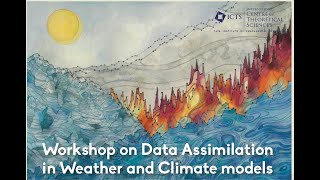
Modelling Rainfall Extremes and Floods Over Karnataka
Explore modelling techniques for rainfall extremes and floods in Karnataka, focusing on data assimilation methods and their applications in weather and climate prediction.
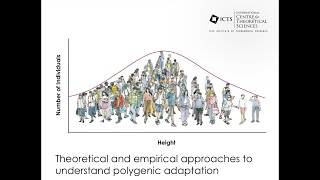
Understanding Polygenic Adaptation with Experimental Evolution
Explore polygenic adaptation through experimental evolution, integrating genetic and phenotypic insights to understand complex trait inheritance and adaptive dynamics in biological systems.
Digital Water - Transforming Water Management Through Technology
Explore innovative digital solutions revolutionizing water management and distribution, enhancing efficiency and sustainability in urban water systems.

Measurement Uncertainty in Physics
Explore measurement uncertainty in physics, focusing on experimental techniques, error analysis, and data interpretation to enhance research skills and scientific accuracy.
Change and Resilience in Ukraine's Agricultural Landscapes During Conflict
Experts discuss the impact of Russia's invasion on Ukraine's agriculture, using remote sensing and AI to observe land use changes, and examining environmental effects for future recovery efforts.
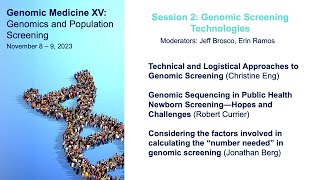
Genomic Screening Technologies: Approaches, Challenges, and Considerations - Session 2
Explore genomic screening technologies, their applications in public health, and challenges in implementation. Experts discuss technical approaches, newborn screening, and factors for calculating screening effectiveness.
Genomic Medicine XV: Laying the Groundwork for Population Genomic Screening - Session 1
Explore genomic medicine's current state, barriers, and future in population screening. Experts discuss technologies, clinical impact, and research directions for expanded genomic screening in the U.S.
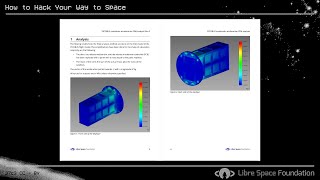
How to Hack Your Way to Space - Democratizing Space Exploration
Explore open-source space exploration with Libre Space Foundation. Learn how hackers and makers are democratizing space through innovation, collaboration, and sustainability.
Running in the Dark for the Iranian Cheetah
Explore the critical role of scale in understanding and preserving the endangered Iranian cheetah, emphasizing local knowledge and learning from past conservation efforts.
Weather and Climate Modelling - Advances and Challenges
Explore cutting-edge weather and climate modelling techniques with expert talks and Q&A from leading researchers in the field of Climate Informatics.
Role of AI in Tackling Climate Change - How Uncertain is Future Sea Level Rise
Explore AI's potential in addressing climate change, focusing on predicting sea level rise uncertainties, with insights from a leading expert in the field.
Climate Informatics 2024 Lightning Talks
Impactful short presentations on climate informatics, featuring diverse speakers from leading institutions sharing cutting-edge research and insights in the field.