
Unraveling the Web of Relationships: Understanding Graph Data
Explore graph theory basics, real-world applications, and the growing importance of graph databases in solving complex data challenges across industries.
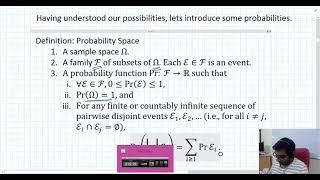
Basic Definitions in Probability Theory - Introduction and Experiment
Learn fundamental probability concepts through clear definitions and practical experiments, enhancing your understanding of statistical principles.
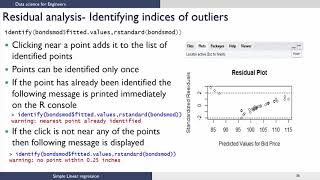
Simple Linear Regression Model Assessment - Continued
Assess simple linear regression models through continued exploration of key concepts and techniques for evaluating model performance and validity.
Elements of Scientific Measurement - Part 2: Analyzing Sampled Data and Experimental Errors
Explore issues in measurement, data analysis, distribution, sampling, and experimental errors for enhanced scientific understanding.
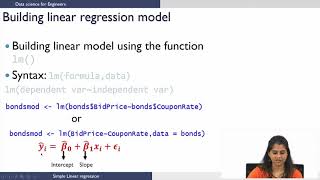
Simple Linear Regression Model Building
Build a simple linear regression model by loading data, exploring its structure, and fitting a regression line, with a comprehensive model summary.
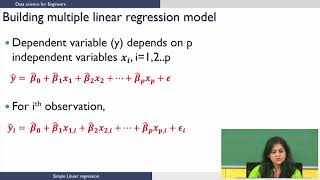
Multiple Linear Regression: Model Building and Selection
Build and select multiple linear regression models through data loading, visualization, and iterative model refinement using R.

New Performance Guarantees for Tukey's Median - Lecture
Explore Tukey's depth concept, its applications in robust statistics and social choice, and recent advancements in performance guarantees for Tukey's median in high-dimensional data analysis.
Error Bars and Confidence Intervals - Part 2
Explore error bars, confidence intervals, and z-statistics for data analysis. Learn techniques for small datasets and estimating confidence intervals.
Regression and Differentiation: Practical Issues
Explore practical issues in regression and differentiation, focusing on key concepts and real-world applications in data analysis and mathematical modeling.
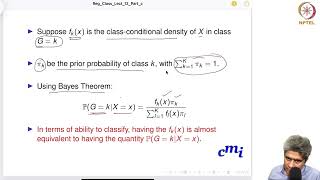
Multi-Class Classification with Discriminant Analysis
Learn discriminant analysis techniques for multi-class classification, covering data collection, distributions, decision boundaries, and linear approaches to effectively categorize new data points.
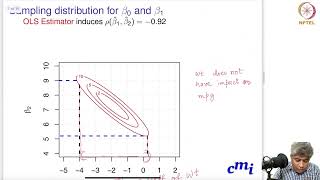
Understanding Multicollinearity
Explore multicollinearity and its impact on regression analysis, focusing on the Variance Inflation Factor as a key diagnostic tool.

Multiple Linear Regression Model and Application of F Statistics - Part 5
Explore multiple linear regression models and apply F statistics in advanced statistical analysis. Enhance your understanding of complex data relationships and hypothesis testing.

Multiple Linear Regression Model and Application of F Statistics - Part 2
Explore advanced concepts of multiple linear regression and F-statistics, enhancing statistical analysis skills for complex data modeling.
Statistical Methods in Hypothesis Testing: Z-Test and T-Test - Part 1
Explore statistical methods for hypothesis testing, focusing on z-test and t-test applications and their significance in data analysis.
Error Bars and Confidence Intervals - Part 1
Explore error bars, confidence intervals, and z-statistics for data estimation, with focus on small sample sizes.
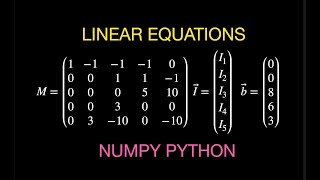
Solving a System of Linear Equations with a Matrix and Python
Learn to solve linear equation systems using matrices and Python, with practical applications in Google CoLab and Jupyter Notebooks.

Hill Random Forests with Application to Tornado Damage Insurance
Explore Hill random forests and their application to tornado damage insurance in this mathematical conference talk.
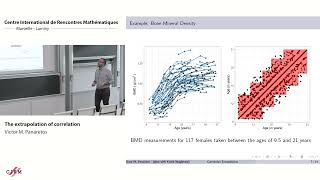
The Extrapolation of Correlation
Explore advanced mathematical concepts in correlation extrapolation through Victor Panaretos' insightful conference talk at CIRM's thematic meeting on adaptive forecasting methods.

Can We Trust the Statistics in the Media? - The Peter Lindsay Memorial Lecture 2022
Explore how to critically evaluate statistics in media with Professor Sir David Spiegelhalter. Learn to distinguish between informative and persuasive use of numbers in various contexts.

Weaving Numbers: Killing Mosquitoes with Mathematics
Explore how mathematical modeling aids in combating mosquito-borne diseases and informs effective intervention strategies for global health impact.

Mathematical Modelling of Clonal Dynamics of Acute Myeloid Leukemia: Model-Based Approach to Understand Within-Tumour Heterogeneity
Explore mathematical models of acute myeloid leukemia's clonal dynamics to understand tumor heterogeneity using a model-based approach.