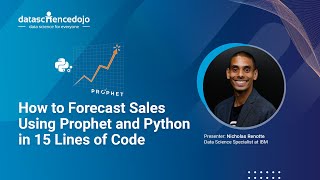
How to Forecast Sales Using Prophet and Python
Learn to build accurate sales forecasts using Prophet and Python in just 15 lines of code. Discover how to leverage this powerful tool for various time series predictions, from market trends to weather forecasting.
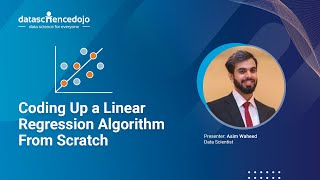
Coding Up a Linear Regression Algorithm From Scratch - Build Linear Regression From Python
Advanced Python tutorial on implementing Linear Regression from scratch, covering object-oriented programming, vectorized operations, and efficient coding strategies. Bridges theory and practice for experienced data scientists.
Miles to Go Before I Sleep - Gamification, Health Wearables, and Activity
Exploring the impact of gamification and leaderboards on physical activity using Fitbit data. Reveals surprising benefits for sedentary users and potential drawbacks for highly active individuals.
Data Storage Systems - Taking a Look at Redshift, MySQL, PostgreSQL, Hadoop and Others
Explore key data storage systems like Redshift, MySQL, PostgreSQL, and Hadoop. Learn their features, pros, cons, and ideal use cases to make informed decisions for your data infrastructure needs.
What Is a Data Engineer?
Explore data engineering: goals, skills, tools, and its role in the data ecosystem. Learn how data engineers support data scientists and drive business success through effective data management.
Building Data Science Products - Think Business First
Learn to approach data science projects from a business perspective, focusing on key questions and considerations before diving into tools and techniques.
AI for Social Good
Explore AI applications for social good, addressing global challenges like poverty and healthcare access. Learn from real-world examples and discover untapped opportunities to make impactful change through data science.
Product Led Growth Strategy in Modern Business - What is Product Led Growth? - Drive Product Growth
Explore Product-Led Growth strategy, its foundation in user data, and the evolving role of data scientists in driving product success through collaboration and personalized experiences.
Ace the SQL and Data Science Interview - Complete Interview Prep - SQL Interview Tips and Tricks
Expert insights on acing data science and SQL interviews, covering technical questions, case studies, and strategies to stand out in the competitive job market.
Time Series Analysis for Beginner Data Scientists - Time Series Forecasting
Learn time series analysis for data science: navigate, analyze, and model time series data, create forecasts, and build interactive dashboards. Ideal for beginners with basic coding skills.
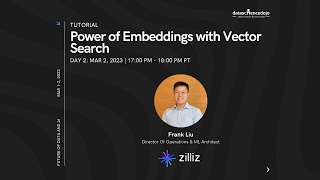
Unlock the Power of Embeddings with Vector Search - Future of Data & AI - Data Science Dojo
Explore embeddings and vector search for unstructured data analysis. Learn to build semantic text and reverse image search systems using Milvus, with real-world applications and best practices.
What Data Scientists Need to Know about Master Data Management - Future of MDM
Explore Master Data Management's role in data science, its implementation styles, unique features, and future trends. Learn how MDM enhances data accuracy and drives improved business outcomes.
MySQL Up and Running - MySQL Tutorial for Beginners - Learn SQL
Learn to set up and use MySQL for data science, covering RDBMS basics, deployment, interfacing, and practical dataset examples. Gain essential SQL skills for working with structured data in real-world scenarios.
Telling Your Data Story With the 3Vs - Vocabulary, Voice, and Vision - Storytelling with Data
Learn effective data storytelling techniques using the 3Vs: Vocabulary, Voice, and Vision. Improve your ability to create compelling narratives for data management programs and gain support from stakeholders.
Data Manipulation with Dplyr
Learn efficient data manipulation using dplyr in R. Master essential functions for filtering, aggregating, and joining datasets, enhancing your data analysis skills with practical examples.
Introduction to Text Analytics with R - Pre-Processing Our Test Data
Learn to preprocess test data, cache IDF values, perform SVD projections, and evaluate model effectiveness for text analytics in R. Enhance your skills in handling unseen textual data and making predictions.

N-Grams - Introduction to Text Analytics with R
Explore N-grams in text analytics, including TF-IDF validation, word ordering, dimensionality challenges, and hardware limitations. Enhance your R-based text analysis skills.
Data Visualization and Storytelling with PowerBI
Learn to create impactful, interactive data stories using Power BI. Discover techniques for visually compelling narratives that engage audiences and emphasize key points through effective data visualization.

TF-IDF - Introduction to Text Analytics with R
Explore TF-IDF for text analytics in R: improve document representation, handle unequal lengths and common terms, implement TF-IDF, and clean data matrices post-weighting.
Intro to Machine Learning with R & Caret
Learn to leverage R's caret package for efficient machine learning tasks, including data sampling, model training, cross-validation, and hyperparameter tuning. Enhance your data science skills with practical examples.
Business Data Analysis with Excel - Excel for Data Analysis
Learn robust business data analysis using Excel. Explore histograms, running records, and process behavior charts to analyze trends, compare data, and derive insights without programming or advanced statistics.