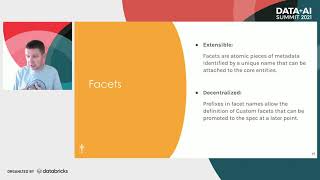
Observability for Data Pipelines with OpenLineage
Explore data pipeline observability using OpenLineage, enhancing reliability and auditability. Learn how metadata collection enables understanding of data flow and dependencies across teams and technologies.
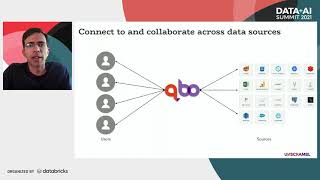
Natural Language Query and Conversational Interface to Apache Spark
Explore conversational analytics with Apache Spark, enabling natural language queries for data insights. Learn about NLP-to-SQL translation and its integration with dialog management and visualization.
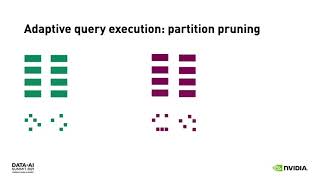
Modernizing Apache Spark 3.0 Applications - Best Practices and Optimization Techniques
Optimize legacy Spark applications for 3.0: leverage Adaptive Query Execution, columnar processing, GPU acceleration, and ML integration. Concrete examples and lessons from modernizing analytics workloads.
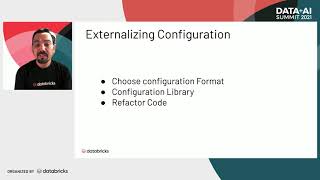
Dumb-Proofing Data Pipelines: Techniques for Configurable and Maintainable ETL - Databricks
Techniques to create configurable, maintainable data pipelines. Learn to externalize configurations, validate inputs, and leverage Scala features for robust, easily deployable ETL processes.
Learn to Use Databricks for Data Science
Discover how Databricks simplifies data science with a unified platform for analytics workloads, from data preparation to predictive analytics, enhancing collaboration and productivity at scale.
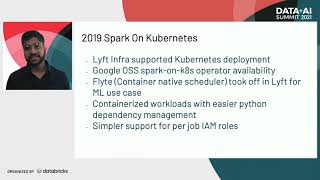
Hybrid Apache Spark Architecture: Optimizing YARN and Kubernetes for Lyft's Workloads
Explore Lyft's hybrid Apache Spark architecture using YARN and Kubernetes, addressing scalability challenges and optimizing workload management for improved reliability and efficiency.
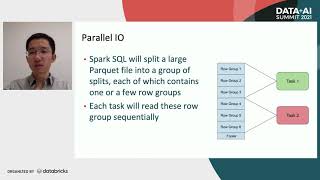
Optimizing Spark SQL Jobs with Parallel and Asynchronous IO
Optimizing Spark SQL jobs through parallel and async IO techniques, including file-level and row group-level parallel read, asynchronous spill, and parquet column family, resulting in 5-30% performance improvement.
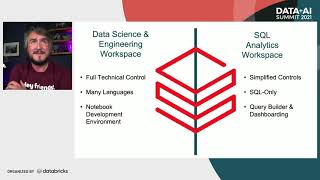
Getting Started with Databricks SQL Analytics
Explore Databricks SQL Analytics: set up SQL endpoints, query workspaces, create dashboards, and connect BI tools. Learn how this tool enhances the Lakehouse architecture for SQL-savvy data analysts.
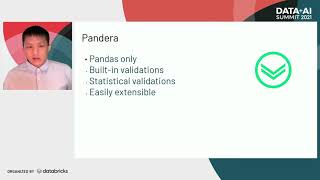
Fully Utilizing Spark for Data Validation with Fugue and Pandera
Explore lightweight data validation for Spark using Fugue and Pandera, enabling partition-specific rules and efficient big data processing without compromising on functionality.
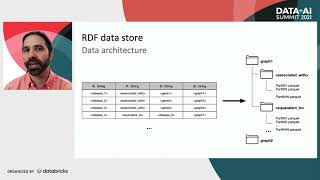
Drug and Vaccine Discovery Using Knowledge Graphs and Apache Spark
Explore how GSK uses knowledge graphs and Apache Spark to build a massive medical database, enabling advanced drug and vaccine discovery through innovative data querying and machine learning techniques.
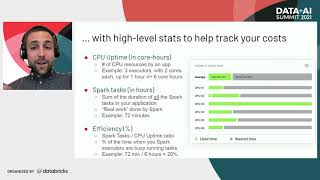
Delight - Improved Apache Spark UI for Performance Troubleshooting
Explore Delight, a free monitoring dashboard for Apache Spark. Learn to troubleshoot and optimize data engineering pipelines using system metrics and Spark information for improved performance and cost-effectiveness.
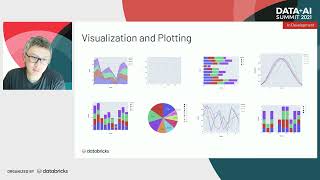
Deep Dive into New Features of Apache Spark 3.1
Explore Apache Spark 3.1's new features: ANSI SQL compliance, streaming enhancements, Python improvements, and performance optimizations for faster, easier, and smarter data processing.
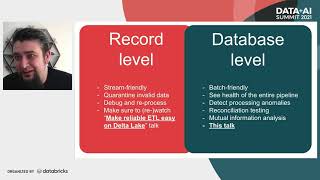
Data Quality Tools Comparison for Continuous Data Imports
Comparison of open-source data quality tools for continuous imports, covering maturity, documentation, extensibility, and features like data profiling and anomaly detection.
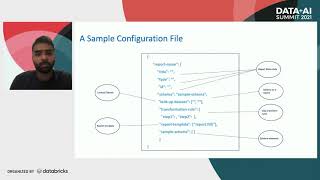
Configuration-Driven Reporting on Large Datasets Using Apache Spark
Configurable enterprise framework for generating and distributing diverse reports from large financial datasets using Apache Spark, with dynamic scheduling and data transformation capabilities.
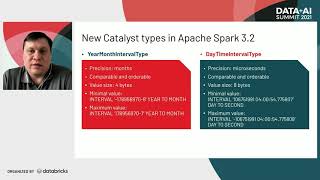
Comprehensive View on Intervals in Apache Spark 3.2
Explore Apache Spark 3.2's interval enhancements, including ANSI SQL conformance, new interval types, and improved APIs. Learn to construct, use, and manage intervals effectively in Spark SQL and PySpark.
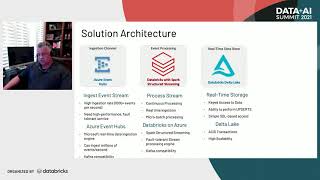
Build Real-Time Applications with Databricks Streaming - Fire Department Use Case
Learn to build real-time applications using Databricks Streaming, focusing on a fire department use case. Explore architecture, data sources, and implementation for live tracking of equipment, personnel, and incidents.
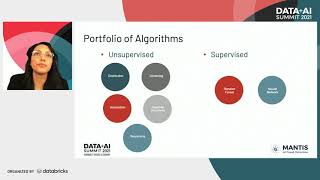
Wizard Driven AI Anomaly Detection with Databricks in Azure
Explore wizard-driven AI anomaly detection for fraud prevention using Databricks. Learn unsupervised and supervised methods, aggregation frameworks, and human-in-the-loop feedback to improve models over time.
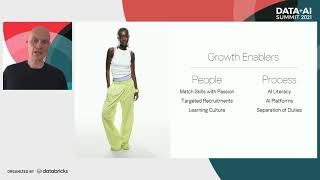
Scaling AI at H&M - Democratizing and Accelerating AI Usage
H&M's evolving AI platform democratizes and accelerates AI usage across the group, focusing on speed to production, data abstraction, feature store, and pipeline orchestration for efficient model management and development.
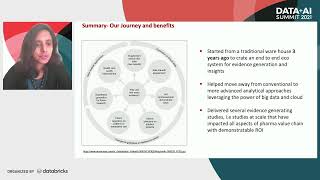
Real-World Evidence and Patient Analytics Using Databricks - A Use Case
Explore real-world health data analytics using Databricks, including insights generation, data security, and advanced use cases. Learn about big data ingestion and cloud-based platform industrialization for life sciences.
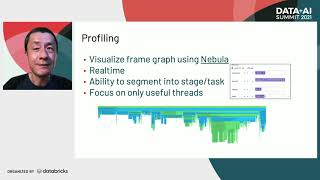
Migrating ETL Workflows to Apache Spark at Scale - Pinterest's Experience
Explore Pinterest's journey migrating ETL workflows to Apache Spark, covering challenges, solutions, and performance improvements. Learn about semantic gaps, thrift objects, and innovative Spark profiling techniques.
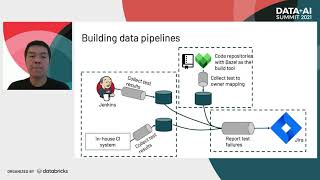
Managing Millions of Tests Using Databricks - Automated Monitoring and Reporting System
Explore automated test monitoring and reporting for Databricks Runtime using Delta, analyzing results from various sources to track quality and efficiently report failures to owners.