Cyber & Data - Similarity and Matching
Explore similarity and matching techniques in cybersecurity, including distance methods, phonetic matching, and hashing, with practical Python examples.
Cyber & Data: Introduction to Splunk
Learn to analyze data with Splunk, covering basics, file analysis, web access logs, and visualizations for effective cybersecurity and data insights.
Cyber & Data - Introduction to Splunk and Machine Learning
Explore Splunk and machine learning techniques for data analysis, including anomaly detection, prediction, clustering, feature extraction, and preprocessing methods.
A Unifying Framework for Analyzing Complex Systems
Explore complex systems analysis through genetic algorithms, agent-based models, network analysis, and time series analysis. Learn quantitative methods for social sciences and economics research.
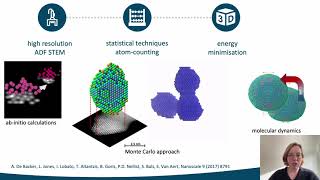
3D Atomic Resolution Through Dose-Efficient Fusion of Image & Analytical Technique
Explore 3D atomic structure analysis of nanomaterials using advanced quantitative TEM techniques, including parameter estimation, deep learning, and fusion of ADF STEM with EDX for heterogeneous materials.
Optimal and Differentially Private Data Acquisition: Central and Local Mechanisms
Explore central and local mechanisms for optimal and differentially private data acquisition, focusing on theoretical foundations and practical applications in statistical analysis.
On the Complexity of Two-Party Differential Privacy
Explore the intricacies of two-party differential privacy, examining its complexity and implications for data analysis and privacy protection in collaborative settings.
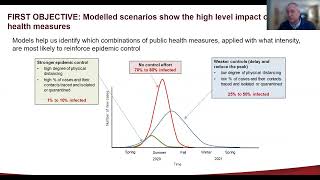
Predicting What Comes Next: Modelling the COVID-19 Epidemic
Explore mathematical modeling techniques for predicting COVID-19 epidemic trends and future scenarios, with insights from public health experts.
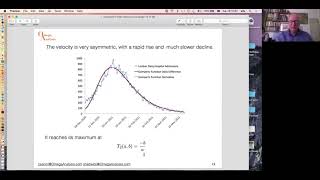
Predicting the Course of Covid-19
Explore mathematical models for predicting COVID-19 trends, analyzing data patterns, and discussing implications for public health strategies and decision-making.
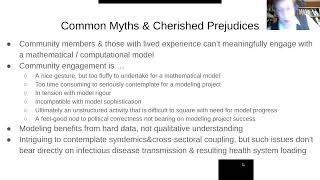
Dynamic Modelling and Health Inequities: Peril, Promise, Principles, and Practices - EDI Session 2
Explore dynamic modeling's impact on health equity, participatory approaches, and methodological priorities for inclusive research. Learn strategies to enhance model design and community engagement in health studies.
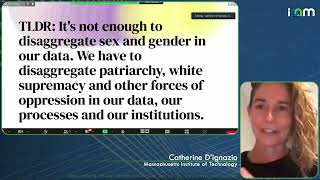
What Does Feminist Data Science Look Like?
Explore feminist approaches to data science, challenging traditional methodologies and promoting inclusive, ethical practices in data collection, analysis, and interpretation.

What is "Race" in Algorithmic Discrimination on the Basis of Race?
Explore the complex relationship between race and algorithmic discrimination, examining causal effects and proposing a constructivist theory to address discrimination in machine learning.
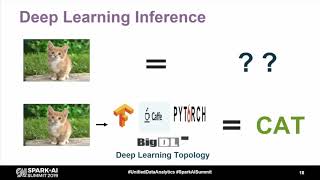
Accelerating Real-Time Video Analytics on a Heterogeneous CPU and FPGA Platform
Explore real-time video analytics acceleration using CPU+FPGA platforms. Learn about performance optimization, latency reduction, and cost-effective solutions for industrial applications like fraud detection and surveillance.
Scaling Security Threat Detection with Apache Spark and Databricks
Explore advanced security threat detection using Apache Spark and Databricks. Learn about innovative solutions for notebook-based testing, self-tuning alerts, automated investigations, and custom SDK development for enhanced cybersecurity.

Data Privacy Techniques with Apache Spark - Defensive and Offensive Approaches
Explore data privacy techniques for Apache Spark, including offensive and defensive approaches, k-anonymity, and quasi-identifiers. Learn implementation strategies and how Databricks Delta enhances dataset privacy.
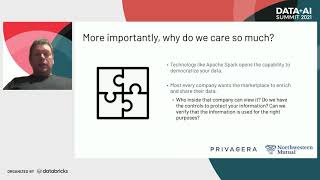
Scaling Privacy in a Spark Ecosystem
Learn strategies for scaling privacy in Spark ecosystems, balancing customer rights with business needs. Explore centralized access control, auditing, and reporting in open data environments.
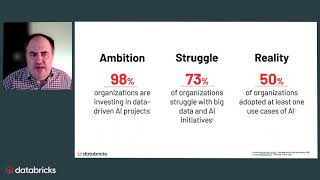
Manufacturing and Distribution Industry Forum - Data and AI Summit 2021
Explore how leading manufacturers leverage data and AI to optimize operations and supply chains. Industry experts share insights on intelligent manufacturing, equipment-as-a-service, and sustainability initiatives.
Bridging the Air Gap: Cross-Domain Solutions - PG08
Explore cross-domain solutions for secure data transfer between networks, including examples, security testing, and future developments in bridging air-gapped systems.

Measuring the IQ of Your Threat Intelligence Feeds
Explore methods for evaluating threat intelligence feeds, including novelty tests, overlap tests, and population tests, to improve cybersecurity decision-making and data analysis.
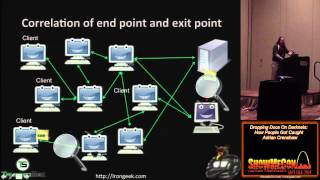
Dropping Docs on Darknets: How People Got Caught - Lecture 3
Explore real-world cases of darknet document leaks, analyzing security breaches and the methods used to identify perpetrators. Learn from past mistakes to enhance digital anonymity.
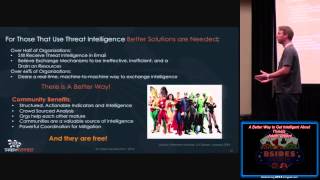
A Better Way to Get Intelligent About Threats
Explore threat intelligence automation, data fusion, and the Diamond Model for enhanced cybersecurity analysis and decision-making across various business roles and industries.