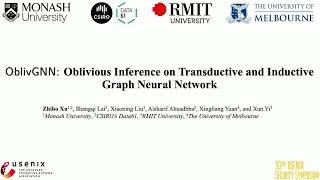
OblivGNN: Oblivious Inference on Transductive and Inductive Graph Neural Networks
Discover a privacy-preserving solution for secure GNN inference in cloud services, enabling protected analysis of sensitive graph data while maintaining model confidentiality and efficiency.
Consistent Diffusion Meets Tweedie - Training Exact Ambient Diffusion Models with Noisy Data
Explore groundbreaking techniques for training diffusion models with corrupted data, using Tweedie's formula to generate high-quality samples while reducing memorization and privacy concerns.

Confidential AI with Ubuntu on Azure - Securing Machine Learning Workloads
Discover how to protect AI workloads using Ubuntu confidential VMs on Azure, featuring AMD EPYC processors and NVIDIA H100 GPUs for enhanced data privacy and security in cloud-based machine learning.
Cloud Computing Challenges: Understanding Key Obstacles and Solutions in Modern Infrastructure
Explore key challenges in cloud computing, from data privacy and regulatory compliance to technical hurdles, while discovering practical solutions for effective cloud management.
Understanding AI Ethics and Governance - Building Responsible and Trustworthy Systems
Explore the critical principles of ethical AI development, from addressing algorithmic bias to implementing governance frameworks for responsible and transparent artificial intelligence systems.
Introduction to Artificial Intelligence and Machine Learning
Discover the fundamentals of AI and ML, from core algorithms to real-world applications across industries, while exploring future trends and key challenges in modern technology.
Artificial Intelligence and Machine Learning - An Introduction to Core Concepts and Applications
Discover the fundamentals of AI and ML, exploring core components, real-world applications, future trends, and key challenges in technology transformation across multiple industries.
Decentralized Federated Machine Learning: Empowering Edge Devices with Kubernetes
Discover how to implement Federated Machine Learning with Kubernetes for privacy-preserving model training across edge devices, enabling efficient image classification and scaled computations.

AI for the Public Sector with Microsoft 365 Copilot GCC
Discover how Microsoft 365 Copilot GCC empowers public sector agencies with AI capabilities, focusing on mission success, responsible practices, and data privacy in government cloud environments.

Challenges and Opportunities in Storage Security - Data Center Security and Sustainability
Explore evolving storage security trends, from quantum computing challenges to data sanitization requirements, while understanding implementation strategies for secure and sustainable datacenter operations.

User-Level and Federated Local Differential Privacy in Statistical Inference
Explore fundamental statistical inference challenges in distributed data systems with differential privacy constraints across servers and users, focusing on privacy-preserving information transmission.
From Silicon to Service: Ensuring Confidentiality in Serverless GPU Cloud Functions
Dive into advanced cloud security concepts, focusing on confidential computing, hardware-based TEEs, and GPU-accelerated workloads for building secure serverless functions with complete stack attestation.
Privacy in the Age of Big Compute - Privacy Enhancing Technologies and Data Protection
Discover how Privacy Enhancing Technologies and Confidential Computing protect sensitive data in high-dimensional environments, addressing re-identification risks and ensuring data security compliance.
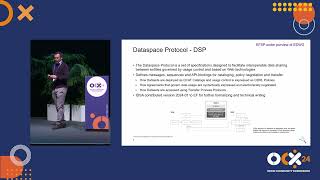
Eclipse Dataspace Components Framework for Cross-Company Data Sharing - OCX 2024
Explore the evolution of Dataspace concepts and learn how Eclipse Dataspace Components Framework enables secure cross-organizational data sharing with policy management and standardized protocols.

Securing IoT Integrations with Third-Party Services
Explore essential security strategies for IoT integrations with third-party services, covering challenges, privacy concerns, and best practices through a practical smart city case study.
Ethical Dimensions of AI in Educational Technology
Explore critical ethical considerations in educational technology, from privacy and data protection to equity concerns, while examining responsible AI implementation strategies and digital well-being.
Crafting Hyper-Relevant User Experiences with AI-Powered Personalization
Discover how to create personalized user experiences using AI, from data collection and ethical considerations to implementation strategies and future trends in real-time personalization at scale.

Model Stealing for Low-Rank Language Models Through Reverse Engineering
Discover groundbreaking mathematical techniques for reverse-engineering language models through conditional queries and barycentric spanners, exploring MIT's innovative approach to model extraction.
LanDscAPe - Exploring LDAP Weaknesses and Data Leaks at Internet Scale
Explore a comprehensive analysis of LDAP server vulnerabilities, revealing critical security misconfigurations, data leaks, and TLS setup issues across thousands of Internet-connected servers.
Understanding How to Inform Blind and Low-Vision Users about Data Privacy through Privacy Question Answering Assistants
Explore how blind and low-vision users navigate digital privacy challenges, their risk perceptions, and the potential role of privacy Q&A assistants in improving their online safety and information access.
Less is More: Revisiting the Gaussian Mechanism for Differential Privacy
Explore groundbreaking improvements to differential privacy through a novel Rank-1 Singular Multivariate Gaussian mechanism that enhances data protection while minimizing accuracy loss in high-dimensional queries.