
How to Write a Kubernetes Reconciler Using Controller-Runtime - Tutorial
Learn to build Kubernetes controllers using controller-runtime, exploring best practices, conventions, and common pitfalls. Gain hands-on experience with Kubebuilder and understand Kubernetes conditions for efficient custom resource management.
Kcp: Towards 1,000,000 Clusters - Workspaced CRDs
Explore kcp project's innovative approach to Kubernetes scaling, introducing workspaces for improved isolation and novel API service models, challenging traditional cluster management concepts.
Agent-Based Kubernetes Installation - Overview and Benefits
Explore agent-based Kubernetes installation using discovery ISO for preconfiguration, problem detection, and GitOps integration, enabling efficient cluster setup and management.
Kubernetes Reloaded - Avoiding the Dev Plateau with Custom Resource Definitions
Explore Custom Resource Definitions (CRDs) in Kubernetes, their inner workings, and how they drive innovation. Learn about popular CRDs and see a demo of Kubernetes as an internal dev solution for platform engineering.
Bootiful Kubernetes Operators - Automating Infrastructure with Spring Boot
Explore automating Kubernetes infrastructure using Spring Boot-powered custom operators, eliminating YAML complexity and extending K8s functionality through live coding demonstrations.
Under the Hood with Fluent Bit Operator: Kubernetes-native Log Processor
Explore Kubernetes-native logging with Fluent Bit Operator, addressing challenges, debugging workloads, and implementing efficient log processing pipelines. Includes real-world examples and a demo.
Use Kubernetes to Automatically Manage Your On-Premises Infrastructure
Learn to leverage Kubernetes for automated on-premises infrastructure management, exploring key concepts, Cluster API, and practical implementation with MetaCube IO.
SIG API Machinery Deep Dive - Applying What We've Learned
Explore Kubernetes API machinery, focusing on Server Side Apply, client usage, extensibility, and SIG structure. Learn about Priority Fairness, health checks, and concurrency limits.
Unraveling the Mystery of Versioning Custom Resource Definitions (CRDs)
Explore CRD versioning in Kubernetes, covering lifecycle, upgrades, compatibility, and migration strategies for seamless project evolution and user experience.
How to Promote the Use of Best Practices and Automate Security Policies
Explore container security automation in CI/CD pipelines, focusing on vulnerability scanning, admission controls, and runtime security using tools like OPA and Kubernetes Admission Controls.
Building Carbon Awareness with KEDA - Taking the First Step Towards Sustainability
Explore how the Carbon Aware KEDA Operator helps reduce carbon footprint in software applications without code changes. Learn deployment, usage, and potential integration into KEDA.
Extending Kubernetes Scheduler for Multi-Cluster and Multi-Cloud Workloads
Explore extending Kubernetes scheduler for multi-cluster environments and optimizing for non-Kubernetes workloads. Learn benefits and challenges of scheduling across multiple clouds and managed resources.
Auto Operation of Hundreds of Kubernetes Clusters in Yahoo Japan
Explore Yahoo! Japan's approach to managing hundreds of Kubernetes clusters, including zero-downtime upgrades, custom extensions, and efficient on-premise operations for serving 130 million users.
To CRD or Not to CRD - Exploring Custom Resource Definitions in Kubernetes
Explore the potential of Custom Resource Definitions in Kubernetes, their evolving use cases, and how they compare to traditional application development approaches.
Kubernetes - The Universal Control Plane
Explore building a unified control plane for multi-cluster Kubernetes management using open-source tools like kcp and Crossplane, enabling flexible workload scheduling and avoiding cloud lock-in.

Effortless Scalability - Orchestrating Large Language Model Inference with Kubernetes
Explore automating deployment of large AI models on Kubernetes, leveraging CRDs for seamless management and optimizing GPU utilization through preset configurations and auto-provisioning.
How We Are Moving from GitOps to Kubernetes Resource Model in 5G Core
Exploring Swisscom's transition from GitOps to Kubernetes Resource Model for 5G core, focusing on dynamic configuration management, automation, and cloud-native concepts to improve mobile network deployment and lifecycle.
Effortless Scalability: Orchestrating Large Language Model Inference with Kubernetes
Explore automated deployment of large AI models on Kubernetes, leveraging CRDs for seamless management and optimizing GPU utilization through preset configurations and auto-provisioning.
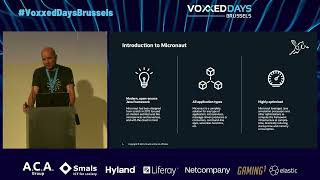
Implementing Kubernetes Operators in Java with Micronaut
Learn to implement Kubernetes operators using Java and Micronaut framework. Discover how to create cloud-native applications, custom resource definitions, and manage deployments in a Kubernetes cluster.
Durable Execution - The Next Leap for Microservices Architectures
Explore how Kubernetes operators and CRDs can simplify platform engineering, reduce developer cognitive load, and create powerful abstractions for microservices and data products in cloud-native environments.
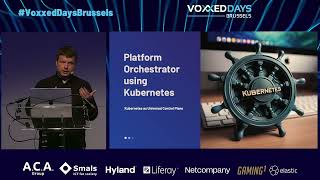
Platform Engineering: Raising Abstraction Levels with Kubernetes Operators
Explore how Kubernetes Operators and CRDs can be used to create higher-level abstractions in platform engineering, lowering cognitive load for developers and enabling self-service tools.