
Ferramentas AST e Arquiteturas MAD e Monolítica na Segurança de Aplicações Modernas
Explore ferramentas de segurança para arquiteturas modernas e monolíticas. Aprenda a integrar sistemas de detecção, firewalls e scanners no desenvolvimento, garantindo conformidade e mitigando riscos.
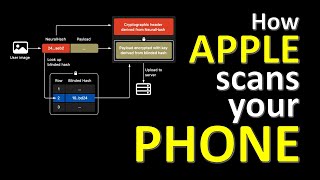
How Apple Scans Your Phone and How to Evade It - NeuralHash CSAM Detection Algorithm Explained
Detailed exploration of Apple's CSAM detection system, analyzing its technical aspects, privacy measures, and potential weaknesses. Covers NeuralHash, private set intersection, and threshold secret sharing.

ESP-NOW - Peer to Peer ESP32 Network
Learn to create private peer-to-peer networks with ESP32 boards using ESP-NOW protocol. Explore setup, broadcasting, and practical applications like remote temperature sensing without WiFi.
Building Data Breach and Subpoena Resistant Applications - Philly ETE 2017
Explore cryptographic techniques and messaging systems to build applications resistant to data breaches and subpoenas, setting new standards for user data security.
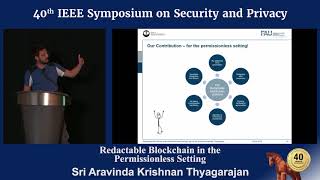
Redactable Blockchain in the Permissionless Setting
Explore innovative blockchain redaction techniques for permissionless systems, addressing data privacy concerns while maintaining security and public verifiability without additional trust assumptions.
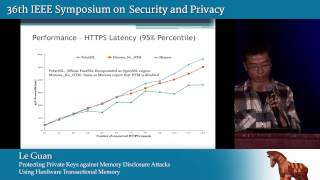
Protecting Private Keys Against Memory Disclosure Attacks Using Hardware Transactional Memory
Explore hardware transactional memory for protecting cryptographic keys against memory disclosure attacks, enhancing security in both software and physical threat scenarios.
How Secure and Quick is QUIC? Provable Security and Performance Analyses
Analyzes QUIC protocol's security and performance, revealing strengths and vulnerabilities. Explores trade-offs between latency reduction and robust security in this innovative transport protocol.
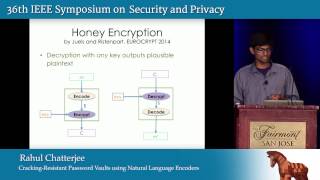
Cracking-Resistant Password Vaults Using Natural Language Encoders
Innovative password vault security using natural language encoders to generate plausible decoys, resisting offline cracking and forcing online attacks. Implements NoCrack system for enhanced protection.

Plundervolt - Software-Based Fault Injection Attacks against Intel SGX
Explore software-based fault injection attacks on Intel SGX, focusing on the Plundervolt technique that exploits voltage scaling interfaces to compromise enclave computations and cryptographic algorithms.

The 9 Lives of Bleichenbacher's CAT - New Cache Attacks on TLS Implementations
Explores novel cache-based attacks on TLS implementations, demonstrating vulnerabilities in popular systems and introducing a parallelization technique for padding oracle attacks against RSA.
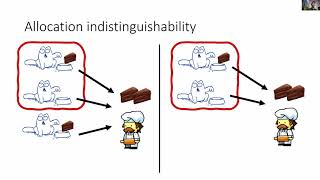
Private Resource Allocators and Their Applications
Introduces private resource allocators to prevent allocation-based side-channel attacks in systems like anonymous messaging, with various constructions offering different privacy guarantees and trade-offs in efficiency.
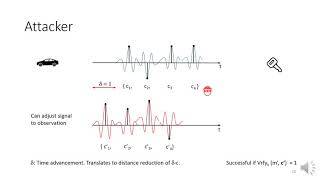
Message Time of Arrival Codes - A Fundamental Primitive for Secure Distance Measurement
Explores secure Time-of-Arrival measurement through Message Time of Arrival Codes, addressing attacks on proximity verification systems and discussing performance-security tradeoffs in signal modulation techniques.
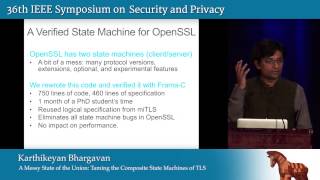
A Messy State of the Union - Taming the Composite State Machines of TLS
Explore critical security vulnerabilities in TLS implementations, including the FREAK flaw, and learn about a verified composite state machine for OpenSSL that addresses these issues.
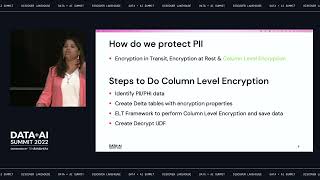
Protecting PII and PHI Data in Data Lakes with Column-Level Encryption
Explore column-level encryption techniques for protecting sensitive data in data lakes, including design, implementation, and key management, with a focus on securing PII/PHI information.
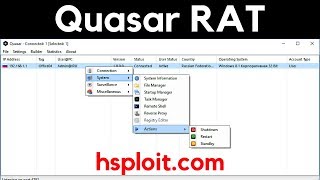
QuasarRAT - Remote Administration Tool for Windows
Explore QuasarRAT, a powerful Windows remote administration tool with features like file management, remote desktop, and keylogging. Learn its capabilities and potential applications.

Theory Seminar - Differential Privacy in Theory and Practice, Abie Flaxman
Explore differential privacy in the US Census, its impact on data accuracy, and potential improvements. Insights from analyzing test runs and 1940 data application.
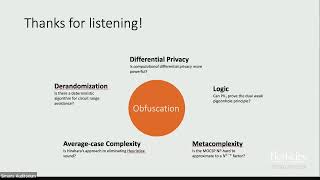
Tales of Obfuscation in Bounded Arithmetic, Metacomplexity, and Differential Privacy
Explores obfuscation's role in theoretical computer science, covering Circuit Range Avoidance, metacomplexity of Kolmogorov complexity, and computational differential privacy, with focus on recent results and open questions.
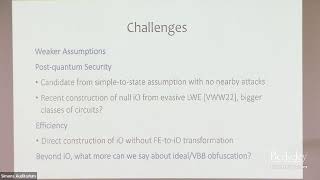
Tutorial on Obfuscation
Explore minimal complexity assumptions for cryptography, focusing on obfuscation techniques and their applications in secure system design.
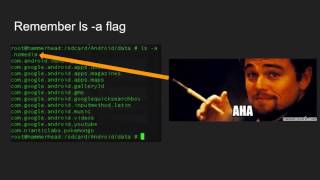
Advanced Android Bug Bounty Skills - Ben Actis, Bugcrowd's LevelUp 2017
Explore advanced Android bug bounty techniques, focusing on IPC vulnerabilities, mobile-specific issues, and leveraging web hacking skills for mobile security testing.
Overview of Common Android App Vulnerabilities
Explore common Android app vulnerabilities, their detection, and remediation. Learn about Google Play's security programs and essential resources for developers to enhance app security.

Password Cracking Primer - Techniques and Concepts
Learn to identify and crack common password hashes, understand salting and peppering techniques, and gain essential skills for penetration testing and security consulting.