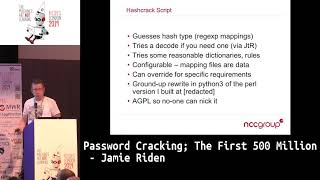
Password Cracking - The First 500 Million
Explore advanced password cracking techniques, hash preprocessing tools, and best practices for secure hashing. Learn to prevent credential stuffing and analyze real-world password dumps.

A Cache Hard Password Hash
Explore bscrypt, a cache-hard password hash designed for enhanced security. Learn its features, implementation, and advantages over traditional hashing methods.

In the War for Information, Will Quantum Computers Defeat Cryptographers?
Explore the future of quantum computing and its potential to revolutionize cryptography. Learn about the race to reinvent encryption and secure the digital world in the face of unprecedented computational power.
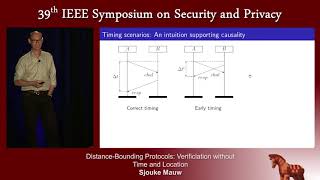
Distance-Bounding Protocols - Verification without Time and Location
Explore a novel approach to verifying distance-bounding protocols using causality-based characterization, enabling automated security analysis without relying on time and location concepts.
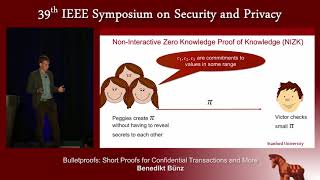
Bulletproofs - Short Proofs for Confidential Transactions and More
Efficient zero-knowledge protocol for range proofs and arithmetic circuits, with logarithmic-sized proofs and no trusted setup. Ideal for confidential transactions in cryptocurrencies.
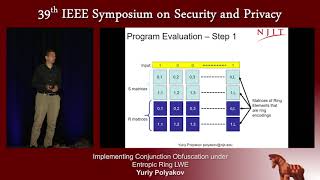
Implementing Conjunction Obfuscation under Entropic Ring LWE
Explore secure program obfuscation implementation for conjunction programs, addressing practicality challenges and achieving significant performance improvements in obfuscation and evaluation runtimes.
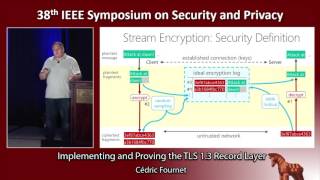
Implementing and Proving the TLS 1.3 Record Layer
Explore the implementation and security proofs of TLS 1.3's record layer, focusing on authenticated encryption, cryptographic algorithms, and formal verification using F* language.
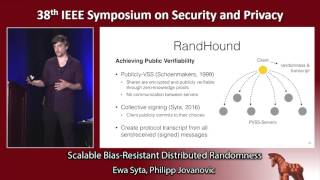
Scalable Bias-Resistant Distributed Randomness
Explore scalable protocols for generating unbiased public randomness in distributed systems, focusing on RandHound and RandHerd's innovative approaches to ensure integrity and efficiency.
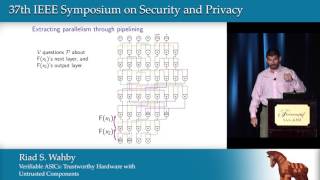
Verifiable ASICs
Explore verifiable computation for untrusted ASICs, enabling high-assurance execution without compromising performance. Learn about the Zebra system's implementation and its potential to match trusted platform performance.
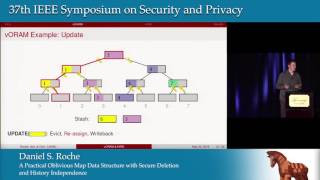
A Practical Oblivious Map Data Structure with Secure Deletion and History Independence
Introduces a novel oblivious RAM supporting variable-sized blocks and a history-independent data structure, offering enhanced privacy and efficiency for key/value map operations.
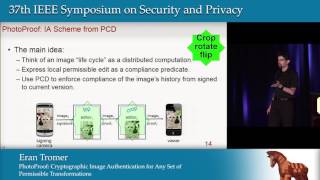
PhotoProof - Cryptographic Image Authentication for Any Set of Permissible Transformations
Cryptographic method for authenticating images while allowing permissible transformations. Enables verification of image integrity and authenticity without revealing sensitive information.
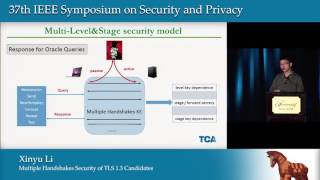
Multiple Handshakes Security of TLS 1.3 Candidates
Explores security aspects of TLS 1.3 candidates, focusing on multiple handshake protocols. Introduces a multi-level security model and proves the soundness of TLS 1.3 security design.
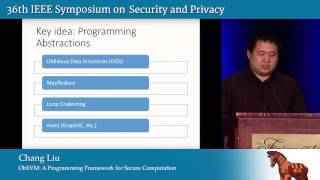
ObliVM - A Programming Framework for Secure Computation
Explore ObliVM, a framework for secure computation offering a domain-specific language, user-friendly abstractions, and efficient oblivious representations for various applications like data mining and genomic analysis.
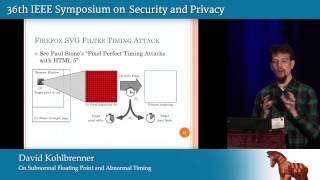
On Subnormal Floating Point and Abnormal Timing
Explores timing vulnerabilities in x86 floating-point operations, demonstrating practical attacks on Firefox and a privacy-focused database. Introduces a constant-time math library as a potential mitigation.
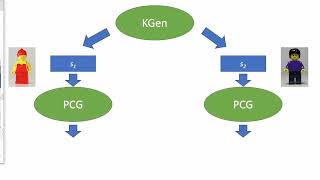
Low-Bandwidth Threshold ECDSA via Pseudorandom Correlation Generators
Explore efficient threshold ECDSA using pseudorandom correlation generators, reducing bandwidth requirements for secure distributed signing protocols.
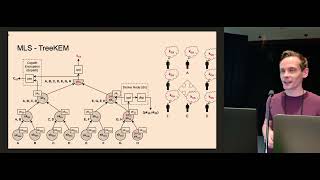
Security Analysis of the MLS Key Derivation
Explore the security aspects of MLS key derivation, focusing on analysis techniques and potential vulnerabilities in this cryptographic process.
Publicly Accountable Robust Multi-Party Computation
Explore innovative techniques for secure multi-party computation, focusing on public accountability and robustness in distributed systems and cryptographic protocols.
COBRA - Dynamic Proactive Secret Sharing for Confidential BFT Services
Explore dynamic proactive secret sharing for confidential Byzantine Fault Tolerant services, enhancing security in distributed systems with innovative techniques.
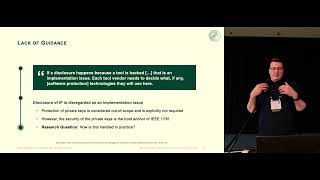
How Not to Protect Your IP - An Industry-Wide Break of IEEE 1735 Implementations
Uncover critical flaws in IEEE 1735 implementations for IP protection, exploring industry-wide vulnerabilities and their implications for hardware security.
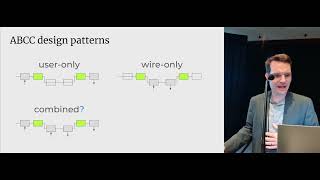
Security Foundations for Application-Based Covert Communication Channels
Explore covert communication channels in applications, focusing on security foundations, techniques, and potential implications for network security and privacy.
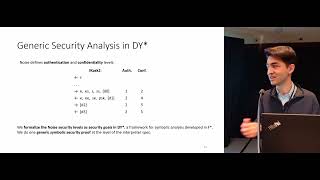
Noise - A Library of Verified High-Performance Secure Channel Protocol Implementations
Explore verified high-performance secure channel protocol implementations in this IEEE talk, covering the Noise library's features and applications in cryptographic security.