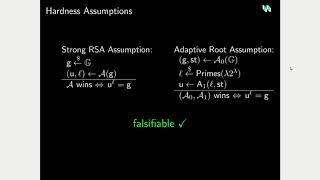
Transparent SNARKs from DARK Compilers
Explore transparent zero-knowledge proofs, polynomial commitment schemes, and DARK compilers in cryptography. Learn about innovative approaches to enhancing privacy and security in blockchain systems.
Cryptography 0 to 128 in 50 Minutes
Explore cryptography fundamentals, from symmetric and asymmetric methods to hashing and security concerns, in this comprehensive overview for beginners and professionals alike.

A Better Story for Kubernetes Secrets
Explore techniques for securing Kubernetes secrets, including encryption, KMS plugins, and HashiCorp Vault. Learn the tradeoffs of each approach to enhance cluster security.

Apache Pulsar and the Legacy of Telegraphy
Explore the parallels between wireless telegraphy and Apache Pulsar, uncovering design principles for distributed, low-latency messaging systems. Gain insights into Pulsar's architecture, features, and future potential.
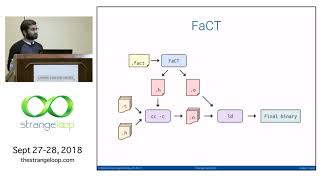
FaCT - A New Language for Constant-Time Programming
FaCT: A new language for writing constant-time cryptographic code, addressing security vulnerabilities in traditional methods. Enables high-level programming constructs while ensuring timing side-channel resistance.

End-to-End Encryption - Behind the Scenes
Explore end-to-end encryption protocols, their inner workings, and applications beyond messaging. Learn about key exchange, forward secrecy, and authentication in secure communication.
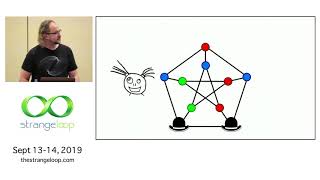
Rhapsody in Zero Knowledge - Proving Without Revealing
Explore zero-knowledge proofs: a cryptographic technique enabling proof verification without revealing sensitive information, balancing security and privacy in modern computing.
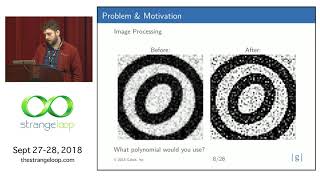
Your Secrets Are Safe with Julia - A Compiler for Secure Computation
Explore Ramparts, a compiler translating Julia code for homomorphic encryption, enabling secure computation on encrypted data without cryptography expertise.

.NET Core Data Security - Hope is Not a Strategy
Learn to secure .NET Core data using encryption, hashing, and authentication techniques. Covers random number generation, symmetric/asymmetric encryption, digital signatures, and hybrid encryption schemes.

Why FIDO Security Keys & Webauthn Are Awesome
Discover how FIDO security keys and WebAuthn prevent phishing attacks, protect your digital assets, and enhance user security through advanced authentication methods.
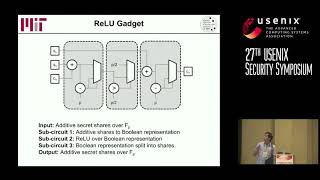
GAZELLE - A Low Latency Framework for Secure Neural Network Inference
Efficient framework for secure neural network inference combining homomorphic encryption and two-party computation, outperforming existing systems in speed while preserving privacy for cloud-based machine learning.

Un-F*#$ing Cloud Storage Encryption
Explore secure key rotation for cloud storage encryption, addressing current vulnerabilities and introducing new schemes with improved security and performance trade-offs.

High Confidence Malware Attribution Using the Rich Header
Explore advanced malware attribution techniques using the Rich Header, including its generation, fingerprinting capabilities, and a novel metadata hash for large-scale sample detection.

Time Signature Based Matching for Data Fusion and Coordination Detection in Cyber Relevant Logs
Methodology for detecting automated behavior in cyber logs using temporal pattern matching, scalable through locality sensitive hashing. Applications include anomaly detection and data fusion.

Don't Ignore GDPR - It Matters Now
Explore GDPR's impact on global businesses, covering key requirements, data protection roles, personal data definitions, and subject rights in this informative talk.
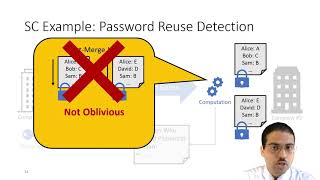
MAGE - Nearly Zero-Cost Virtual Memory for Secure Computation
MAGE: An execution engine for secure computation, enabling efficient processing of large-scale encrypted data by leveraging oblivious memory access patterns to optimize virtual memory management.
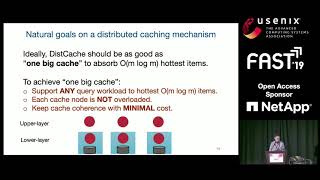
DistCache - Provable Load Balancing for Large-Scale Storage Systems with Distributed Caching
Innovative distributed caching mechanism providing provable load balancing for large-scale storage systems. Partitions hot objects and adaptively routes queries, enabling linear cache throughput increase with node count.
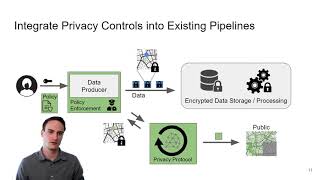
Zeph - Cryptographic Enforcement of End-to-End Data Privacy
Cryptographic system for enforcing user-defined privacy policies in real-time data analytics, ensuring compliance and protection against breaches while maintaining scalability and low latency.
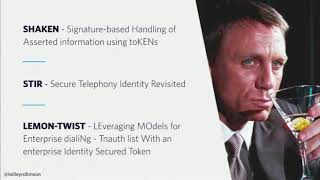
What if We Had TLS for Phone Numbers? An Introduction to SHAKEN - STIR
Explore SHAKEN/STIR, a new tech standard using public key cryptography to combat phone number spoofing and reduce spam calls, with insights on implementation challenges and interim solutions.

Project Everest - Fast, Correct, and Secure Software for Deployment Now
Explore Project Everest's verified, high-performance secure communication components. Learn about F* programming, EverCrypt, EverParse, and EverQuic-transport, and their adoption in major projects.

Anti-Forensics for Fun and Privacy
Explore anti-forensics techniques to protect your privacy from various threat levels, from casual snooping to nation-state surveillance. Learn practical methods to safeguard your digital footprint.