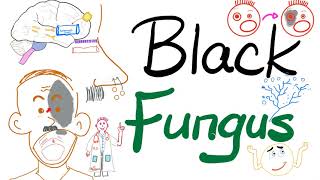
Black Fungus and COVID-19
Explore the connection between black fungus (mucormycosis) and COVID-19, including causes, symptoms, and complications in immunocompromised patients, particularly those with uncontrolled diabetes.
Frontiers of Medical AI - Therapeutics and Workflows
Explore cutting-edge AI applications in medicine, focusing on therapeutics and workflow optimization. Learn about AI-driven cancer treatment decisions, protein engineering, and specialized medical search engines.
Patient-Specific COVID-19 Resource Utilization Prediction Using Fusion AI Model - Amara Tariq
Explore AI-driven prediction of COVID-19 resource utilization using fusion modeling, combining patient history and current indicators for efficient healthcare planning and allocation.
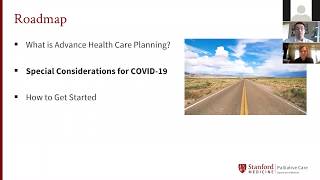
Advance Care Planning During COVID-19 - What if I Get Seriously Ill?
Explore advance care planning, choosing healthcare proxies, and completing directives, with special focus on COVID-19 considerations from Stanford's palliative care expert.
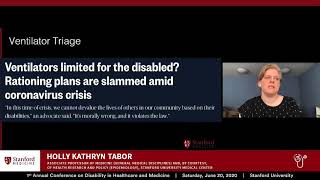
Disability and COVID-19: Ethical Challenges and Inclusive Solutions
Exploring COVID-19's impact on disability communities, ethical challenges, and calls for justice. Discusses triage concerns, research gaps, and the intersection of disability with race and healthcare access.

Lung and Heart-Lung Transplant Patient & Family Advisory Council Town Hall
Virtual town hall discussing COVID, wellness, and clinic updates for lung and heart-lung transplant patients and families, featuring expert speakers and covering topics like transplant volumes, outcomes, vaccine logistics, and mental health.
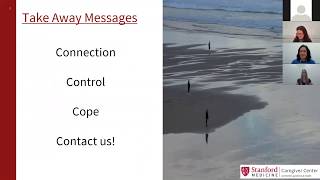
Caregiving During COVID-19
Learn strategies for connection, control, and coping as a caregiver during the pandemic, with insights on available resources and support from Stanford Health Care experts.

Myalgic Encephalomyelitis/Chronic Fatigue Syndrome in the Era of COVID-19
Exploración de la encefalomielitis miálgica/síndrome de fatiga crónica y su relación con el COVID prolongado, abordando síntomas, investigaciones actuales y perspectivas de tratamiento.
Mental Health and the COVID-19 Crisis: Impact and Policy Response
Explore the impact of COVID-19 on mental health in Australia, examining community profiles and evaluating the effectiveness of national policy responses like the coronavirus supplement.
COVID-19 Online Panel Discussion - March 2020
Expertos discuten la respuesta a la pandemia de COVID-19, abordando pruebas, inmunología, modelado, intervenciones, desarrollo de vacunas y dimensiones socioeconómicas.
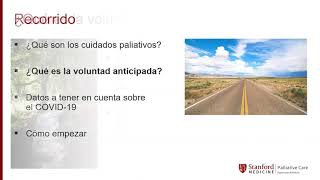
Guía para Tomar Decisiones Médicas en Tiempos de COVID-19 - Voluntad Anticipada
Guía sobre voluntad anticipada y decisiones médicas durante la pandemia de COVID-19, incluyendo cómo planificar y comunicar sus deseos de atención médica en caso de enfermedad grave.
Andy Dobson on Epidemic Modeling for COVID-19
Explore epidemic modeling for COVID-19 with Princeton epidemiologist Andy Dobson. Learn about mathematical models, herd immunity, endemic infections, and the interplay between epidemiological and economic systems.
COVID-19 and Complex Time in Biology and Economics with David Krakauer
Explore complex systems insights on COVID-19, including timing's role in biology and economics, network dynamics, and societal adaptation to rapid change.
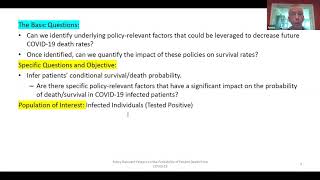
Effect of Universal TB Vaccination and Other Factors on Probability of Patient Death from COVID-19
Explore how universal TB vaccination, air pollution, and health expenditure impact COVID-19 survival rates across countries, with quantified probability changes by age and sex using information-theoretic methods.
Embracing Complexity for Systemic Interventions - Transmission Series Episode 5
Explore how embracing complexity in systems can lead to better interventions in various fields, from epidemiology to conservation, and improve decision-making under uncertainty.
Science in the Time of COVID - Lessons from the Pandemic
Insights from network epidemiologists on COVID-19's impact on scientific research, institutional interactions, and societal norms. Explores surprises, lasting effects, and future implications of the pandemic.
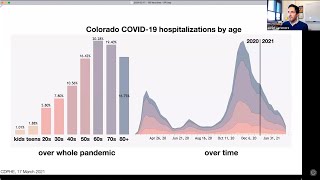
Vaccination Strategies - Prioritization, Dose Sparing, and Decisions Under Uncertainty and Inequity
Explore vaccination strategies for COVID-19, including prioritization and dose-sparing, considering uncertainties in variants, human behavior, and global inequities through mathematical models.
Testing Our Way Out of COVID-19: A Bumpy but Possible Path Forward
Explore how frequent, widespread testing with lower sensitivity could dramatically reduce COVID-19 spread and potentially end the pandemic while reopening the economy.
Epidemic Spread Through Segregated Spaces - Racial Disparities in COVID-19
Explore racial disparities in COVID-19 impact, examining structural factors and spatial segregation. Learn how to improve epidemic models by incorporating multi-scale spatial interactions and socio-economic factors.

Halting the Spread of COVID-19 - Network Epidemiology and Containment Measures
Network epidemiology insights on COVID-19 spread, discussing contagion across scales, co-infections' impact, and evidence supporting containment measures. Explores complexities of pandemic modeling and intervention strategies.
Improving COVID-19 Surveillance and Response
Explore challenges in monitoring and preventing COVID-19 spread, from ethical concerns to academic research limitations, with Harvard epidemiologist Caroline Buckee.