Telescopes on the Moon: The Next Decades - Exploring Space Through Lunar Observatories
Explore groundbreaking astronomical possibilities as lunar-based telescopes revolutionize our understanding of dark ages cosmology, early universe radiation, and exoplanet discoveries in unprecedented detail.

How Earth Moves
Explore Earth's complex movements, from daily rotation to cosmic travel, and their impact on time, seasons, and our place in the universe. Uncover fascinating celestial phenomena and calendar intricacies.
Observing the Birth of the Universe - With Lyman Page
Explore the universe's birth through cosmic microwave background variations, revealing its age, size, and structure formation. Insights from a leading experimental cosmologist on observational cosmology.
Studying Physics to Explore the Cosmos - Katie Mack at IFWIS
Astrophysicist Katie Mack shares her journey in physics, discussing dark matter, black holes, and her experiences from high school to professional research, inspiring future women in STEM careers.
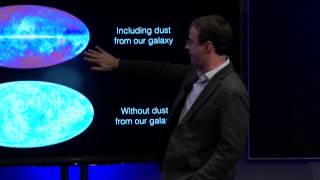
Cosmology in the 21st Century
Explore the expanding universe, from the big bang to dark matter, with cosmologist Kendrick Smith. Gain insights into cosmic phenomena and our current understanding of the universe's composition and evolution.

The Fundamental Patterns That Explain the Universe - With Brian Clegg
Explore fundamental patterns shaping our universe, from cosmic microwave background to quantum behaviors. Gain unique insights into physical world's workings through ten essential sequenced systems.
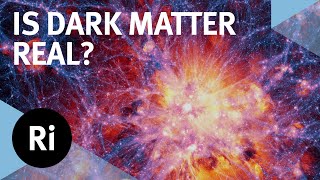
Is Dark Matter Real? - With Sabine Hossenfelder
Physicist Sabine Hossenfelder explores evidence for dark matter, proposing a superfluid theory that combines dark matter with modified general relativity to explain cosmic observations.
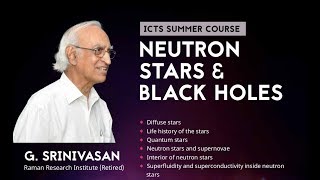
Universe or Multiverse? - Neutron Stars and Black Holes Lecture 14
Explore the universe's expansion, cosmic microwave background, and inflationary theories. Delve into cosmological phase transitions, gauge theories, and the concept of multiverses in this comprehensive lecture.
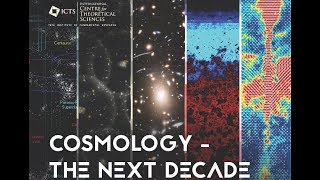
Reionization - Evidence and Observational Constraints - Lecture 1
Explore the epoch of reionization, its evidence, and observational constraints through absorption signatures, Lyman-alpha forest, and CMBR angular power spectrum in this comprehensive lecture.
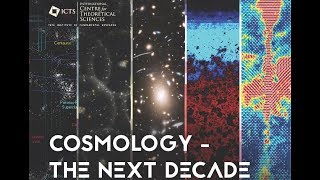
Cosmology with Large-Scale Structure - Lecture 1
Explore large-scale structure as a cosmological probe, covering statistical approaches, bias models, and testing methods. Learn how LSS informs our understanding of the universe's composition and evolution.
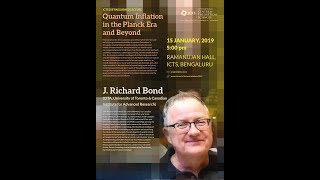
Quantum Inflation in the Planck Era and Beyond by J. Richard Bond
Explore quantum fluctuations in the early universe, cosmic microwave background data, and the quest for physics beyond the standard model of cosmology through cutting-edge experiments and observations.
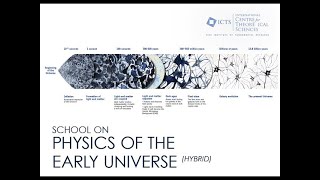
Cosmological Perturbation Theory - Lecture 1
Explore cosmological perturbation theory, from the universe's history to advanced concepts like scalar, vector, and tensor perturbations, Fourier transforms, and power spectra. Gain insights into cosmic microwave background and general relativity.
X-ray and Microwave Cosmology: Synergy and Competition - Lecture 1
Explore X-ray and microwave cosmology, focusing on CMB interactions with hot electrons and their impact on our understanding of the Universe. Learn about cutting-edge telescopes and spacecraft.
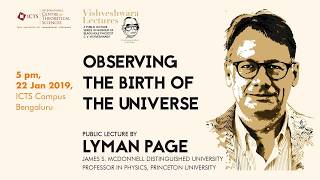
Observing the Birth of the Universe by Lyman Page
Explore the cosmic microwave background, its measurement techniques, and implications for understanding the early universe and gravitational waves in this comprehensive lecture by a Princeton physicist.
Seeing Through Space-Time - IPAM at UCLA
Explore inverse problems in spacetime structure, light observation sets, and cosmic microwave background, delving into mathematical challenges in gravitational wave astronomy.

Largest Cosmological Surveys and Big Data Science - Session 3
Explore cutting-edge cosmological surveys and big data techniques in this session, focusing on large-scale structures, CMB observations, and multi-messenger cosmology advancements.

Largest Cosmological Surveys and Big Data Science - Session 3
Explore cutting-edge cosmological research through hands-on projects and expert insights. Develop skills in analyzing large-scale structure surveys and multi-messenger cosmology data.

Largest Cosmological Surveys and Big Data Science - Session 1
Explore cutting-edge cosmological research through hands-on projects and expert insights. Gain valuable skills for analyzing large-scale structure surveys and cosmic microwave background data.
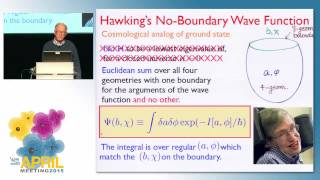
Quantum Gravity and Quantum Cosmology
Explore quantum cosmology, including theories of spacetime geometry and the universe's quantum state, to understand the origins of our classical universe and predict observable phenomena.
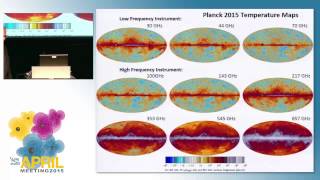
Status of Cosmological Parameters from the Cosmic Microwave Background
Explore recent advances in cosmology using data from Planck and suborbital experiments, focusing on cosmic microwave background and its implications for early Universe physics.
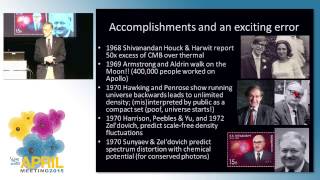
50 Years of the Cosmic Microwave Background - Discoveries and Future Prospects
Explore 50 years of cosmic microwave background research, from early discoveries to modern precision cosmology. Learn about key breakthroughs, current theories, and future prospects in this fascinating field of astrophysics.