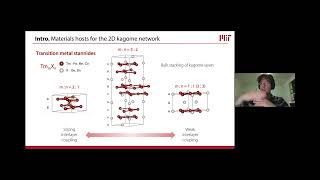
Electronic Topology and Correlations in Kagome Metals
Explore electronic topology and correlations in kagome metals, focusing on transition metal stannides and AV3Sb5 family. Discover unique phenomena arising from magnetism, spin-orbit coupling, and geometric frustration.
Linkage Disequilibrium - Introduction to Genomics Theory
Explore linkage disequilibrium in genomics, its importance, metrics, and applications. Learn about LD block structure, genetic distance, and how it reveals population history and selection pressures.
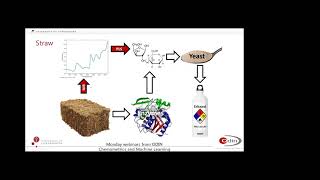
The Cage of Covariance
Explore strategies for handling correlated variables in data analysis, including orthogonalization techniques and predictive component methods.
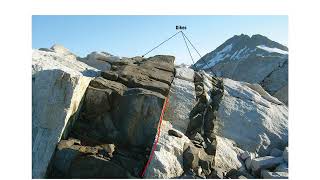
Geologic Time Lecture
Explore Earth's history through geologic principles, fossils, and dating methods. Uncover the secrets of our planet's past and learn to interpret the rock record.
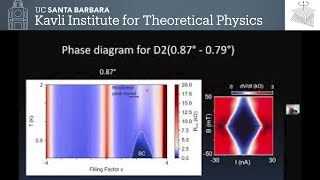
Superconductivity, Correlations and Chern Insulators in Twisted Bilayer Graphene - Stevan Nadj-Perge
Explore superconductivity, correlations, and Chern insulators in twisted bilayer graphene, focusing on recent developments and experimental findings in Moiré materials physics.
Quantum Materials Under Nonlinear Spotlight - Probing Symmetry and Quantum Geometry
Exploring quantum materials using nonlinear techniques to investigate symmetry and quantum geometry. Discusses recent advancements in probing topological properties and their interplay with symmetry and interactions.
Towards Fracton-Like Phases in Frustrated Magnets - Yong Baek Kim
Exploring the emergence of fracton-like phases in frustrated magnets, discussing recent developments in topology, symmetry, and interactions in condensed matter physics.
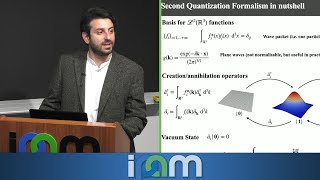
Field Theory Methods for Multiscale Description of Quantum Systems - IPAM at UCLA
Explore quantum field theory's role in multiscale phenomena, from fundamental interactions to condensed matter physics and biology. Learn about inequivalent Hilbert space representations and their applications.

Bivariate Analysis in R
Learn bivariate analysis techniques in R, including t-tests, ANOVA, chi-square, correlations, and linear regression. Gain practical skills for data science and statistics using RStudio.
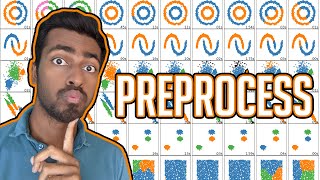
Preprocessing Data for Machine Learning - Deep Dive
Comprehensive guide to preprocessing data for logistic regression, covering standardization, encoding, data imbalance, correlation, multicollinearity, and missing data handling techniques.
Mind Over Data - The One Thing You Know and Machines Don't
Explore the intersection of human intuition and machine learning in causal reasoning, examining Bayesian networks, confounding factors, and real-world applications in AI and data analysis.
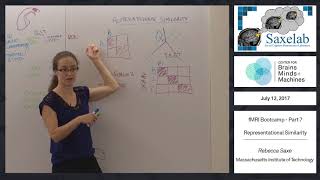
FMRI Bootcamp - Representational Similarity
Explore advanced fMRI analysis techniques, focusing on representational similarity and its applications in neuroimaging research.
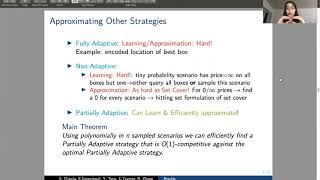
Pandora's Box with Correlations - Learning and Approximation
Explore learning and approximation techniques for correlated Pandora's Box problems, focusing on algorithmic approaches and theoretical insights.

Gatling Step-by-Step Masterclass - Correlation, Commands, and Assertions
Explore advanced Gatling features: correlation, assertions, command-line execution, and integration with CI/CD tools. Learn to optimize performance tests and use Gatling Enterprise for scalable testing.

Lies, Damned Lies, and Statistics
Explore common statistical fallacies and learn to recognize misleading data interpretations. Gain insights on correlation, bias, and significance to draw accurate conclusions from statistics.
Common Data Science Mistakes
Explore common pitfalls in data science, from data preparation to analysis. Learn to avoid mistakes in statistics, outlier handling, and visualization for more accurate insights and predictions.
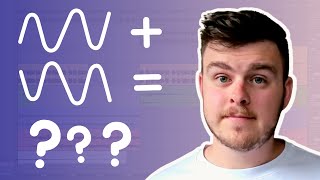
Understanding Phase Cancellation in Music Production and Audio Mixing
Master the concept of phase cancellation in audio production through practical examples of kick drums, basslines, instruments, and stereo synths to improve your mixing decisions.
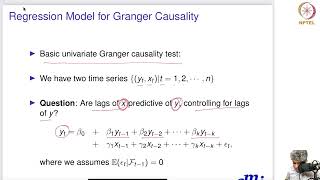
Granger Causal Model: Introduction and Application in Regression Analysis
Explore the Granger Causal model, an application of regression that attempts to address causality in data analysis beyond mere correlation.
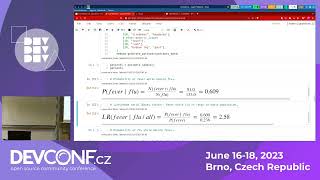
Correlation is Not Causation - Finding Patterns in Software Health Data
Explore patterns in Kubernetes/OpenShift alerting data to uncover relationships between software health metrics, applicable to various services and data science tasks.
Correlation in Boolean Functions - Quantum Computer Programming - Lesson 32
Explore the concept of correlation between Boolean functions in quantum computing, enhancing your understanding of this fundamental relationship in programming logic.
Common Data Science Mistakes and How to Avoid Them
Explore common statistical and data science pitfalls, learning to identify and avoid crucial errors in analysis and interpretation.