
All Security Is Good(s)- Design Guidance for Economics - L Jean Camp - USENIX Enigma Conference - 2020
Explore economic aspects of security adoption failures, incentive-aligned design, and the balance between information sharing and privacy, with real-world examples and research insights.

Compliance Does Not Equal Security (Except When It Might Be) - Rob Clark - USENIX Enigma Conference - 2018
Exploring IBM's innovative approach to cloud security, aligning with NIST guidelines to enhance DevSecOps, reduce complexity, and drive security features across platforms and services.

Threat Modeling Cloud Apps - What You Don't Know Will Hurt You
Explore threat modeling for cloud applications, focusing on AWS services, security controls, and potential risks. Learn to identify assets, adapt to cloud architectures, and address new security challenges.
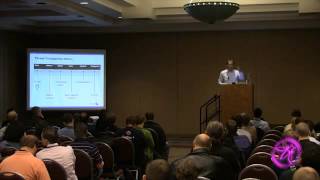
Simplifying Threat Modeling
Simplified approach to threat modeling: identify attack surfaces, visualize users as threats, illuminate assets and trust boundaries, postulate attacks, evaluate impact, and mitigate risks.

Risk Management for Teams That Get Things Done
Explore effective risk management strategies for growing organizations, focusing on peer review, communication, and automation to maintain high uptime standards without sacrificing velocity.
Cloud Security at Scale - Managing the Chaos
Explore the challenges and best practices for securely migrating large enterprises' legacy infrastructure to the cloud, with actionable insights for a successful transition.
Learning the Power of the -Not My Responsibility- Mindset
Discover how shifting security responsibility to the business can improve accountability, reduce friction, and prevent burnout among security engineers while enhancing overall company security.
Offensive Threat Models Against the Supply Chain
Applying adversarial threat models to supply chain systems, focusing on geo-political risks and industry-specific threats to build effective threat libraries and attack sequences for improved security.
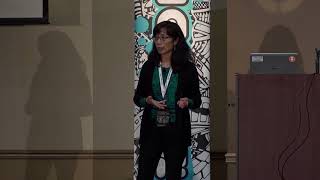
Information Security Risk Assessment - Lessons from the Front Lines
Practical insights on conducting Information Security Risk Assessments for software products, covering methods, tips, and lessons learned to identify and mitigate potential security risks.
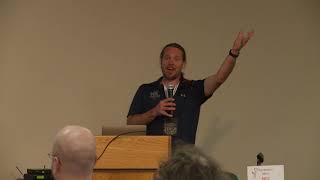
Cloud Ops MasterClass - Lessons Learned from Cloud Automation
Explore cloud operations at scale, multi-account models, and automated guardrails for security and compliance. Learn to leverage automation tools for efficient cloud management and collaboration.
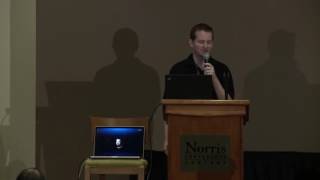
We Are the Cavalry - Why It Has to Be Us and Why Now
Exploring cybersecurity challenges in the Internet of Things era, emphasizing the need for proactive measures and collective responsibility to address emerging risks and protect human safety.
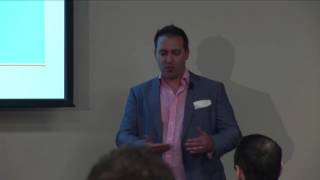
Fast Adversaries - Fast Countermeasures
Fast-paced hacking techniques and countermeasures: Learn about adversaries' evolving tools, tactics, and how to protect assets effectively. Explore rapid detection, patching, and risk management strategies.
Authz is the New Authn - Trust Elevation with UMA and OpenID Connect
Explore standards-based trust elevation in online identity using UMA and OpenID Connect for enhanced fraud mitigation and centralized authentication policies in web access management.
Designing Flexibility in Software to Increase Security
Explore designing flexible software architecture to enhance security, adapt to changes, and prevent vulnerabilities. Learn from real-world examples and gain practical tips for writing better, more adaptable code.
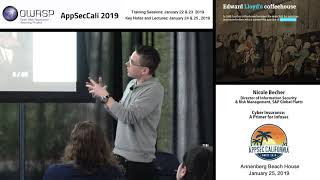
Cyber Insurance - A Primer for Infosec
Explore cyber insurance: market growth, policy coverage, underwriting challenges, and its relevance to information security professionals. Gain insights into this evolving field and its impact on risk management.
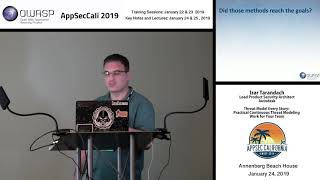
Threat Model Every Story - Practical Continuous Threat Modeling Work for Your Team
Explore continuous threat modeling for agile teams, focusing on collaborative methodologies and the PyTM open-source tool to enhance product security throughout development.

Scratching the Surface of Your CD - Continuous Delivery and Application Security Challenges
Explore strategies for integrating continuous security testing into fast-paced Continuous Delivery environments, addressing challenges and streamlining processes for modern development workflows.

Digital Disease - How Healthcare Cybersecurity Challenges Can Claim or Save Lives
Explore healthcare cybersecurity challenges and their impact on patient safety. Learn how integrating clinicians with software developers can address risks in an increasingly connected medical landscape.
Costs of Coding to Compliance
Explore the challenges of coding for compliance, learn strategies to address security gaps, and discover how to prioritize initiatives for better risk management in application security.
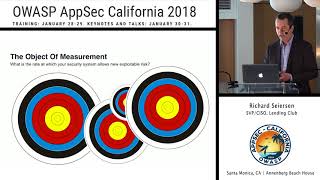
Prove It! - Confronting Security With Data
Explore data-driven methods to measure and improve security capabilities in rapidly scaling businesses, focusing on quantitative strategies and decision analysis techniques.
Handling of Security Requirements in Software Development Lifecycle
Explore a unified process for handling security requirements in large companies, focusing on SecurityRAT tool for automated requirement management and issue tracking integration.