Usernetes Gen2: Kubernetes in Rootless Docker with Multiple Nodes
Explore Usernetes Gen2: a Kubernetes distribution enabling multi-node rootless clusters using Docker. Learn about its advantages, implementation, and potential for production use.
Optimizing Container Registry Storage: Introducing Blob De-Duplication for Accurate Sizing and Cost
Explore blob de-duplication for accurate container registry storage sizing, improving cost optimization and usage visibility. Learn implementation details and deployment at scale.
Kata Containers - Security and Containers Without Compromise
Explore Kata Containers: an open-source runtime offering enhanced security through virtualization while maintaining container-like performance. Learn about its integration with Confidential Containers and real-world applications.
Securing Vulnerable Images with Copa - Hot Fix Techniques
Learn to secure container images instantly using Copa, addressing vulnerabilities without full rebuilds. Explore real-time scanning, patching, and filtering techniques for efficient image protection.
EROFS: An Image-based Filesystem for Containers
Explore EROFS filesystem for containers: overview, recent features, and future developments. Learn about its applications, design, and integration with various container technologies.
Continuous Delivery: The Missing Piece in the GitOps-OCI Security Puzzle
Explore the challenges of maintaining trust in containerized deployments using GitOps and OCI. Learn how Continuous Delivery offers a solution to bridge the gap between secure image signing and code-based storage.
Kubernetes as a Platform Framework - Journey from IaC Pipelines to K8s APIs
Explore platform engineering trends, tools, and methodologies for scaling cloud adoption. Learn to build modern platforms using OSS CNCF tools like Argo, Crossplane, and Gatekeeper to empower developers and streamline workflows.
Docker and GenAI - Deploying AI Applications
Learn to deploy AI applications using Docker, covering GenAI Stack, Compose Profiles, and containerization from scratch. Simplify dependency management and ensure cross-platform compatibility.
Tetragon Kubernetes Policy Filtering - Cloud Native Live
Explore Tetragon for Kubernetes policy filtering, enhancing security and observability in cloud-native environments through advanced system-level telemetry and policy enforcement.
Detection Engineering in Kubernetes Environments - Wrangling Security Data Out of Your Clusters
Explore Kubernetes security: log types, detection strategies, and real-world scenarios. Learn to identify malicious activities and risky configurations in both self-managed and CSP-managed clusters.

Avengers Assemble: Threat Modeling Kubernetes Clusters at Massive Scale
Explore threat modeling for Kubernetes clusters at scale, identifying potential security risks and countermeasures in microservices architectures to enhance protection against unauthorized access and resource misuse.
CSI Forensics - Unraveling Kubernetes Crime Scenes
Explore advanced DFIR techniques for container environments, focusing on Kubernetes. Learn to checkpoint compromised apps, conduct memory forensics, and understand the latest DFIR capabilities for effective incident response.
User Namespaces in Kubernetes - Security and Flexibility
Explore user namespaces in Kubernetes 1.30 beta, enhancing security and flexibility. Learn concepts, mitigate vulnerabilities, and run Docker inside containers without privileged mode.
Malicious Compliance Automated: Building Secure Containers and Obfuscating Content
Explore container image compression techniques, secure image building, and obfuscation methods to reduce attack surfaces and disrupt vulnerability scanners. Learn automation and Linux kernel interfaces for enhanced security.
Demystify Modern Signing: Keys, Certificates, and Envelopes
Explore practical aspects of cryptographic signing tools, covering key algorithms, signing envelopes, certificates, and verification, with a focus on identity-based signing using short-lived keys.
From Risks to Resilience: Leveraging CNCF Projects Against Kubernetes' OWASP Top 10
Explore strategies to mitigate OWASP Kubernetes Top Ten security risks using CNCF projects. Learn actionable insights to enhance the security of your Kubernetes deployments.
Container Images and Security 101: 5 Need to Know Facts
Explore 5 essential facts about container image formats, security tools, and best practices for confident application deployment in cloud and Kubernetes environments.
Threat Modelling: How to Improve Your Kubernetes Security Posture
Learn to enhance Kubernetes security through innovative threat modeling techniques, focusing on identifying risks in complex environments and improving overall security posture for development and SRE teams.
Drawing Lines in the Sand - Running Unprivileged eBPF in Kubernetes
Explore eBPF capabilities in Kubernetes, focusing on security permissions, Linux capabilities, and avoiding 'privileged:true'. Learn about fine-grained control and necessary privileges for different eBPF features.
Thinking Like a Threat Actor in Kubernetes Environments
Explore threat actor mindsets to enhance Kubernetes security. Learn proactive defense strategies and vulnerability assessment techniques for robust cloud-native environments.
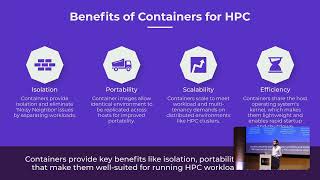
HPC with Containers on Ubuntu - Enroot and Pyxis Implementation
Learn to install and configure Enroot and Pyxis for running containerized applications on Slurm clusters, simplifying HPC workflows and enabling Ubuntu-based containers across diverse infrastructures.