Kubernetes 1.29 - Mandala: Key Features and Enhancements
Explore key enhancements in Kubernetes 1.29, including CSI node expansion, sidecar containers, taint-based eviction, and more. Gain insights into the latest features and improvements.
Glasskube - New Package Manager for Kubernetes
Explore Glasskube, a new package manager for Kubernetes, through a walkthrough and demo. Learn its features, installation process, and potential benefits for cluster management.
Creating a Kind Cluster with Kubernetes 1.30 Release Candidate
Create a Kind cluster with Kubernetes 1.30 RC, explore new features, and learn how to test upcoming releases. Gain insights into the latest enhancements and provide valuable feedback to the Kubernetes community.
Application Deployment to Kubernetes Using Acorn - Simplifying Kubernetes Workflows
Explore simplified Kubernetes app deployment using Acorn, addressing developer challenges and comparing alternative tools. Includes practical demo and insights into cloud-native computing.
Cut Your Kubernetes Costs in Half Using CAST AI
Optimize Kubernetes infrastructure and reduce costs with CAST AI's intelligent autoscaling and cost observability features for efficient resource management.
Kubernetes Community and Cloud Native Activities in China
Explore the thriving Kubernetes community in China, including contributions, maintainer roles, and insights from leaders. Gain an overview of recent cloud native events and their impact on the ecosystem.
Observability Supercharger: Building Traffic Topology Maps for Millions of Containers with Zero Code
Leveraging eBPF to build universal traffic topology maps for millions of containers, enabling distributed tracing and optimizing performance with minimal impact on production environments.
Developer-Friendly Kubernetes - No More CLI or YAML
Simplify Kubernetes management with Cyclops, an open-source tool eliminating CLI and YAML. Streamline workflows and boost productivity using this intuitive interface for resource management.
Demystifying Kubernetes DevOps with Open Source Lens IDE
Explore Lens, an open-source Kubernetes IDE simplifying cluster management with user-friendly GUI. Learn key features for effortless resource handling, monitoring, troubleshooting, and enhanced security across multiple environments.

Kubernetes v1.31 - What's New - Elli Release
Explore Kubernetes 1.31's key updates: cloud neutrality, AppArmor integration, custom debugging profiles, improved ingress connectivity, and enhanced pod management for more efficient deployments.
Kubernetes v1.30 - What's New and Improved
Explore Kubernetes 1.30's 45+ enhancements, including resource-based autoscaling, dynamic allocation, and user namespace management, to boost efficiency in container orchestration.
Kubernetes on Top of Mesos on Top of DCOS
Explore Kubernetes deployment on Mesos and DCOS, discussing system architecture, installation, and benefits. Learn about container orchestration, cluster management, and microservices implementation in enterprise environments.
Disaster Recovery in Kubernetes
Learn strategies for implementing robust disaster recovery solutions in Kubernetes environments, ensuring business continuity and data protection.
DevOps in Real Life, A How-To
Discover how Meltwater's platform team creates a "paved road" for developers, enabling them to embrace DevOps practices while maintaining productivity in autonomous teams.
Scaling Event-Driven Architecture Workloads with Kubernetes, KEDA and Karpenter
Master event-driven workload scaling using Kubernetes, KEDA, and Karpenter to handle high-traffic scenarios effectively. Learn strategies for efficient resource management and cost optimization in cloud environments.
Scaling Self-Hosted Platform Infrastructure with Nomad - A Beginner's Guide
Discover how to simplify CI/CD infrastructure deployment and maintenance using Nomad, focusing on self-hosted runners, Packer workflows, and HCP Terraform Agents for efficient container orchestration.
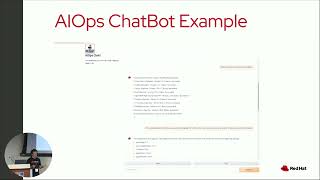
Deploying Large Language Models on Kubernetes Environments for Intelligent Applications
Master the deployment of Large Language Models on Kubernetes, enabling intelligent applications with chatbots for documentation interaction and operational tasks like anomaly detection.
The Future of Cloud-Native Application Development with Radius
Explore Microsoft's Radius project, an open-source platform streamlining cloud-native development by enabling seamless collaboration between developers and platform engineers while ensuring operational best practices.
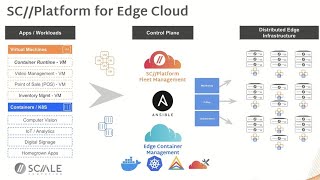
Container Management and Orchestration with Scale Computing Platform
Discover how to leverage SC//Platform's ecosystem for edge computing, using Ansible Collections and various cloud tools for seamless container management and application deployment across distributed environments.
Running Modern Workloads in Google Cloud with GKE Autopilot
Discover how GKE Autopilot simplifies Kubernetes management by eliminating infrastructure complexities, allowing teams to focus on workloads while Google handles the underlying components and security concerns.
Run Enterprise Workloads with Kubernetes on VMware Cloud Foundation
Master unified management of modern and traditional workloads through VMware Cloud Foundation's integrated platform, featuring automated deployment, governance controls, and seamless infrastructure integration for enterprise-scale operations.