BlindAI - An Open-source Solution for Privacy-friendly AI Deployment
Explore BlindAI, an open-source project leveraging Confidential Computing for privacy-friendly AI deployment. Learn about end-to-end encryption, ONNX model support, and real-world applications in document analysis and medical imaging.
Allowing an Intel TDX Module to Run Without SEAM - Development Techniques
Explore techniques to run modified Intel TDX modules without SEAM, balancing security and convenience in VM isolation. Learn about environment, methods, and options for development using Intel TDX.
AMD SEV-SNP Attestation - Establishing Trust in Guests
Explore AMD SEV-SNP attestation for confidential computing, including report generation, verification, and integration into Linux guest boot flow for enhanced security and trust.
Device Attestation in Hardware TEE-Based Confidential Computing
Explore device attestation in confidential computing, focusing on TEE VMs verifying device authenticity for secure workload transfer and acceleration.
Unifying Confidential Attestation - Strategies and Approaches
Explore confidential computing attestation, comparing SEV-ES, SEV-SNP, and Intel TDX. Learn strategies for unification, including secure vTPMs and the Confidential Containers Attestation Agent.
Confidential Computing and Privacy-Enhancing Technologies - The Landscape
Explore confidential computing and privacy-enhancing technologies for secure cloud adoption. Compare approaches, discuss open source's role, and see a demo using the Enarx project.
SEV-SNP Development Status Update - Current Progress and Future Plans
Explore AMD SEV-SNP's enhanced guest protection, upstream development progress, challenges, and future plans for features like live-migration and interrupt security.
Splitting pKVM Into Discrete, Mutually Exclusive Address Spaces for Enhanced Security
Explore pKVM's enhanced isolation techniques for confidential computing, including separate address spaces and VCPU isolation, to mitigate data leakage risks and reduce trust requirements in drivers.
Providing Confidential Guest Services with a Secure VM Service Module on AMD
Explore AMD's SEV-SNP architecture, VMPL, and SVSM for enhanced guest security in virtualization. Learn about Linux kernel support and open-source SVSM development for secure boot and live migration.
Confidential Computing in Azure Databricks
Explore Azure Databricks' integration with Confidential Computing, enhancing data security through hardware-based trusted execution environments and advanced VM features, with insights on future developments.
Decoding Trust in Confidential Computing: Foundations and Open Source Perspectives
Explore trust in confidential computing and open source, examining technical protocols, policy considerations, and human factors shaping the evolving landscape of secure and transparent computing.
Confidential Containers for GPU Compute - Incorporating LLMs in AI Lift-and-Shift Strategy
Explore confidential containers for GPU-accelerated AI, integrating LLMs and Kubernetes for secure, high-performance computing while maintaining data privacy in cloud-native environments.
Fortifying AI Security in Kubernetes with Confidential Containers - CoCo
Explore confidential computing for AI model protection in Kubernetes using Confidential Containers (CoCo). Learn how CoCo enhances security for AI/ML workloads and provides memory protection for foundational platforms.
The First Year of the Confidential Computing Consortium
Explore the Confidential Computing Consortium's first year, its impact on open source, and the evolution of software industry partnerships and nonprofit culture.
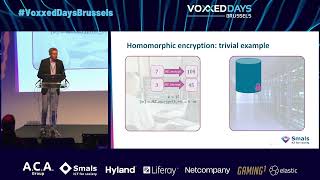
Introduction to Confidential Computing - Protecting Sensitive Workloads
Explore confidential computing techniques for protecting sensitive data during processing, focusing on encryption, secure enclaves, and hardware-based isolation in cloud environments.
Kata Containers 3.0 - Virtualization Optimized for Cloud Native Environments
Discover the latest evolution of Kata Containers 3.0, featuring the new Dragonball hypervisor and async rust runtime for enhanced container virtualization and cloud-native performance.
Zero Trust Architecture for Containers with Kata and Confidential Computing
Dive into advanced container security using Kata and Confidential Computing to implement zero-trust architecture, protect sensitive workloads, and achieve attestable pod integrity in Azure environments.

systemd and TPM2 Features in Linux - Current State and Future Developments
Explore systemd's TPM2 features for enhanced Linux security, including disk unlocking, PCR policies, and system credentials, with insights on future developments and implementation challenges.
Hardening Linux for Confidential Cloud Computing - Deep Dive and Results
Explore techniques for hardening Linux guest systems in confidential cloud computing environments, focusing on security mechanisms, kernel subsystem treatments, and results from fuzzing and code audits.
The Next Frontier: Exploring the Confidentiality of Kubernetes Control Planes
Explore confidential computing to enhance security of Kubernetes control planes, focusing on data in-use protection, implementation challenges, and practical approaches for multi-tenant clusters.
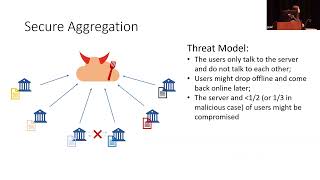
MicroFedML: Privacy Preserving Federated Learning for Small Weights
Privacy-preserving federated learning techniques for small weights, focusing on MicroFedML. Explores innovative approaches to enhance data privacy in machine learning collaborations.