Introduction to Online Experimentation and A-B Testing
Learn best practices for designing and evaluating A/B tests in online experimentation. Covers choosing metrics, avoiding errors, interpreting results, and comparing A/B to multivariate testing.

Bootstrapping the Right Way - Data Science Best Practices
Learn effective bootstrapping techniques for data analysis, including proper resampling, package selection, and considerations for parametric Bayesian approaches from a distinguished data scientist.

Health Stats IQ
Explore key statistical concepts in epidemiology, including confounding variables, log scales, standardization, confidence intervals, p-values, and risk measures.
Statistical Inference Concept Statistics for Beginners
Comprehensive introduction to statistical inference concepts, covering sampling distributions, confidence intervals, hypothesis testing, and more. Ideal for beginners seeking a solid foundation in statistical analysis.
Bootstrapping Statistics and Bootstrapping in R
Learn bootstrapping in statistics and R, covering resampling techniques, hypothesis testing, and confidence intervals. Gain practical skills with examples and downloadable datasets.
Univariate Analysis in Statistics and with R - Statistics for Beginners
Comprehensive introduction to univariate analysis in statistics, covering key concepts like t-distribution, hypothesis testing, and confidence intervals. Includes practical examples using R for data analysis and visualization.
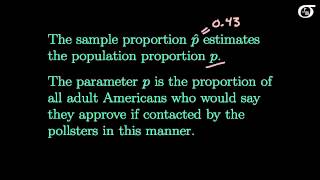
Confidence Intervals for a Population Mean
Learn to construct, interpret, and apply confidence intervals for population means using Z and t methods, exploring assumptions and sample size determination.

Inference for Two Population Means
Learn statistical inference techniques for comparing two population means, including pooled-variance and Welch t-tests, confidence intervals, and paired-difference procedures.
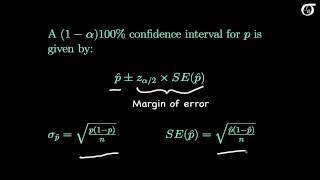
Inference for Proportions
Explore statistical inference for proportions, covering sampling distributions, confidence intervals, hypothesis tests, and comparisons between two populations.
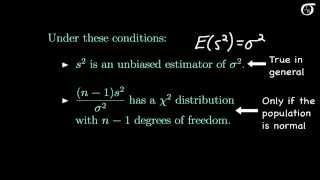
Inference for Variances
Explore statistical methods for analyzing variances, including confidence intervals and hypothesis tests for one and two variances, with a focus on normally distributed populations and robustness considerations.

Statistics Lecture - Confidence Interval for the Sample Mean, Population Standard Deviation Known
Learn to calculate confidence intervals for sample means with known population standard deviation, including margin of error and required sample size determination.
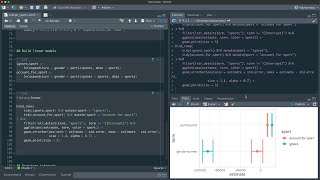
Handling Coefficients for Modeling Collegiate Sports Expenditures
Explore collegiate sports expenditures using linear modeling and tidymodels, focusing on handling coefficients and intervals for insightful analysis of financial patterns.
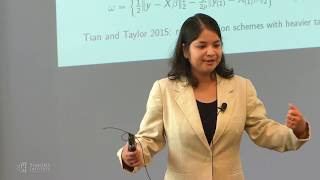
Recent Development in Selective Inference II
Explore advanced selective inference techniques, including randomized approaches, computational challenges, and approximate methods for statistical analysis in adaptive data settings.
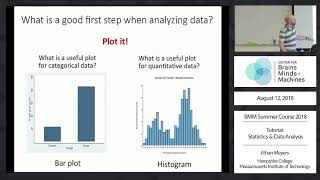
Statistics and Data Analysis
Learn essential statistics and data analysis concepts, including distributions, visualization techniques, correlation, regression, and hypothesis testing, to enhance your data interpretation skills.
Statistics Tutorial - T Distribution and Hypothesis Testing
Learn to calculate and interpret T distributions, use T tables, understand degrees of freedom, and perform hypothesis testing with independent and dependent samples in this comprehensive statistics tutorial.
Statistics Tutorial 4: Z Scores and Confidence Intervals
Explore probability, normal distributions, sample error, Central Limit Theorem, Z scores, and confidence intervals with Python code examples for practical application.
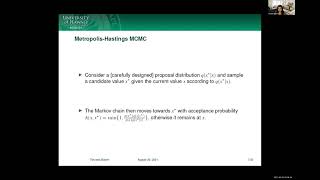
Farzana Nasrin - Random Persistence Diagram Generator
Explore a method for generating random persistence diagrams using parametric models and Markov chain Monte Carlo algorithms, with applications in material science and topology.

Finding Confidence Intervals for the Population Proportion
Learn to calculate and interpret confidence intervals for population proportions, enhancing your statistical analysis skills for real-world data interpretation.
Confidence Interval for the Sample Mean, Population Std Dev - Unknown
Learn to estimate population mean using sample data when population standard deviation is unknown, including t-distribution and confidence intervals.

Statistics Lecture - Confidence Intervals for Variance and Std Dev - Chi-Squared Distribution
Learn to calculate confidence intervals for variance and standard deviation using the Chi-Squared distribution, enhancing your statistical analysis skills.

Statistical Inference
Comprehensive exploration of statistical inference, covering estimation techniques, hypothesis testing, and advanced concepts for in-depth understanding of statistical analysis methods.