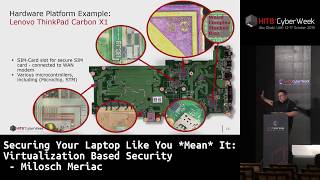
Securing Your Laptop Like You Mean It
Comprehensive guide to advanced laptop security, covering hardware virtualization, secure boot, and protection against sophisticated physical attacks. Practical tips for privacy-conscious users and security professionals.
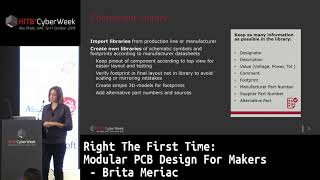
Right The First Time - Modular PCB Design For Makers
Step-by-step guide to designing custom embedded microcontroller PCBs. Learn modular design, component selection, schematic creation, and PCB layout for successful prototyping and small-scale manufacturing.
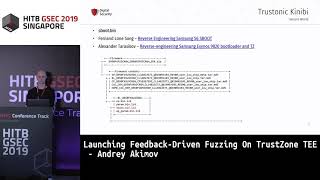
Launching Feedback-Driven Fuzzing on TrustZone TEE
Exploring TrustZone vulnerabilities in Samsung Galaxy smartphones using feedback-driven fuzzing on Trustonic trustlets, revealing potential security breaches in ARM's hardware isolation technology.
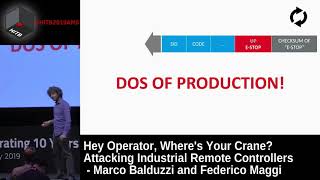
Attacking Industrial Remote Controllers
Exploring vulnerabilities in industrial RF remote controllers, revealing security flaws and potential attacks. Includes demos, findings, and recommendations for improving safety in IIoT applications.
ModJack - Hijacking the MacOS Kernel
Explore a userspace logic bug chain for kernel privilege escalation on macOS, bypassing security measures and loading unsigned kernel extensions. Learn about module hijacking and mitigation techniques.
Reversing Cryptographic Primitives Using Quantum Computing
Explore quantum computing's impact on cryptography, including reversing cryptographic primitives using quantum circuits and real hardware implementations of P-Box, S-Box, CRC-8, and XOR functions.
Compiler Bugs and Bug Compilers
Explore compiler vulnerabilities and malicious modifications in GCC, from accidental bugs to intentional exploits. Learn about compiler stages, potential attack vectors, and strategies for detecting malicious alterations.
Improving Unicode Attacks With Deep Learning
Exploración de ataques Unicode mejorados con aprendizaje profundo, creando un diccionario de caracteres confundibles para desarrollar herramientas ofensivas sofisticadas y nuevos procedimientos de prueba de aplicaciones.
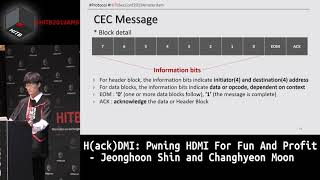
HDMI - Pwning HDMI For Fun And Profit
Explore HDMI vulnerabilities through protocol analysis, fuzzing techniques, and real-world exploitation, showcasing potential security risks in AV devices and demonstrating practical attack vectors.
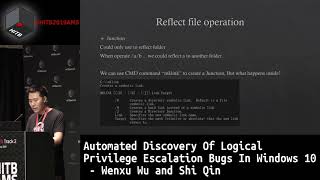
Automated Discovery of Logical Privilege Escalation Bugs in Windows 10
Automated discovery of logical privilege escalation vulnerabilities in Windows 10 services, using simulated user interactions and interface calls. Includes methodology, ALPC analysis, and system implementation.
Pwning Centrally-Controlled Smart Homes
Exploring vulnerabilities in centrally-controlled smart homes, demonstrating remote attacks on IoT devices like door locks, gates, and gas valves, and discussing analytical methods for smart home hacking.
SeasCoASA - Exploiting A Small Leak In A Great Ship
Exploiting vulnerabilities in Cisco ASA firewalls: New techniques to bypass protection mechanisms, heap exploitation strategies, and disclosure of a 0-day vulnerability affecting major ASA versions.
Attacking GSM - Alarms, Smart Homes, Smart Watches and More
Explore vulnerabilities in GSM devices like alarms and smartwatches. Learn number spoofing, brute-force attacks, and mobile operator exploits. Gain hands-on experience and develop security requirements for GSM systems.
For The Win - The Art of the Windows Kernel Fuzzing
Explore advanced Windows kernel fuzzing techniques, including a new method and custom tool for discovering vulnerabilities in kernel objects and their relationships.
Deobfuscate UEFI - BIOS Malware and Virtualized Packers
Practical approach to reverse engineering obfuscated BIOS/UEFI malware and virtualized packers, using tools and techniques for code simplification and threat analysis.
The Birdman - Hacking Cospas-Sarsat Satellites
Explore vulnerabilities in satellite-based rescue systems, focusing on the International Cospas-Sarsat Programme. Learn about eavesdropping, spoofing, and active attack techniques on satellite communications.
How to Dump, Parse, and Analyze i.MX Flash Memory Chips
Explore techniques for dumping, parsing, and analyzing i.MX flash memory chips, focusing on NXP i.MX architecture in embedded systems. Learn about custom flash memory management and tools for recovering filesystems.
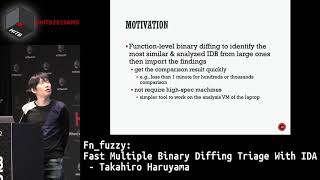
fn_fuzzy - Fast Multiple Binary Diffing Triage With IDA
Efficient binary diffing tool for IDA Pro, using fuzzy hashes to quickly compare and import function data from multiple IDBs, enhancing malware analysis productivity.

Hidden Agendas - Bypassing GSMA Recommendations on SS7 Networks
Explores vulnerabilities in SS7 networks, revealing how attackers can bypass security measures to intercept messages and steal money. Discusses the implications for 2G/3G users and highlights a critical flaw in current protection tools.
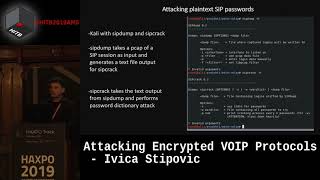
Attacking Encrypted VOIP Protocols
Explore techniques for intercepting and decrypting encrypted SIP sessions, and learn about a new tool for streamlined password recovery in VOIP protocols.
Ghost Tunnel 2.0 - Blue Ghost
Explore covert Bluetooth communication using Ghost Tunnel 2.0, enabling multiple secure tunnels for file transfer and command execution without detection or inspection by most protection systems.