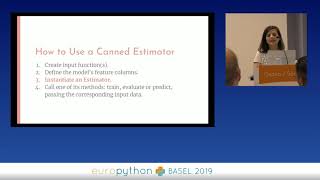
Tensorflow Estimators
Explore Tensorflow's simplified API, including Estimators, Datasets, and Tf-hub. Learn to design efficient neural networks using best practices and pre-trained modules.

Teaching Programming to the Next Generation
Explore effective strategies for teaching Python programming to young students aged 11-18, based on a successful case study in a UK secondary school.
Histogram-based Gradient Boosting in scikit-learn 0.21
Explore the new Histogram-based Gradient Boosting implementation in scikit-learn 0.21, offering competitive performance with XGBoost and LightGBM for efficient machine learning on tabular data.

What About Recommendation Engines
Explore recommendation engines: their importance, components, algorithms, and implementation in companies like Netflix and Amazon. Learn to build your own system using basic statistics and practical examples.
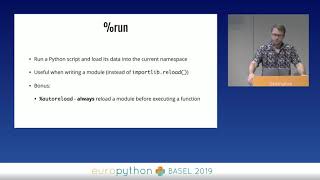
Wait, IPython Can Do That?
Discover advanced IPython features for enhanced Python development, including magic functions, profiling, debugging, and customization options to boost productivity and streamline workflows.
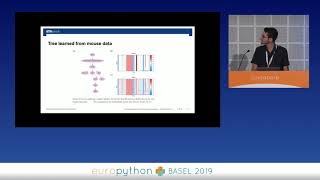
Bioinformatics Pipeline for Revealing Tumour Heterogeneity
Explore a Python-based bioinformatics pipeline for analyzing single-cell DNA sequencing data to reveal tumor heterogeneity and inform personalized cancer treatments.
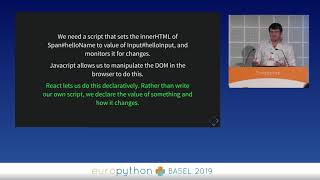
Dash - Interactive Data Visualization Web Apps with No Javascript
Explore interactive data visualization web apps using Dash, a Python framework that eliminates the need for JavaScript. Learn best practices, pitfalls, and when to transition to traditional web development.

Undefined Behavior is Not an Error
Explore the intricacies of Undefined Behavior in C++, distinguishing it from run-time errors and examining its implications for developers. Learn what compilers are permitted to do with UB code.
Go for DevOps, Go for Microservices, and What Go Is
Explore Go's role in DevOps and microservices, its strengths and limitations, and the reasons behind its success in these domains.
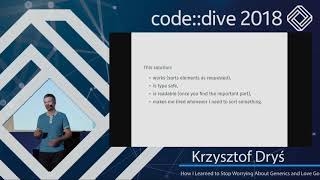
How I Learned to Stop Worrying About Generics and Love Go
Discover Go's unique features and advantages over Java/.Net, including concurrency primitives, code vendoring, and simplified reflection, while addressing common concerns like lack of generics.
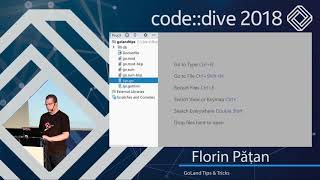
GoLand Tips & Tricks
Discover productivity-enhancing features and tricks in GoLand IDE for efficient Go development, from error detection to database integration and debugging tools.
Sphinx Won't Bite You! Documenting Python Code
Learn to effectively document Python code using reStructuredText and Sphinx. Discover best practices for creating clear, informative documentation that enhances code readability and saves development time.
Implementing a Domain Specific Embedded Language with Boost Proto
Explore implementing a domain-specific embedded language for solving diffusive problems using Boost Proto, with insights on designing efficient DSELs for discrete linear and bilinear forms.
Generic Programming in C++ - A Real-World Example
Explore the design and implementation of hex/unhex functions for Boost.Algorithm, examining key decisions and showcasing practical generic programming techniques in C++.
Metaparse - Compile-Time Parsing with Template Metaprogramming
Explore Metaparse, a C++ library for generating compile-time parsers using template metaprogramming. Learn how it differs from Boost.Spirit and Boost.Proto for parsing strings at compile-time.
What's New in Visual Studio IDE for C++ Developers
Explore new features in Visual Studio '11' for C++ developers, including semantic colorization, improved IntelliSense, code analysis, and integrated team collaboration tools.
Moving Boost to Git
Explore Git's advantages for Boost developers and users, from basic concepts to advanced topics, as presented by Beman Dawes at C++Now! 2012.
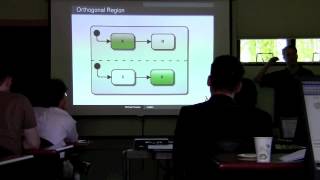
Ladon - A Distributed State-Machine Framework
Explore distributed state-machine framework Ladon, combining Boost libraries for reactive systems. Learn design, usage, and patterns for creating reliable, scalable solutions.
Odeint - Solving Ordinary Differential Equations in C++
Explore odeint, a C++ library for solving ordinary differential equations. Learn about its generic design, container independence, and versatility in scientific and engineering applications.

Optimizing Embedded Hard Real-Time Code in C++
Techniques for optimizing C++ in embedded hard real-time systems, improving performance without hardware changes. Explores efficient coding practices and C++ facilities for faster execution and better maintainability.
Future C++1x Proposals
Explore upcoming C++ features, including concepts, transactions, and concurrency enhancements, with insights on compiler implementation status and future language extensions.