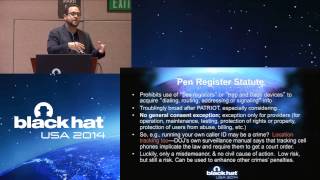
The Big Chill - Legal Landmines that Stifle Security Research and How to Disarm Them
Legal challenges and risks in security research: exploring laws, cases, and potential solutions to protect researchers while promoting cybersecurity advancements.
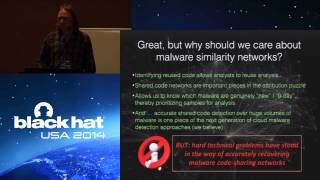
A Scalable, Ensemble Approach for Building and Visualizing Deep Code-Sharing Networks
Innovative ensemble approach for detecting code-sharing in malware, combining multiple analysis techniques to overcome obfuscation and scale to millions of samples. Includes visualization and open-source implementation.
Nobody is Listening to Your Phone Calls - Really - A Debate and Discussion on the NSA's Activities
Debate on NSA surveillance activities, exploring privacy concerns, legal implications, and national security arguments. Experts discuss the scope and impact of data collection programs on citizens' rights.
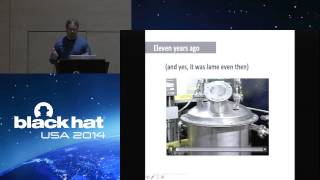
Miniaturization
Exploring advanced SCADA hacking techniques, focusing on miniaturization challenges in embedded devices and novel algorithms for stealthy attacks on industrial control systems.

ICSCorsair - How I Will PWN Your ERP Through 4-20 mA Current Loop
Explore vulnerabilities in industrial control systems, from low-level protocols to high-level applications. Learn about ICSCorsair, an open hardware tool for auditing and exploiting ICS networks across multiple layers.
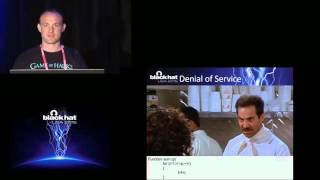
The Node.js Highway - Attacks Are At Full Throttle
Explore Node.js security issues and effective measures for secure application development. Learn about weak cryptography, testing, MongoDB, and see a practical demo.

The Little Pump Gauge That Could - Attacks Against Gas Pump Monitoring Systems
Explore attacks on gas pump monitoring systems, their vulnerabilities, and the motives behind them. Learn about honeypot deployment and prevention strategies.
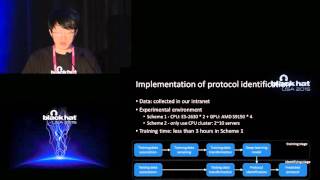
The Applications of Deep Learning on Traffic Identification
Explore deep learning for network traffic identification, covering neural networks, automatic feature learning, and anomaly detection. Improve protocol identification beyond traditional methods.
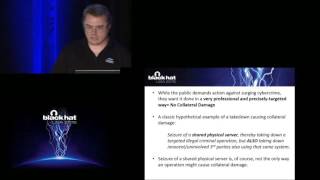
Targeted Takedowns - Minimizing Collateral Damage Using Passive DNS
Explore how Passive DNS can help investigators minimize collateral damage during cyber criminal takedowns, ensuring precise targeting and avoiding harm to innocent parties.
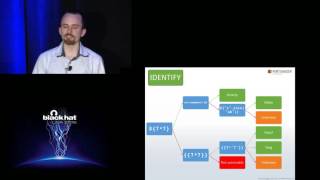
Server-Side Template Injection - RCE for the Modern Web App
Explore techniques to recognize and exploit template injection vulnerabilities, leading to remote code execution in web applications. Learn automated detection methods and application-specific exploits.
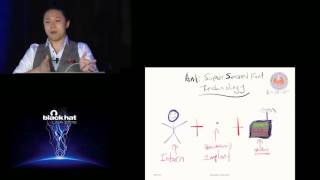
Emanate Like A Boss - Generalized Covert Data Exfiltration With Funtenna
Explore Funtenna, a software technique for covert data exfiltration through electromagnetic emanations in various computing devices, including its mechanisms, implementations, and implications for network security.
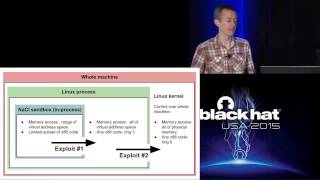
Exploiting the DRAM Rowhammer Bug to Gain Kernel Privileges
Explore the DRAM Rowhammer bug's security implications, from bit flips to kernel privilege escalation. Learn about exploit techniques, mitigations, and the physics behind this hardware vulnerability.
Repurposing OnionDuke - A Single Case Study Around Reusing Nation State Malware
Explore the process of reverse engineering and repurposing OnionDuke, a suspected Russian government malware, for use in other tools. Learn about malware analysis and ethical considerations in cybersecurity research.
TrustKit - Code Injection on iOS 8 for the Greater Good
Explore iOS 8's new code packaging rules and their impact on security. Learn about TrustKit, an open-source library for easy SSL public key pinning implementation in iOS apps without source code modification.

Bring Back the Honeypots
Explore modern honeypot techniques for enhanced network security. Learn about application traps, booby-trapped documents, and cloud-based deception to detect and prevent breaches effectively.

Big Game Hunting - The Peculiarities of Nation-State Malware Research
Explore nation-state malware research, focusing on attribution challenges and novel techniques for linking binaries. Gain insights into the complexities of threat intelligence and state-sponsored cyber espionage.

Stagefright - Scary Code in the Heart of Android
Exploring Android's Stagefright framework vulnerabilities, focusing on discovery techniques, OS internals, and security implications. Demonstrates proof-of-concept code and discusses mitigation strategies.
Dance Like Nobody's Watching - Encrypt Like Everyone Is - A Peek Inside the Black Hat Network
Explore the inner workings of the Black Hat network, one of the most hostile environments created. Learn about its planning, deployment, and maintenance, as well as the unique challenges it faces.

The Lifecycle of a Revolution
Exploring the evolution of the internet, from idealistic beginnings to current challenges, and examining future trends in digital security, privacy, and freedom.
Bringing a Machete to the Amazon
Explore AWS security challenges, vulnerabilities, and solutions. Learn assessment techniques and tools to protect your cloud infrastructure and applications.
Lights Off - The Darkness of the Smart Meters
Explore security vulnerabilities in smart power meters, including remote control capabilities and potential risks. Learn about device reverse engineering and its implications for connected home technology.