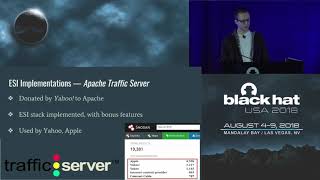
Edge Side Include Injection - Abusing Caching Servers into SSRF and Transparent Session Hijacking
Explore Edge Side Include injection, a web attack vector exploiting caching servers. Learn how this legacy technology can lead to SSRF and session hijacking vulnerabilities in modern web infrastructure.
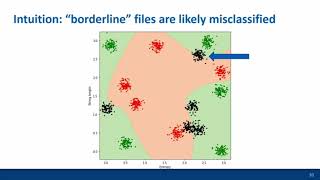
Measuring the Speed of the Red Queen's Race - Adaption and Evasion in Malware
Explore the dynamic evolution of malware and security measures using machine learning to quantify adaptation rates in the ongoing cybersecurity arms race.
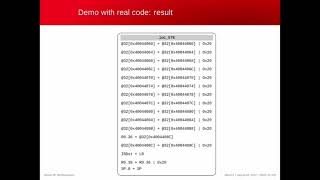
Miasm - Reverse Engineering Framework
Explore Miasm's reverse engineering capabilities, from basic framework to symbolic emulation and malware analysis tools. Learn disassembly, code emulation, and advanced techniques for tackling complex software.

Those Don't Matter! Effective Prioritization Through Exploit Prediction
Discover a machine learning classifier for data-driven vulnerability prioritization, enhancing risk management strategies and improving decision-making in cybersecurity.

iOS Jailbreak Internals - Userland Read-Only Memory Can Be Dangerous
Explora las vulnerabilidades en la memoria de solo lectura de iOS, analizando ataques DMA y explotando fallas en IOSurfaceAccelerator para lograr ejecución de código arbitrario y jailbreak.

A Hacker's Guide to Career Progression
Explore hacking career progression strategies, from risk-taking to problem-solving, mentorship, and giving back. Learn to navigate your journey based on technical preferences and salary aspirations.

Detecting Credential Compromise in AWS
Learn techniques to detect and mitigate credential compromise in AWS, a widespread concern for cloud-based companies. Explore various attacker motives and outcomes.

Qualitative Look at Autonomous Peer Communication's Impact on Organizational Phishing Detection
Explore how autonomous peer communication enhances organizational phishing detection through user education and marketing tools in information security awareness programs.

Why the World Must Take Notice of the Rising Asian Dark Web
Explore the rising Asian dark web markets, their usage patterns, and user motivations. Gain insights into new research findings across various Asian countries' dark web landscapes.

Finding Xori - Malware Analysis Triage with Automated Disassembly
Explore automated malware analysis using Xori, an open-source tool for efficient triage and disassembly. Learn to process high volumes of malware and improve analysis capabilities at scale.

Dissecting Non-Malicious Artifacts - One IP at a Time
Uncover the risks of security product interactions with online scanners, exploring information leaks, zero detection issues, and practical examples for improved cybersecurity.
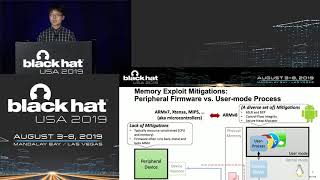
PeriScope - An Effective Probing and Fuzzing Framework for the Hardware-OS Boundary
Explore PeriScope, a Linux-based framework for analyzing device-driver interactions, enabling passive monitoring and active fuzzing to enhance hardware-OS boundary security.

The Cyber Shell Game - War, Information Warfare, and the Darkening Web
Explore ideological differences in cyber-conflict, major campaigns, and the Internet's shift from enabling freedoms to security and control. Examine threats and potential solutions for preserving the Internet's utility.

I'm Unique, Just Like You - Human Side-Channels and Their Implications for Security and Privacy
Explore unintentional human-generated identifiers in digital security, their uses in attack and defense, and countermeasures. Gain insights into "human side-channels" and their privacy implications.

Finding a Needle in an Encrypted Haystack
Discover new techniques to exploit NTLM authentication, including a critical zero-day vulnerability enabling domain-wide machine takeover, even with strict security configurations.

Intel VISA - Through the Rabbit Hole
Explore Intel's internal architecture, PCH devices, and security-sensitive data access. Learn to read signals from internal buses and discover hidden components within Intel chips.
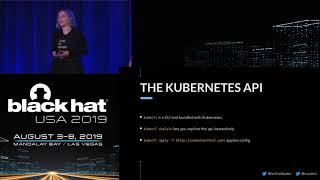
I'm Unique, Just Like You - Human Side-Channels and Their Implications for Security and Privacy
Explore human side-channels: unintentional digital identifiers from human behaviors, their implications for security and privacy, and potential countermeasures.
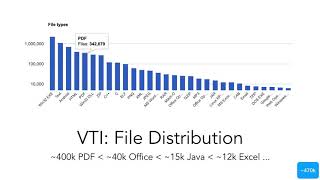
Worm Charming - Harvesting Malware Lures for Fun and Profit
Explore YARA rules for extracting malware samples from VirusTotal, learning techniques to identify attacker infrastructure and analyze real-world threats.
ACSploit - Exploit Algorithmic Complexity Vulnerabilities
Explore techniques to identify and exploit algorithmic complexity vulnerabilities, focusing on inefficient worst-case scenarios and their impact on program performance and security.

Minimum Failure - Stealing Bitcoins with Electromagnetic Fault Injection
Electromagnetic fault injection attack on Trezor Bitcoin wallet revealed, allowing seed extraction without physical tampering. Implications for embedded USB stacks and cryptocurrency security explored.

Hacking Your Non-Compete
Explore real cases of competing with former employers, protecting intellectual property, and navigating non-compete agreements. Learn from forensics and legal experts about common pitfalls and legal outcomes when changing jobs.