A Guide for Early Career Scientists
Comprehensive guide for students and early career scientists to maximize their AGU Fall Meeting experience, covering sessions, schedules, and support resources.
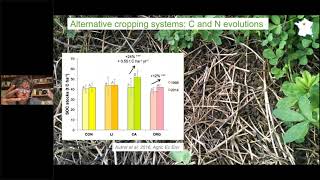
Soil Carbon Sequestration - When Does Increased Soil C Storage Yield Net Removal of Greenhouse Gases
Explore soil carbon sequestration's impact on greenhouse gases, featuring case studies from France and U.S. Midwest. Discuss organic agriculture, nitrogen leaching, and mitigation strategies for reducing agriculture's GHG impact.
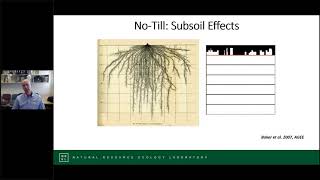
Soil Carbon Sequestration - How Does Tillage Affect Soil Carbon?
Explore tillage's impact on soil carbon with experts discussing conservation practices, long-term experiments, and debates surrounding carbon sequestration in agricultural lands.
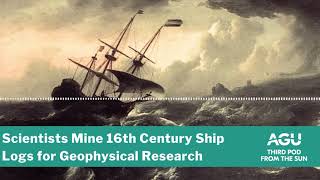
Scientists Mine 16th Century Ship Logs for Geophysical Research
Explore how historical ship logs from the Age of Sail provide crucial data for mapping Earth's magnetic field over the past 400 years, blending maritime history with modern geophysical research.

Conversations About Career Paths for Atmospheric Scientists in the Private Sector
Explore diverse private sector careers for atmospheric scientists, featuring insights from industry professionals on work environments, responsibilities, and transitioning from academia.

Connecting Close to Home - Engaging Federal Policymakers in Your Community
Learn effective strategies for engaging federal policymakers during August recess, including scheduling meetings, preparing for visits, and hosting policymakers at your institution to advocate for scientific priorities.
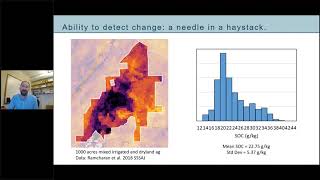
Measuring Soil C - Emerging Approaches
Explore emerging approaches for measuring soil carbon with experts from the Soil Health Institute and Woodwell Climate Research Center, focusing on widespread quantification and monitoring techniques.
Data & Software Sharing Guidance for Early Career Researchers - AGU Journal Requirements
Learn best practices for citing and sharing research data and software, focusing on AGU journal requirements and tools that simplify the process for early career researchers.
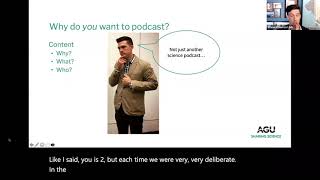
Storytelling via SciArt - Crafting an Audio Story
Explore expert techniques for crafting compelling audio stories in science, from podcasting to music, with insights on planning, recording, editing, and reaching diverse audiences.
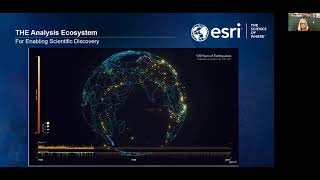
Earth Science Research Methods - Protecting Our Planet
Explore cutting-edge technologies and analytical methods in Earth sciences to address global challenges like climate change, pollution, and ecosystem degradation for the benefit of humanity.
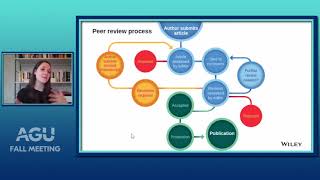
Get Your Work Published and Discovered
Comprehensive guide to navigating the scientific publishing process, from manuscript preparation to open access and research promotion.
Life Beyond Neptune - The Future of MC-ICP-MS
Explore advancements in multicollector inductively coupled mass spectrometry, including new technologies and applications, with a focus on improved sensitivity and precision in isotope ratio measurements.
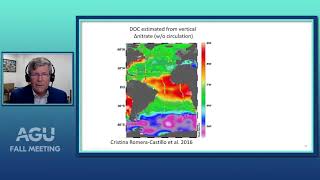
Oceanic Dissolved Organic Carbon - The World Tour
Explore the dynamics of oceanic dissolved organic carbon, a major carbon reservoir, through global observations and data analysis. Uncover sources, sinks, and controls across ocean basins.
The Southern Ocean’s Role in Glacial Cycles - Engine Not Caboose?
Explore the Southern Ocean's critical role in Earth's climate engine and glacial cycles through multiple proxies, focusing on its impact on atmospheric CO2 levels and ocean dynamics.
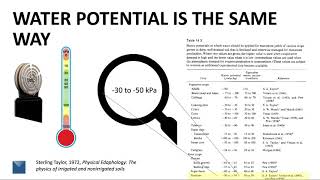
Why Water Content Can't Tell You Everything and Other Research-Ruining Mistakes
Discover common research pitfalls, best practices, and strategies for effective field data collection in soil moisture studies, emphasizing the importance of comprehensive measurements beyond water content.
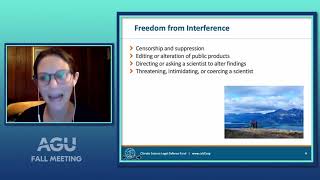
Strengths and Limitations of Scientific Integrity Policies
Explore scientific integrity policies in federal agencies, their strengths and limitations, and how to address censorship and political interference in scientific research.
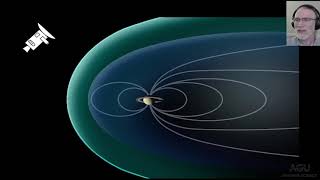
Sharing Science Up-Goer Five Challenge Presentations
Scientists present complex research using only simple words, challenging themselves to explain their work clearly and concisely while making science accessible and engaging for all audiences.
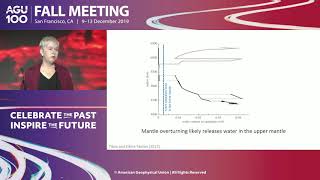
Evolution of the Differentiated Earth
Explore Earth's early evolution from accretion to habitability, covering magma oceans, differentiation, magnetic field formation, and the emergence of life-sustaining conditions.
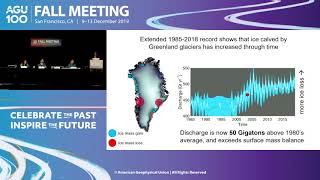
Ice in Motion - Decades of Satellite Images Illuminate Change
Satellite imagery reveals decades of ice changes, showcasing glacier retreat, Greenland melt, and Antarctic subsurface lakes. Experts discuss climate impacts on Earth's cryosphere using long-term observations.
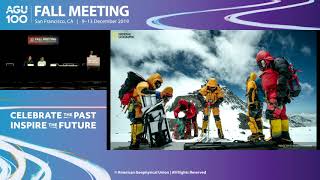
The Importance and Vulnerability of the World's Water Towers
Climate scientists discuss the critical role of mountain regions as "water towers" for global water supply, their vulnerability to climate change, and strategies for sustainable management.
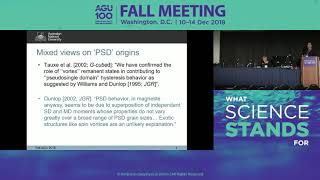
Grand Challenges in Rock and Paleomagnetism
Explore frontiers in rock magnetism, paleomagnetism, and geomagnetic field behavior with expert talks on atomic-scale properties, big data applications, and Earth's magnetic history.