
Prediction of Music Pairwise Preferences from Facial Expressions
Innovative approach to predict music preferences using facial expressions, outperforming traditional methods. Explores personality influences and adapts models accordingly, balancing accuracy with privacy considerations.
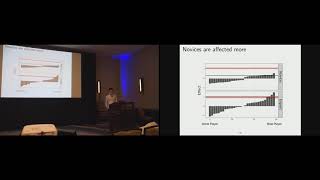
What Can AI Do for Me - Evaluating Machine Learning Interpretations in Cooperative Play
Evaluating machine learning interpretations in cooperative play, focusing on improving human performance through AI assistance in a question-answering task. Explores different interpretation methods and their impact.
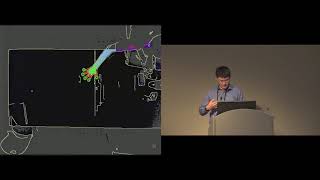
On-World Computing
Exploring on-world computing: bridging digital and physical realms through innovative interfaces, projected touchscreens, and augmented reality for seamless interaction with digital content in everyday environments.
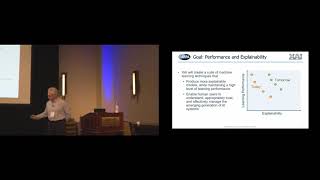
DARPA's Explainable Artificial Intelligence - XAI Program
Explore DARPA's Explainable AI program, its goals, strategies, and applications in machine learning, autonomy, and deep learning. Gain insights into the future of transparent AI systems.
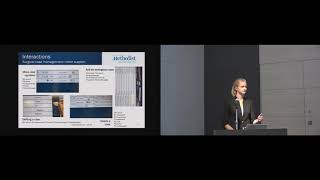
Welcome OnBoard - An Interactive Large Surface Designed for Teamwork and Flexibility in Surgical Flow Management
Interactive large surface for flexible surgical flow management, supporting teamwork through real-time data, customizable interactions, and collaborative features to enhance efficiency and patient care in operating rooms.
LeviCursor - Dexterous Interaction with a Levitating Object
Innovative method for controlling levitating particles in 3D with high precision and agility, enabling smooth movement and interactive applications. Includes optimization techniques and user study results.
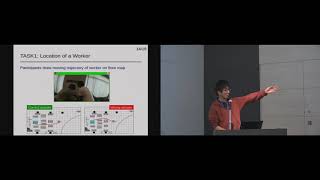
Browsing Group First-Person Videos with 3D Visualization
Innovative 3D visualization interface for analyzing group activities from first-person videos, enhancing understanding of spatial relationships and collaborative dynamics in complex workspaces.
Performance Benefits of High-Fidelity Passive Haptic Feedback in Virtual Reality Training
Explores benefits of using real golf clubs for haptic feedback in VR training, showing improved performance and user preference over controllers in a putting task study.
Multiplanes - Assisted Freehand VR Sketching
Innovative VR drawing system combining freehand flexibility with 3D accuracy. Utilizes snapping planes, beautification, and geometric relationships to enhance spatial sketching and overcome depth perception challenges.
Effects of VE Transition Techniques on Presence, Illusion of Virtual Body Ownership, Efficiency, and Naturalness
Exploring virtual environment transition techniques' impact on presence, body ownership, efficiency, and naturalness in VR, with surprising findings for researchers and game designers.
IMRCE - A Unity Toolkit for Virtual Co-Presence
Explore IMRCE, a Unity toolkit for creating mixed reality collaborative environments. Learn about its design, implementation, and evaluation for rapid prototyping of virtual co-presence systems.
Injecting Nonverbal Mimicry with Hybrid Avatar-Agent Technologies - A Naïve Approach
Exploring nonverbal mimicry in virtual interactions using hybrid avatar-agent technology, with insights on its potential impact on communication and social dynamics.
Evaluating the Effects of Feedback Type on Older Adults' Performance in Mid-Air Pointing and Target Selection
Investigates feedback types for improving older adults' mid-air pointing and target selection performance, revealing visual-audio combination's effectiveness and target location's significance in gesture-based interfaces.
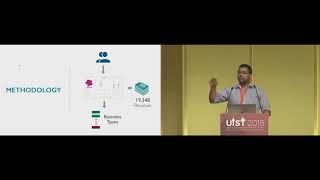
The Exploratory Labeling Assistant - Mixed-Initiative Label Curation with Large Document Collections
Innovative visual data analysis method integrating human-driven label ideation with machine-driven recommendations for efficient categorization of large document collections.
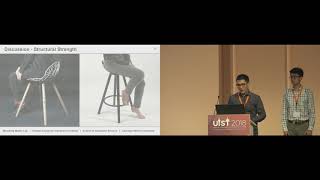
4DMesh - 4D Printing Morphing Non-Developable Mesh Surfaces
Innovative 4D printing technique for morphing flat sheets into complex 3D surfaces, combining thermoplastic actuators and geometric algorithms to create functional, non-developable structures with various applications.
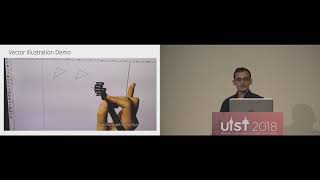
Unimanual Pen+Touch Input Using Variations of Precision Grip Postures
Explore innovative pen input techniques using precision grip postures for enhanced unimanual interaction in touch-based interfaces, with applications in document annotation and vector drawing.
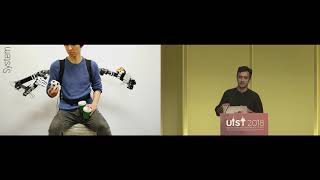
MetaArms - Body Remapping Using Feet-Controlled Artificial Arms
Explore wearable robotic arms controlled by feet, expanding human capabilities through body remapping. Discover design, user studies, and potential applications of this innovative technology.
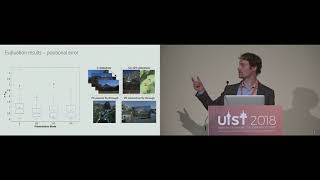
Immersive Trip Reports
Innovative approach to enhance travel photo presentations by aligning images with digital terrain models, creating immersive experiences that better convey spatial context and scenery in VR or video formats.
TrussFormer - 3D Printing Large Kinetic Structures
Explore TrussFormer, a system for 3D printing large-scale kinetic structures using PET bottles and printed connectors. Learn to design and fabricate moving objects, from walking robots to animatronic dinosaurs.
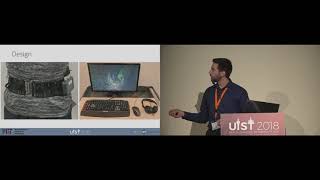
Effects of an Adaptive Modality Selection Algorithm for Navigation Systems
Explores an adaptive algorithm for selecting navigation modalities, considering task benefits, switching costs, and habituation. Improves user performance during multitasking scenarios.

Ubicoustics - Plug-and-Play Acoustic Activity Recognition
Real-time sound-based activity recognition system using professional sound effect libraries for data augmentation. Enables microphone-equipped devices to recognize activities with human-like accuracy.