
Physics and Society - Physics and Social Media
Exploring the impact of social media on physics communication, this talk discusses benefits and challenges for scientists engaging online, emphasizing public outreach and breaking stereotypes.
Engaging the Physics Community in Nuclear Threat Reduction
Exploring nuclear threat reduction strategies and the role of physicists in advocating for disarmament, emphasizing the urgency of addressing current global nuclear risks.
US Plans for New Nuclear Weapons
Explore US plans for new nuclear weapons, including rationale, design validation, and potential consequences of deploying a replacement warhead for silo-based missiles.
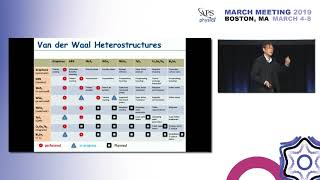
Stacking Atomic Layers One by One - Quest for New Materials and Physics
Explore atomic-scale heterostructures and emerging physics in 2D quantum materials. Learn about stacking techniques, high-mobility graphene, and novel phenomena like magic angles and quasicrystals.
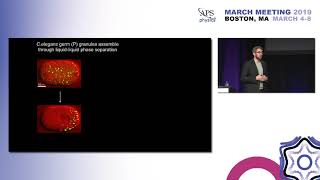
Intracellular Liquid Condensates - New Approaches to Understand and Control Biomolecular Phase Transitions in Living Cells
Exploring intracellular phase transitions and their role in organizing cellular contents, with focus on liquid-liquid phase separation and new approaches for spatiotemporal control.
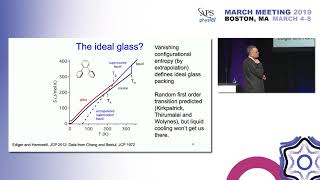
The Design and Growth of Ultra-Stable Glasses
Explores physical vapor deposition for creating ultra-stable glasses with controlled molecular packing, discussing dense structures, anisotropic ordering, and applications in organic electronics.
Federal Policy Making - Perspectives from Inside and Outside Government
Explore federal policy making through examples like microelectronics and quantum technology. Gain insights on stakeholder dynamics, S&T's role in addressing national needs, and effective strategies for influencing policy decisions.
Advice from a Scientist-Policy Maker on Giving Advice to a Policy Maker
Learn effective strategies for communicating scientific advice to policymakers from a scientist-legislator. Gain insights on maximizing impact, understanding policy complexities, and engaging in the political process.
Verification of Denuclearization
Exploring verification challenges and technologies for North Korea's denuclearization, addressing security concerns while ensuring effective monitoring of residual nuclear arsenals.
Machine Learning and the Real Space Renormalization Group
Explore the intersection of machine learning and renormalization group theory, focusing on real-space applications and information theory perspectives in physics.
Advances in Machine Learned Potentials for Molecular Dynamics Simulation
Explore machine learning advancements in molecular dynamics simulations, covering symmetries, training methods, and applications in hydrocarbon reactions and IR spectra analysis.
Opportunities for Infusing Physics into AI - ML Algorithms
Explore the fusion of physics and AI algorithms, covering neural programming, hierarchies, equations, and applications in autonomous systems and technology.
Neural Network Renormalization Group
Explore multi-scale entanglement renormalization and neural network renormalization group, connecting deep learning with quantum physics concepts for advanced computational techniques.
Learning Quantum with Generative Models
Explore generative models for quantum state learning, covering neural networks, RBMs, and applications to GHZ states and local Hamiltonians.
Predicting Energies from Electron Densities - Machine Learning for Reactive Molecular Dynamics
Explore machine learning techniques for predicting molecular energies from electron densities, with applications in reactive molecular dynamics and density functional theory.
Understanding Neutrino Interactions Using Deep Learning
Explore deep learning applications in neutrino physics, from classifying interactions to analyzing events, with insights on future developments in particle detection.
Learning Science with Machine Learning - Opening the Pandora Box
Explore how machine learning techniques can enhance scientific understanding and data analysis in cosmology, with insights on model interpretation and innovative approaches.
Tensor Networks and Neural Network States - From Chiral Topological Order to Image Classification
Explore neural networks in quantum physics and image recognition, bridging manybody physics with machine learning for innovative applications in various fields.
From Reinforcement Learning to Spin Glasses - The Many Surprises in Quantum State Preparation
Explore quantum state preparation, reinforcement learning, and spin glasses, uncovering surprising connections and insights in this cutting-edge physics research presentation.
Bridging Deep Learning and Many-Body Quantum Physics via Tensor Networks
Explore connections between deep learning and quantum physics through tensor networks, examining architectures, entanglement measures, and information flow in neural networks.
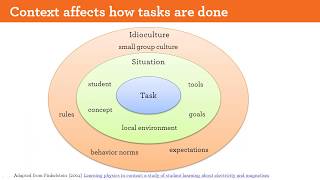
Teaching the Whole Physics Student
Practical strategies for integrating career-relevant skills into physics education, supporting students holistically as they pursue diverse 21st-century careers in industry and academia.