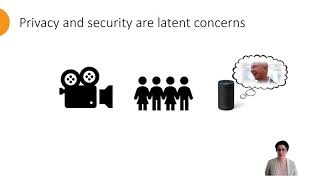
Privacy and Security Nutrition Labels to Inform IoT Consumers
Explore IoT device privacy and security labeling, addressing consumer concerns and empowering informed decisions through transparent, user-friendly information at the point of purchase.
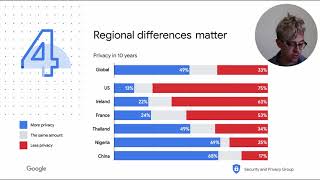
Privacy, Measurably, Isn't Dead
Explore global privacy attitudes through data from 90,000+ respondents across 25+ countries. Discover key findings on current and future privacy perceptions, regional variations, and actionable insights for privacy advocates.
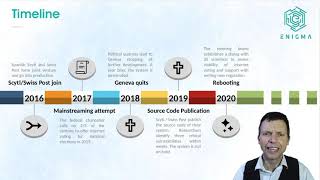
The Adventurous Tale of Online Voting in Switzerland
Explore Switzerland's 15-year journey with online voting, its challenges, security issues, and the crucial role of international researchers in shaping future regulations and implementation.

Designing Verifiable Health Solutions for Global Pandemic
Exploration of verifiable health solutions for pandemic response, addressing public safety and privacy concerns through attestation, test results, and vaccination history tracking.

Does Your Threat Model Consider Country and Culture? A Case Study of Brazilian Internet Banking Security to Show That It Should
Explores unique cybersecurity challenges in Brazilian internet banking, highlighting how regional factors shape threats and the need for localized threat models in global security assessments.
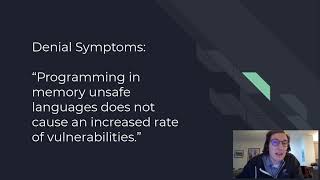
Quantifying Memory Unsafety and Reactions to It
Explore memory unsafety in C/C++, its prevalence in major projects, and developer reactions. Learn strategies for addressing this critical issue in modern secure development.

Detecting Fake 4G LTE Base Stations in Real Time
Explore techniques for detecting fake 4G LTE base stations in real-time using open-source software and affordable hardware. Learn about IMSI catchers, their prevalence, and strategies to limit their effectiveness.

What Shark Conservation Teaches Us about Emotionality and Effective Communication Strategies for Security and Privacy
Explore how shark conservation strategies can improve security and privacy communication, avoiding fear-based tactics for more effective public discourse and problem-solving approaches.
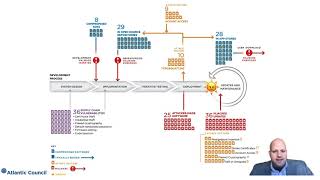
Breaking Trust – Shades of Crisis Across an Insecure Software Supply Chain
Explore software supply chain security threats, their impact, and potential solutions through analysis of 115 attacks and vulnerabilities from the past decade.
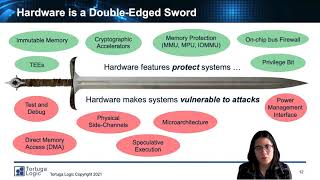
Hardware - A Double-Edged Sword for Security
Explore hardware's dual role in security: as a trust anchor and potential vulnerability. Learn about system-level threats, real-world examples, and promising solutions for detecting and preventing hardware vulnerabilities.

A Sound Mind in a Vulnerable Body - Practical Hardware Attacks on Deep Learning
Explores hardware vulnerabilities in deep learning systems, demonstrating how fault injection and side-channel attacks can compromise model accuracy and steal proprietary information, highlighting the need for robust ML-level defenses.

The Limits of Sandboxing and Next Steps
Exploring sandboxing limitations in Chrome security, discussing OS constraints, and introducing memory safety as a complementary approach to enhance software resilience.

Bringing Usable Crypto to 7 Million Developers
Insights on implementing client-side encryption for databases, covering challenges, solutions, and lessons learned from bringing authenticated encryption to a widely-used NoSQL database.

How Anonymous Is My Anonymized Data?
Explores data anonymization challenges, focusing on relationships between fields and external information that can compromise privacy. Discusses risk assessment and strategies for protecting sensitive data.

All Security Is Good(s)- Design Guidance for Economics - L Jean Camp - USENIX Enigma Conference - 2020
Explore economic aspects of security adoption failures, incentive-aligned design, and the balance between information sharing and privacy, with real-world examples and research insights.

The State of the Stalkerware - Eva Galperin - USENIX Enigma Conference - 2020
Eva Galperin discusses recent efforts to combat stalkerware, a covert surveillance tool often used in domestic abuse. She highlights initiatives by security companies, tech giants, and support organizations to protect victims.
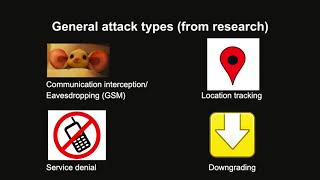
Pre-Authentication Messages as a Common Root Cause of Cell Network Attacks - Yomna Nasser - USENIX Enigma - 2020
Explore cell network vulnerabilities, focusing on pre-authentication message exploitation. Learn about IMSI catchers, spoofing attacks, and ongoing efforts to address these security challenges.

BeyondProd- The Origin of Cloud-Native Security at Google - Brandon Baker - USENIX Enigma - 2020
Exploring Google's BeyondProd: A cloud-native security model emphasizing service trust, workload isolation, and automated vulnerability management for microservices-based architectures.

The Abuse Uncertainty Principle, and Other Lessons Learned from Measuring Abuse on the Internet - David Freeman - USENIX Enigma Conference - 2020
Explore strategies for measuring and prioritizing online abuse, including user reports, human labeling, and automated systems. Learn about the "Abuse Uncertainty Principle" and its implications for detection and metrics.

Trustworthy Elections - Joey Dodds, Galois and Free & Fair - USENIX Enigma Conference - 2020
Exploring challenges in US election systems and innovative solutions for trustworthy voting technology, including ElectionGuard and SSITH projects.

Convincing the Loser - Securing Elections Against Modern Threats - Ben Adida - USENIX Enigma - 2019
Explore modern voting system security, from settled practices to ongoing debates. Learn about audits, online voting, accessibility, and the mission of democracy in this informative talk.