AI, Consciousness, Computation, and Physical Law
Exploring the intersection of AI, consciousness, and physics, Sir Roger Penrose challenges computational theories of mind and proposes a quantum-based model of consciousness.
Computing Meaning from Conceptual Structures in Integrated Information Theory
Explores computing compositional meaning in Integrated Information Theory using category theory and distributional semantics, addressing the role of meaning in conscious experience.
Consciousness, Metacausation and Metadynamism
Exploring consciousness through pre-reflective auto-sensitivity, metacausation, and metadynamism. Proposes a radical view of consciousness as a property of physical processes involving direct causal sensitivity to inner causation.
Moving Beyond Integration and Differentiation in Measures of Neural Dynamics
Explores new mathematical approaches to measure neural complexity, introducing O-information and a formalism for decomposing information dynamics, advancing understanding of conscious states.
Information Cohomology and Probabilistic Topos for Consciousness Modeling - From Elementary Perception to Machine Learning
Explores consciousness through information theory and algebraic topology, proposing a monadic-panpsychic framework and synthesizing major consciousness models within a formal Gestalt theory.
Why Current AI and Neuroscience Fail to Explain Ancient Forms of Spatial Reasoning
Exploring limitations of AI and neuroscience in replicating spatial reasoning and mathematical consciousness, emphasizing evolutionary origins and diverse cognitive phenomena across species.
Consciousness as We Know It - A View from Biology
Exploring biological consciousness through evolutionary approach, focusing on unlimited associative learning as a marker for minimal consciousness in living beings.
A Theoretical Computer Science Perspective on Consciousness
Explore the Conscious Turing Machine model and its insights into consciousness phenomena, including blindsight, inattentional blindness, and free will.
Autodiagnosis and the Dynamical Emergence Theory of Basic Consciousness
Explores the Dynamical Emergence Theory of consciousness, proposing that basic awareness arises from a system's ability to intrinsically discern its own states through dynamic autodiagnosis.

Choosing a JavaScript Framework
Comparison of six popular front-end JavaScript frameworks, exploring their development strategies, philosophies, and key evaluators to aid in making informed technical and business decisions.

Bringing Beacons to the Windows Platform
Explore Bluetooth LE beacons for Windows apps: learn about iBeacon, Eddystone, and how to add physical context to your applications using beacon technology on the Windows platform.
Becoming a Social Developer
Learn strategies for introverted developers to build professional networks, enhance skills, and advance careers while staying true to themselves.
Talk to Your Microservice Via a Chat Bot, Not UI
Explore chat-bot design for microservices: advantages, challenges, and solutions. Learn why this approach can be more convenient for users and developers than traditional web interfaces.

What Every Node.js Developer Needs to Know About Elixir
Discover Elixir: A versatile, safe alternative to Node.js for server-side development. Learn its benefits, including expressive syntax, massive concurrency, and fault-tolerance.
A High-Performance Solution to Microservices UI Composition
Explore a high-performance approach to UI composition in microservices, featuring real-world insights from Autoscout24's AWS migration. Learn strategies for autonomy, performance, consistency, and testing in distributed front-end architectures.
REPL Driven Development, Scrum, and the Wright Brothers
Explore REPL-driven development, Scrum, and their historical roots. Learn techniques to write code faster and better, with a focus on F# in Visual Studio 2015.
Yesterday's Technology is Dead, Today's is on Life Support
Explore the rapid evolution of technology, its impact on our lives, and the constant cycle of innovation and obsolescence. Gain insights into future tech trends and their societal implications.
Scaling Large Angular Apps
Discover effective techniques for scaling Angular apps in team environments, covering components, API calls, performance optimization, testing, and advanced features for large-scale applications.
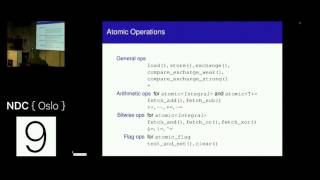
Safety - Off - How Not to Shoot Yourself in the Foot with C++ Atomics
Explore safe techniques for using C++ atomics in multithreaded code, including tools for synchronization, shared state access, scalability, and lock-freedom.
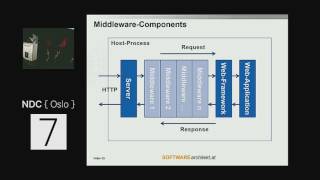
ASP.NET Core 1 - What Has Changed for MVC and Web API Developers
Explore changes in ASP.NET Core 1 for MVC and Web API developers, including framework consolidation, breaking changes, and new possibilities in MVC 6.
Windows IoT Core or Corny
Explore Windows 10 IoT Core on Raspberry Pi 2 for hardware prototyping, comparing it to Linux distributions and demonstrating basic functionality, performance, and development processes.