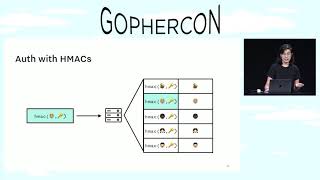
An Over Engineering Disaster with Macaroons
Explore the pitfalls of adopting macaroons for authorization in distributed systems, learning from a team's real-world experience and insights on when to use this technology.
Machine Learning on Go Code
Explore machine learning applications for Go code, including embeddings, code completion, and bug prediction. Discover how ML can enhance developer productivity and code quality.
Designing Software Within Constraints - Building to a Specification
Explore software design within constraints, balancing language-agnostic specs with Go's principles. Learn from MongoDB's Go driver example, covering design, performance, and usage patterns.
Becoming a Go Contributor
Discover how to become a Go contributor through small, consistent efforts. Learn practical steps to engage with the Go community and make meaningful contributions to the language.
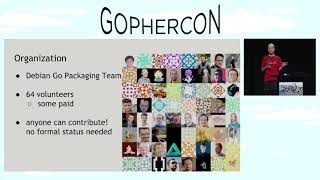
Go in Debian
Explore Go's integration in Debian, packaging processes, and large-scale deployment challenges. Learn best practices for upstream developers to facilitate Debian contributions.
The Importance of Beginners
Explore the impact of new Go programmers on the language's evolution, community growth, and innovation, emphasizing the value of fresh perspectives in shaping Go's future.
Adventures in Cgo Performance
Explore Cgo performance optimization techniques, interoperability challenges, and scaling solutions for high-performance Go applications, drawing from real-world experiences with Wallaroo.

Rethinking Classical Concurrency Patterns
Explore Go's lightweight goroutines and concurrency primitives, challenging traditional patterns and demonstrating alternative approaches for efficient concurrent programming.

The Scheduler Saga
Explore the inner workings of Go's scheduler, including goroutine management, network IO coordination, and memory management mechanisms for efficient program execution.
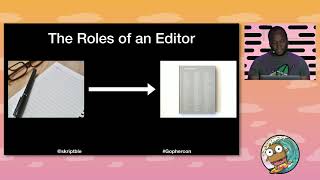
The Gopher's Manual of Style
Explore how publishing industry practices can enhance software development, focusing on structured creative writing principles and the role of editors in improving code quality.

Controlling the Go Runtime
Explore techniques to control the Go runtime, including garbage collection, goroutine management, and affinity. Learn new methods for better runtime control and their practical applications.
How Uber Goes
Discover Uber's journey with Go: from early adoption challenges to innovative solutions for maintaining a large, efficient codebase for microservices.
On the Path to Go 2
Explore Go 2's development journey, including error handling improvements, generics, and modules, with insights on the language's evolution and future direction.
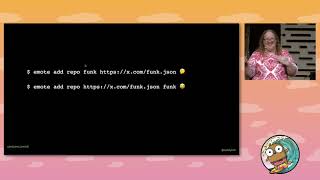
Design Command-Line Tools People Love
Design command-line tools that developers love: structure for reusability, leverage Go libraries, improve testability, and create user-friendly interfaces with natural commands and helpful outputs.
Contributing to the OS Package - How Deep Do You Go?
Explore the journey of contributing to Golang's os package, from identifying a bug to merging a fix, while learning about platform independence and Unix system calls.
Better x86 Assembly Generation from Go
Explore Go assembly and code generation tools for x86, focusing on the avo library. Learn to write efficient, maintainable assembly functions with automatic register allocation and Go control structures.
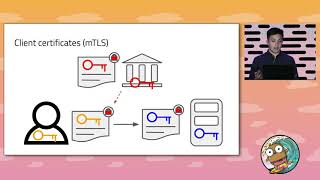
PKI for Gophers
Explore Go primitives for PKI, including certificate hierarchies, mTLS, hardware-backed keys, and public infrastructure. Dive into automated issuance, revocation, and custom PKI implementation.
Optimization for Number of Goroutines Using Feedback Control
Explore dynamic goroutine optimization using feedback control for improved speed and stability in concurrent Go applications, regardless of platform or load conditions.
Detecting Incompatible API Changes
Explore API compatibility in Go, learn to detect breaking changes, and discover techniques for future-proofing your code against API breakage.
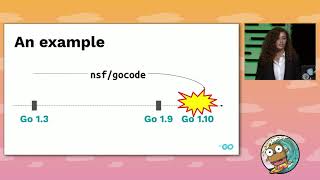
Go, Please Stop Breaking My Editor
Explore gopls, a new tool by the Go team to enhance the Go development experience, addressing issues with editor integration and providing a unified backend for Go editors.
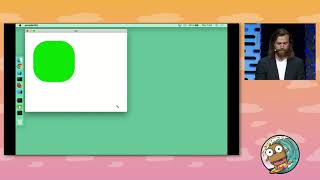
Portable, Immediate Mode GUI Programs for Mobile and Desktop in 100% Go
Explore Gio, a Go library for creating cross-platform GUI programs. Learn about its design, simplicity, portability, and performance advantages for Android, iOS, macOS, Linux, and Windows development.