
Best Practices for Production-Ready Docker Packaging
Learn Docker packaging best practices for production, focusing on security, automation, correctness, and optimization. Gain practical techniques for building secure, efficient, and debuggable images.

An ASGI Server from Scratch
Explore building an HTTP/1 ASGI server using asyncio, from TCP echo server to full implementation. Ideal for those familiar with asyncio and coroutines seeking practical application.
Serverless 2.0 with Cloudstate.io - Stateful Functions with Python
Explore next-generation serverless computing with Cloudstate, addressing challenges in distributed state management and long-lived stateful services for event-driven systems.
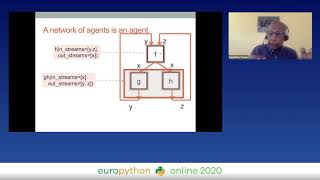
IoTPy - Python + Streams + Agents for Streaming Applications
Explore IoTPy for building concurrent, non-terminating streaming applications in Python, leveraging existing libraries for data analysis and distributed systems.
Effective Code Reviews
Discover the benefits and best practices of code reviews, enhancing product quality and team collaboration. Learn from real-world experiences to implement effective review processes in your organization.

Staying for the Community - Building Community in the Face of Covid-19
Explore strategies for building and maintaining tech communities during challenging times, focusing on resilience, adaptability, and mutual support in the face of global disruptions.
Practical Optimisations for Pandas
Discover techniques for optimizing Pandas code, including bottleneck identification, computational efficiency, and memory management for improved performance in data processing tasks.

Radio Astronomy with Python
Explore radio astronomy using Python, focusing on redshift studies, galaxy distribution analysis, and machine learning techniques for processing large astronomical datasets.
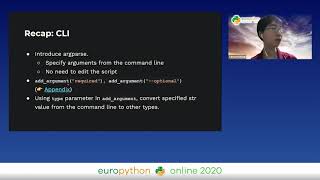
Bringing Your Python Script to More Users
Learn to transform Python scripts into user-friendly applications using CLI, GUI, and web interfaces. Explore techniques to make your code accessible and useful to a wider audience.
Django Clone From Scratch With Flask
Explore engineering Flask to mimic Django, diving into framework internals and development patterns. Learn to create a Django-like app with Flask, discussing benefits and challenges of both frameworks.
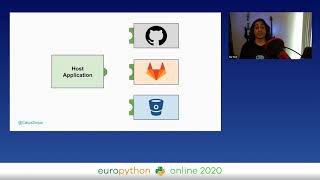
Pluggable Architecture
Explore pluggable architecture principles through custom plugin system design. Learn interface creation, behavior integration, and testing techniques to extend third-party library functionality.
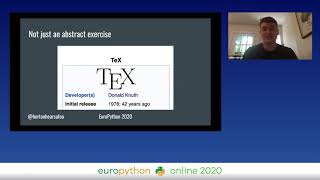
A Brief History of Jupyter Notebooks
Explore the evolution of Jupyter Notebooks, from early computational interfaces to modern collaborative tools. Discover key milestones, current ecosystem, and future developments in scientific programming environments.
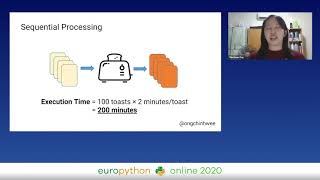
Speed Up Your Data Processing
Explore parallel and asynchronous programming techniques to optimize data processing pipelines, enhancing efficiency in data science workflows and overcoming common bottlenecks.
Taking Part in the Greatest Experiment in History
Explore innovative approaches to teaching Python to children, focusing on functions, modeling, and simulations. Discover curriculum development strategies and project-based learning techniques.
Train, Serve, Deploy - Story of a NLP Model ft. PyTorch, Docker, Uwsgi and Nginx
Learn to build, train, and deploy NLP translation models using PyTorch, Flask, Docker, uWSGI, and Nginx. Covers data preprocessing, model training, web app creation, containerization, and production serving techniques.
Roadmap to an Open Source Artificial Pancreas & Diabetes Monitoring with Flask
Explore open-source solutions for continuous glucose monitoring in Type 1 Diabetes, including the artificial pancreas project and building a notifier for the Nightscout dashboard.
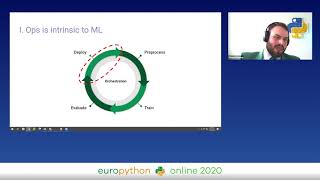
Painless Machine Learning in Production
Discover strategies for efficient machine learning deployment, covering infrastructure, tooling, and best practices for managing the ML lifecycle in production environments.
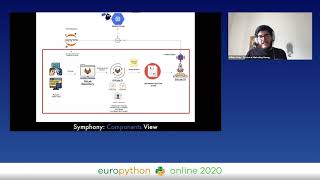
Deploy Your Machine Learning Bots Like a Boss with CI/CD
Learn to deploy machine learning chatbots using CI/CD, covering load balancing, testing, and model retraining. Gain practical insights for taking prototypes to production and iterating faster.
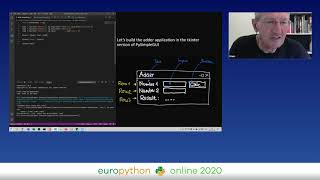
Attractive GUIs with PySimpleGUI
Learn to create attractive and functional GUIs with PySimpleGUI, bridging the gap between complex frameworks and limited design tools. Explore its design philosophy and practical applications.
Docker and Python - Making Them Play Nicely and Securely for Data Science and ML
Learn Docker best practices for data-intensive Python applications, covering image optimization, security, automation, and efficient deployment workflows in Data Science and Machine Learning contexts.
15 Things You Should Know About Spacy
Discover 15 key insights about spaCy, an open-source NLP library for Python. Learn its strengths, limitations, and practical applications for processing and understanding large text corpora.