Python Software Foundation Session
Explore the Python Software Foundation's role, activities, and future plans in supporting the global Python community through events, grants, and organizational initiatives.
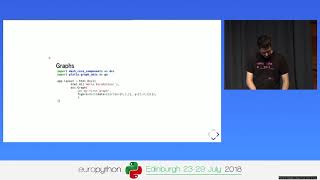
Easy Interactive Data Applications with Dash
Learn to create interactive dashboards and web data applications using Plotly Dash, a Python framework. Discover how to build a small interactive web app with Twitch API data, using only Python.
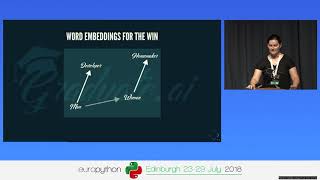
Trust Me, I'm a Data Scientist - Ethics for Builders of Data-Based Applications
Explore ethical pitfalls in data science through a practical example, covering algorithmic fairness, model interpretability, and handling minority classes in AI applications.
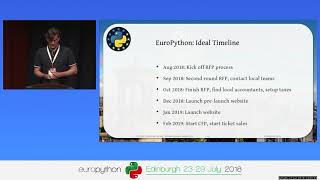
Help Us Build the Next Edition
Discover how to contribute to EuroPython's organization, learn about the workgroup model, and find opportunities to help shape the next conference edition.
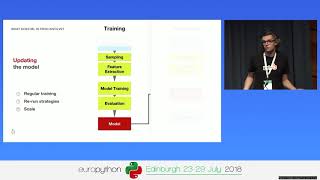
Productionizing Your ML Code Seamlessly
Learn to seamlessly transition ML code from experimental notebooks to production, focusing on development workflows, reliable deployment, and long-term maintenance for valuable insights and predictions.
Exploring the Python AST Ecosystem
Dive into Python's abstract syntax tree ecosystem, exploring tools for visualization, creation, and transformation. Learn practical applications in static analysis and metaprogramming for enhanced code manipulation.
A Tale of Refactoring
Explore a practical approach to refactoring large, complex functions using Python's dynamic features, improving code maintainability and performance through real-world examples.
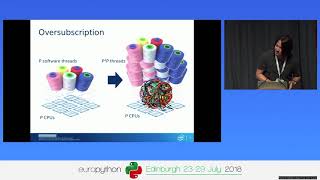
Addressing Multithreading and Multiprocessing in Transparent and Pythonic Ways
Explore advanced Python techniques for efficient multithreading and multiprocessing, including GIL management, static multiprocessing, and thread pool control for optimal performance on multi-core systems.
Python 3 - Ten Years Later
Explore Python 3's evolution over a decade, including language improvements, performance gains, and transition challenges. Learn about key updates and future directions for Python development.
System Testing with Pytest, Docker, and Flask
Learn to combine Pytest fixtures with Docker for high-level integration testing of microservices, and embed mock web services using Flask to control and verify system component interactions.
Creating Solid APIs
Discover best practices for creating developer-friendly APIs, covering documentation, standardization, authentication, versioning, and real-world examples from major platforms.
The Challenges of Maintaining a Popular Open-Source Project
Insight into maintaining popular open-source projects, discussing challenges, community support, and personal growth. Explores balancing responsibilities, setting expectations, and fostering a healthy FOSS ecosystem.
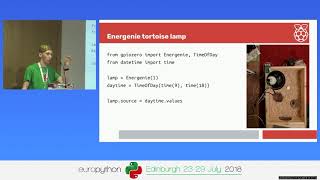
Programming Paradigms for Physical Computing and IoT
Explore multi-paradigm programming for GPIO devices on Raspberry Pi, from simple scripts to complex interactions, using Pythonic code for IoT and physical computing applications.
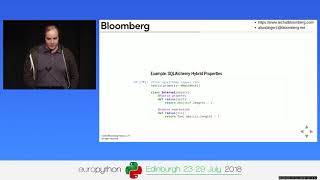
A Taxonomy of Decorators - A-E
Explore five categories of Python decorators: Argument Changing, Binding, Control Flow, Descriptive, and Execution. Learn their syntax, usage patterns, and practical applications in software development.
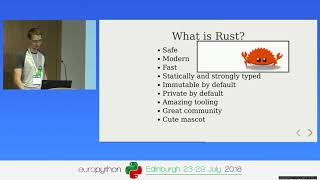
Rust and Python - Oxidize Your Snake
Explore integrating Rust with Python for faster, safer native modules. Learn about PyO3 library, compare it with alternatives, and see how to enhance Python's performance and concurrency.
Lies, Damned Lies, and Statistics
Explore common statistical fallacies and learn to recognize misleading data interpretations. Gain insights on correlation, bias, and significance to draw accurate conclusions from statistics.
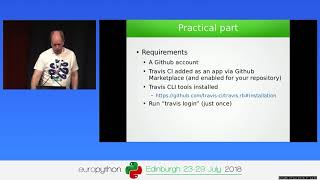
Automating Testing and Deployment with Github and Travis
Streamline open-source project maintenance by automating testing and deployment using Github and Travis. Learn to create an efficient release pipeline, reducing errors and simplifying the process.
How Async and Await Ended Up in Python
Explore the evolution of asynchronous programming in Python, from regular functions to async/await syntax. Learn about iterators, generators, and coroutines while discovering how to write efficient async code.
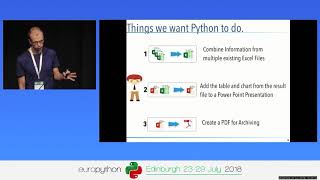
The Boring Python Office Talk - Automate Powerpoint, Excel, and PDF with Python
Discover Python's power to automate office tasks, from creating Excel reports and PowerPoint presentations to manipulating PDFs, enhancing productivity and reducing manual work.
Good Features Beat Algorithms
Explore feature engineering and selection techniques to improve machine learning model accuracy. Learn how to develop an ensemble for measuring feature importance in real-world datasets.
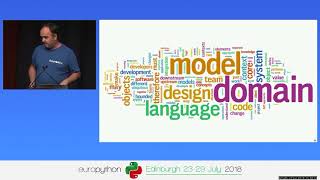
Domain Driven Design Patterns in Python
Explore Domain-Driven Design patterns in Python, learning to model complex domains and implement tactical patterns for robust, maintainable software in large-scale projects.