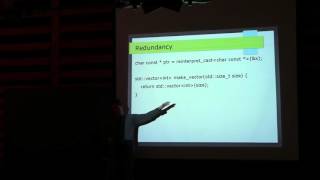
Type Deduction in C++14
Explore C++14 type deduction, its applications in library design, and best practices for balancing power with readability. Learn about auto, decltype, return type deduction, and their impact on modern C++ development.
Back to the Future
Exploring advanced C++ abstractions for multi-core and parallel computing, focusing on a heterogeneous, extensible future implementation that outperforms existing models like OpenMP and MPI.

New Build System for New C++
Explores the need for a new C++ build system to support package management, discussing design principles and seeking feedback on the proposed solution for cross-platform development challenges.
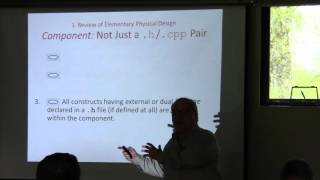
Large-Scale C++ - Advanced Levelization Techniques, Part I
Explore advanced levelization and insulation techniques for large-scale C++ systems. Learn to avoid inappropriate dependencies and optimize physical design for complex software projects.
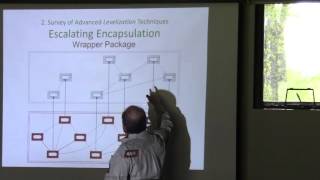
Large-Scale C++ - Advanced Levelization Techniques, Part II
Advanced techniques for managing dependencies in large-scale C++ projects, focusing on levelization and insulation methods to improve software architecture and maintainability. Practical examples demonstrate effective use of C++ language features.
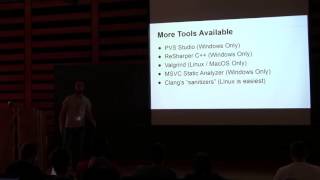
Thinking Portable - How and Why to Make Your C++ Cross Platform
Learn strategies for creating portable C++ code, exploring benefits like standards compliance, future-proofing, and wider tool availability while addressing challenges and providing practical guidelines.
The Price of Shared Pointers or Why Passing Them by Reference Can Be Useful
Explore the hidden costs of shared pointers in C++, including control object overhead and synchronization, and learn why passing them by reference can improve performance in critical scenarios.
SwitchAny - A Practical Exercise in Template Metaprogramming
Explore practical template metaprogramming in C++ with switchAny, a tool for type-based dispatching in Boost.Any. Learn advanced TMP techniques applicable to real-world scenarios.
Why in Heaven Is There No Dependency Management for C++
Explore the lack of dependency management in C++ and its implications, analyzing existing solutions and potential challenges for the language's future.

Boost.Compute - A Library for GPU - Parallel Computing
Explore Boost.Compute, a high-level API for GPU/parallel computing. Learn to write efficient C++ applications for GPUs, FPGAs, and multi-core CPUs using this portable, STL-like library.
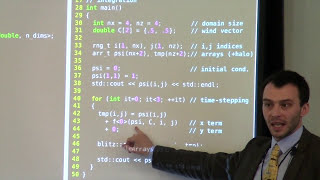
Two New C++ Libraries for Atmospheric Research
Explores development of C++ libraries for atmospheric research, discussing design, implementation, and use of various C++ libraries to achieve maintainability in scientific computing.
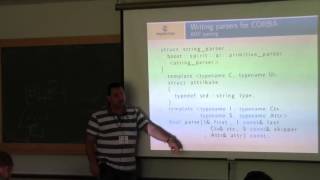
Developing EDSL's for Boost.Spirit
Explore Boost.Spirit for creating embedded domain-specific languages, focusing on parser and generator development using CORBA's GIOP as an example. Learn to handle alignment and endianness challenges.
Ranges for the Standard Library
Explore the future of C++ with Eric Niebler's keynote on Ranges, concept checking, and potential STL 2.0 features. Gain insights into new idioms and the evolving standard library.
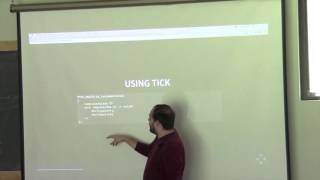
Modern Generic Programming Using the Tick and Fit Libraries
Explore modern C++ generic programming using Tick and Fit libraries for improved type requirements, clearer compile errors, and enhanced function overloading techniques.

Boostache Exposed - The Internals of Boost's Template Engine
Explore Boostache's architecture, including parser, compiler, virtual machine, and data model infrastructure. Learn techniques for implementing template engines and adapting to various data models in C++11.
Type-Safe Configuration Library
Explore a type-safe configuration library that uses compile-time checks, avoiding runtime errors. Learn about type-level tags, Boost.TypeIndex, and metaprogramming techniques for improved C++ configuration handling.
A Review of C++ 11/14 Only Boost Libraries - Fiber, AFIO, DI, and APIBind
Explore upcoming C++11/14-only Boost libraries: Fiber, AFIO, DI, and APIBind. Examine their design choices, C++11/14 feature usage, integration with other libraries, and potential contributions to C++ standardization.
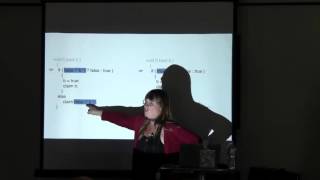
How We Reason About Procedural Programs
Explore fundamental principles and assumptions behind reasoning about procedural programs, examining how programmers achieve correctness and understand complex program behavior.
Big Projects, and CMake, and Git, Oh My!
Comprehensive guide to configuring Git and CMake for large-scale C++ projects, covering advanced techniques for dependency management, build optimization, and collaborative development.
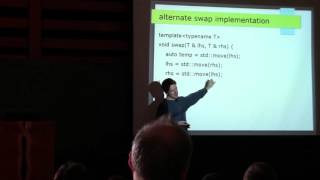
Functions Want To Be Free
Explore techniques for designing efficient interfaces, combining generic and object-oriented programming to simplify code, reduce duplication, and minimize bugs in C++ software development.
Lock-Free by Example - Towards an Interesting Lock-Free MPMC Queue
Explore lock-free programming challenges and solutions through the development of a complex multi-producer, multi-consumer queue, covering key concepts and practical implementations.