
Monads in Modern C++
Demystifying monads in C++23: Learn functional programming techniques to simplify code, reduce boilerplate, and create pure pipelines. Explore practical examples and recent developments in std::vector and std::optional.

Concurrency Approaches - Past, Present, and Future
Explore the evolution of concurrency approaches, analyzing their pros and cons, and discover a new model that promises safety, efficiency, structure, and ease of use in concurrent programming.
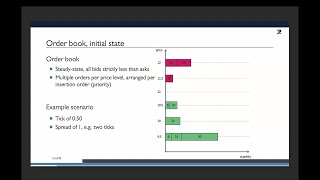
C++ Electronic Trading for Cpp Programmers
Explore electronic trading for C++ developers, covering market dynamics, low-latency strategies, and optimized programming techniques for high-frequency trading systems.
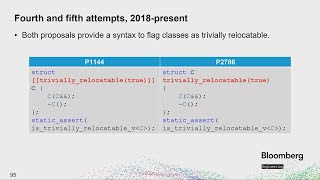
C++ Trivial Relocation Through Time
Explore the concept of trivial relocatability in C++, its performance benefits, and various proposals to incorporate it into the standard, enhancing container efficiency for non-trivial types.

Introduction to Epoch-Based Memory Reclamation - What to Do When No Thread is Watching
Explore epoch-based memory reclamation in concurrent programming, comparing it to hazard pointers and discussing its characteristics, benefits, and potential drawbacks for efficient memory management.
Comparing 'Classic C++' and 'Modern C++' Ways to Solve Programming Tasks
Explore the evolution of C++ programming techniques, comparing classic and modern approaches to solve common tasks, with insights on readability, efficiency, and best practices.
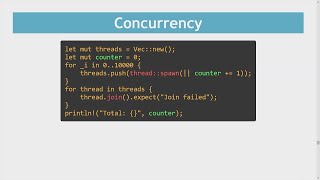
Rust for the Recalcitrant C++ Programmer - ACCU 2023
Comparative exploration of Rust features for C++ programmers, highlighting ownership, type system, immutability, pattern matching, and concurrency, with practical examples and discussions.

Binary File Format Engineering and Reverse Engineering
Explore binary file formats, from basics to advanced techniques. Learn engineering principles, reverse engineering methods, and practical applications in software development.
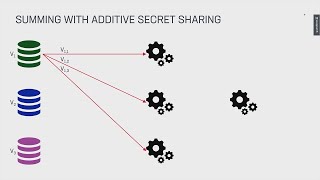
Introduction to Secure Multi-Party Computation
Explore secure multi-party computation techniques for joint calculations on private data without revealing inputs. Learn about homomorphic encryption, garbled circuits, and secret sharing.
How to Master C++
Practical advice for mastering modern C++ through five key programming mindsets: imperative, compile-time, functional, concurrency, and performance. Develop and blend these skills for continuous improvement.
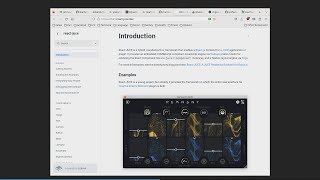
Adventures with React and JUCE - Building UI with Typescript in a C++ Application
Explore integrating React and TypeScript with C++ using JUCE for audio application UI development. Learn advantages, challenges, and performance insights from real-world implementation.

The Art of Addictive Software - The Digital Narcotic
Explore the ethics of addictive software design, its impact on users, and the responsibility of developers in creating digital products that can influence human behavior.

Fumbling Forward - Embracing Mistakes in Agile Teams
Transforming mistakes into opportunities for growth in Agile teams. Learn strategies to embrace failures, overcome self-doubt, and foster a positive mindset for successful software engineering.
How Bloomberg Uses Behavior-Driven Development to Test Distributed Systems
Explore Bloomberg's approach to testing distributed systems using Behavior-Driven Development and the 'behave' framework for enhanced end-to-end coverage and reliability.

And Then() Some(T) - Don't Look in the Box! - Practical Higher-Order Functions in C++ Combinators
Explore practical higher-order functions in C++, inspired by Rust and Haskell. Learn to write cleaner code using combinators for modular control flow management.

Modified Condition - Decision Coverage in Gcc - An Introduction, Motivation, Intuition and Tooling
Explore Modified Condition/Decision Coverage: its importance in safety-critical software, benefits, and implementation using GCC, with insights for automotive and aviation industries.
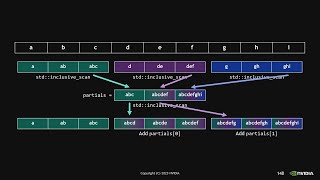
C++ Horizons
Explore the future of C++ with insights on reflection, pattern matching, and senders. Discover how these upcoming features will revolutionize C++ programming in the next decade.

Using, Generating and Testing with Pseudo-Random Numbers
Explore pseudo-random number generation, distributions, and applications in coding. Learn about deterministic chaos, testing techniques, and visualize concepts through blob racing simulations.

Multi Threading Model in Paradox Games - Past, Present and Future
Explore the evolution of multi-threading models in Paradox grand strategy games, from past implementations to current systems and future possibilities for improved performance and complexity.

Remote Mob Programming in a High Stakes Environment
Discover how remote mob programming led to successful delivery of a COVID-19 app backend system, overcoming challenges in a high-stakes environment with tight deadlines and technical constraints.
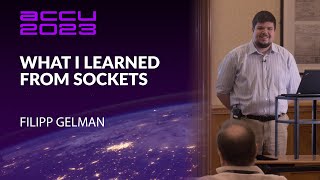
What I Learned From Sockets - Applying the Unix Readiness Model When Composing Concurrent Operations in C++
Explore Unix socket concepts for composing concurrent operations in C++. Learn to apply select/poll mechanisms to various concurrency problems and discover C++ solutions for multi-future and coroutine scenarios.