Ocean Protocol - Empowering a Decentralised Marketplace for the AI Ecosystem
Explore Ocean Protocol's decentralized marketplace for AI data, enabling secure sharing and monetization while preserving privacy and control for data owners and consumers.
I Need Data - For Research
Explore the challenges of obtaining quality data for AI applications in security and other fields, focusing on data acquisition methods and assessing data quality for effective research and development.
Augmented Intelligence - A Marriage between Machine and Human
Explore augmented intelligence, combining human and machine strengths for enhanced decision-making. Learn about its benefits, challenges, and real-world applications in various industries.
Deep Learning and Spark
Learn to classify millions of messages using trained deep learning models (fasttext) with Spark. Includes explanations of key concepts and a practical demo on model training and message classification.
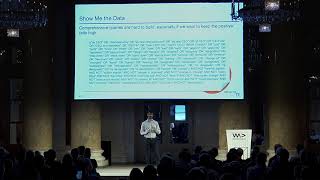
When Humans Teach Machines
Explore an interactive DIY tool for non-data scientists to train and deploy classifiers, simplifying topic identification in large document sets with minimal data collection and quick model training and tuning.
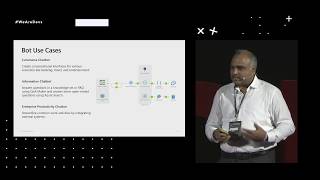
Unleash Your AI Potential
Explore the paradigm shift in AI adoption, its impact across industries, and strategies for successful AI projects. Learn how developers can leverage AI to create innovative solutions and drive positive change.

The Hand Prosthesis That Learns from the User
Explore machine learning in hand prostheses that adapt to users, enhancing control and functionality. Learn about challenges, solutions, and future developments in this innovative field.
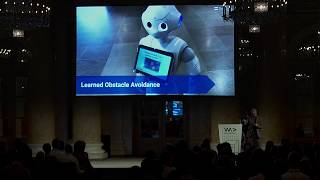
Artificial Intelligence for Artificial Humanoids
Explore AI applications in humanoid robots, including current functions and future developments. Learn about the differences between natural and artificial intelligence in human-robot interactions.
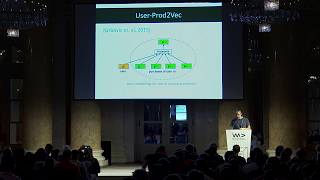
Deep Learning for Recommender Systems
Explore state-of-the-art deep learning techniques for recommender systems, including collaborative filtering, content-based methods, and complex architectures like autoencoders and RNNs for personalized recommendations.

Making Machine Learning Accessible Using Keras
Explore Keras, a user-friendly deep learning API, to make AI accessible for solving business problems. Learn about its features, APIs, model building, and integration with TensorFlow.
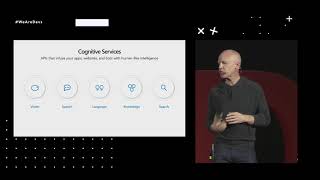
Artificial Intelligence in the Modern Workplace
Explore AI's role in enhancing workplace productivity, enabling better insights, and improving business processes. Learn about integrating AI into existing tools for more intelligent and contextualized experiences.

How to Make an AI iOS for Personal Use
Learn to develop an end-to-end iOS app using Apple's machine learning tools, Create ML and CoreML, for on-device AI without data transmission.
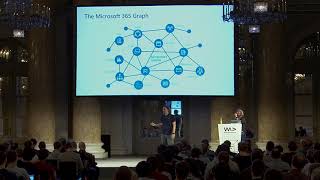
Develop Intelligent Apps for the Modern Workplace
Explore building intelligent workplace apps using business data, adaptive cards, and serverless computing. Learn to implement image recognition and OCR for enhanced user experiences in line-of-business solutions.
How to Be Best in Conveying the Message by Using NLP Approach - Big Five Modeling
Explore NLP techniques for predicting personality traits using the Big Five model to tailor communication strategies and improve customer interactions across various industries and applications.
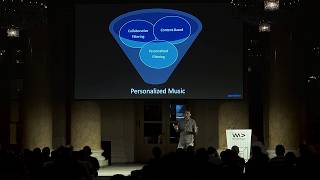
Building a Large Music Recommender Leveraging AI, Deep Learning and Human Expertise
Explore Pandora's sophisticated music recommendation system, combining AI, deep learning, and human expertise to deliver personalized listening experiences based on vast user data and musicological insights.

Build a Great Conversationalist
Learn to create intelligent bots using Azure BOT Framework for natural user interactions in apps and websites. Explore building, connecting, deploying, and managing conversational AI.

Practicing Data Science in the Cloud
Explore end-to-end Machine Learning pipelines in the cloud, from data processing to model deployment, with practical insights on choosing environments and optimizing workflows.
Microsoft AI - Empowering Us All
Explore Microsoft's AI vision: empowering businesses, developers, and society through innovative technologies, open-source commitments, and ethical AI practices for transformative solutions.

Automate Customer Ticket Handling - From an Idea to a Production Ready Model
Learn to develop and deploy an AI model for automating customer ticket processing, from initial concept to production-ready implementation, enhancing business efficiency.
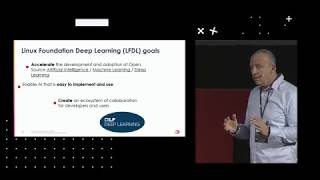
How We Democratize AI with Linux Foundation Open Source
Explore Linux Foundation's efforts to democratize AI through open-source projects like Acumos AI, enabling visual workflows for AI design and a marketplace for sharing models across industries.
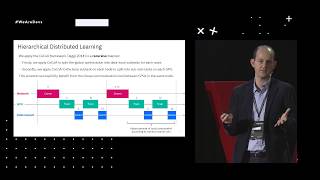
Snap ML - A Highly-Accelerated, Scalable Software Library for Machine Learning
Discover Snap ML, a high-performance framework for training generalized linear models. Learn about its GPU acceleration, pipelining, and distributed computing capabilities for faster machine learning on large-scale datasets.