
You Can't Make People Act More Securely, You Can Help Them Want To
Explore strategies to motivate secure behavior, overcome challenges, and effectively communicate security procedures. Learn to make security an asset and inspire others to embrace it willingly.

Attacking and Defending Full Disk Encryption
Explore full disk encryption vulnerabilities, attack methods, and defense strategies. Learn practical techniques for securing encrypted systems and balancing usability with security.

Evil Empire - SIEM FTW
Explore SIEM technology's role in cybersecurity with insights on implementation, benefits, and best practices for effective threat detection and incident response.
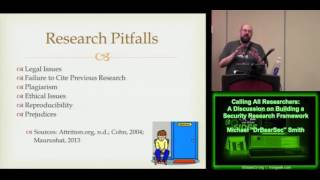
Calling All Researchers - A Discussion on Building a Security Research Framework
Explore strategies for developing a robust security research framework, enhancing methodologies and fostering collaboration within the cybersecurity community.

Vulnerabilities in Application Whitelisting - Malware Case Studies
Explore vulnerabilities in application whitelisting through real-world malware case studies. Learn detection techniques and gain insights into bypassing security measures.

Monitor Your Java Applications with the Elastic Stack - Logs, Metrics, Pings, and Traces
Comprehensive guide to monitoring Java applications using Elastic Stack, covering logs, metrics, pings, and traces for effective microservices management and troubleshooting.

The Road to a More Conscious Organization
Explore strategies for building a conscious organization, reducing office politics, and creating a fulfilling workplace through innovative HR practices and cultural initiatives.
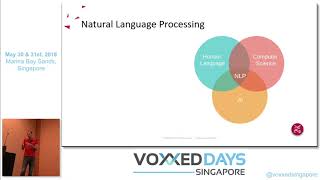
Build Powerful Chatbots with Natural Language Processing
Explore NLP techniques for building domain-specific chatbots. Learn about AI, linguistics, and computer science intersections to process and analyze human languages effectively.

Kafka as a Platform - The Ecosystem from the Ground Up
Explore Apache Kafka's ecosystem: from basic messaging to advanced streaming platform. Learn about topics, partitioning, APIs, stream processing, and enterprise-grade features for scalable data infrastructure.
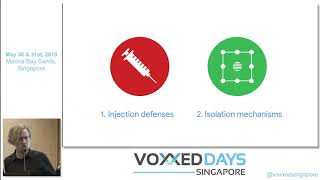
A New Era of Security - How Web Platform Features Can Save Your Application
Explore modern web security features to protect against XSS, CSRF, and other common threats. Learn how to implement CSP3, Trusted Types, and Fetch Metadata Request Headers in your applications.
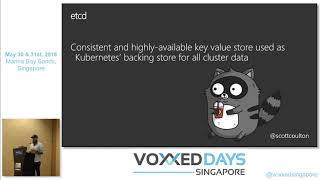
Kubernetes Security 101
Comprehensive overview of Kubernetes security layers, covering sysadmin, developer, and security team perspectives. Explores hardening guides, container security, deployment strategies, and collaborative approaches.
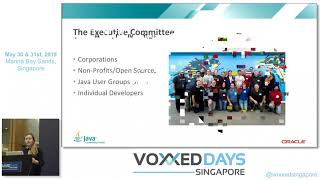
The Future of Java and You
Explore Java's open development, community changes, and opportunities for participation in shaping its future. Learn about upcoming technologies and how involvement can benefit your career.
Server-Side Micro Frontends
Explore server-side micro frontends: concepts, principles, and real-world implementation insights from Standard Chartered Bank. Learn about technology options, DevOps considerations, and challenges in this architectural approach.

Leading a Boss-less Organization
Explore self-organization principles and experiments in removing hierarchies, based on real-world experiences from Bridge and Ekipa companies. Learn about successes, challenges, and practical insights.
How to Optimize Mobile Development and Reduce the Cost of Change with DevOps
Optimize mobile development with DevOps: Accelerate feature delivery, ensure cross-device compatibility, and reduce costs through automation, continuous integration, and cloud-based testing platforms.

Events, Dear Boy, Events
Explore event-driven architectures in microservices, examining philosophical perspectives on identity and change. Learn to balance event streams with traditional data models for robust system design.
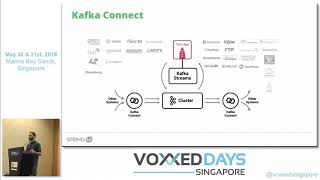
Apache Kafka for the Spring Developer
Explore Apache Kafka integration with Spring ecosystem for scalable, event-driven architectures. Learn Spring Kafka, Reactor Kafka, Spring Cloud Stream, and Spring Cloud Function through live coding examples.

Searching a Silver Bullet
Exploring software engineering challenges in scaling teams and businesses, with insights on holistic problem-solving and distributed agile teams across geographies.

How to Assemble High Performing Teams
Discover strategies for building high-performing teams in digital contexts. Learn about enabling conditions, challenges, and practical tools to enhance collaboration and drive effectiveness in organizations.

Going Open to Support Your Digital Transformation
Explore how embracing open principles can drive digital transformation, enhance focus, and foster continuous learning in organizations. Insights from Red Hat's engineering leadership.

[VDT19] Cognitive UX Using cognitive science and psychology to drive UX design by Emilia Ciardi [IT]
Esplora come le scorciatoie mentali e i bias cognitivi influenzano la progettazione UX, applicando principi di psicologia e scienze cognitive per creare esperienze utente più efficaci.