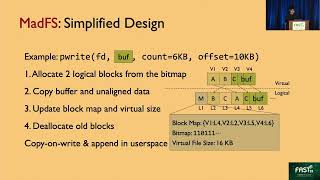
MadFS - Per-File Virtualization for Userspace Persistent Memory Filesystems
Explores per-file virtualization for userspace persistent memory filesystems, introducing MadFS with embedded metadata, crash consistency, and optimistic concurrency control for improved performance and scalability.
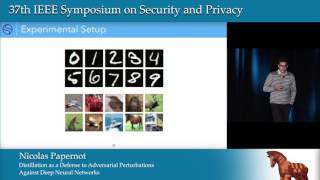
Distillation as a Defense to Adversarial Perturbations against Deep Neural Networks
Introduces defensive distillation to protect deep neural networks from adversarial attacks, reducing attack effectiveness from 95% to 0.5% and increasing robustness by 800% in tests.
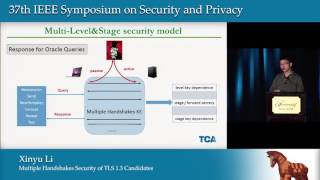
Multiple Handshakes Security of TLS 1.3 Candidates
Explores security aspects of TLS 1.3 candidates, focusing on multiple handshake protocols. Introduces a multi-level security model and proves the soundness of TLS 1.3 security design.
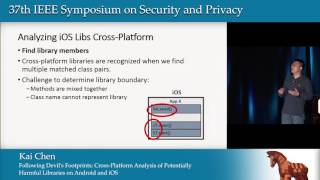
Following Devil's Footprints - Cross-Platform Analysis of Potentially Harmful Libraries on Android and iOS
Cross-platform analysis of potentially harmful libraries in Android and iOS apps, revealing widespread infection and risky behaviors like unauthorized data access and audio/video recording.
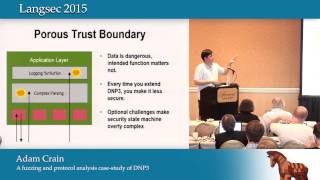
A Fuzzing and Protocol Analysis Case-Study of DNP3
Explores vulnerabilities in DNP3, a key SCADA protocol for power systems, revealing design flaws and implementation gaps. Discusses fuzzing results, CVEs, and analyzes the protocol's security addendum.
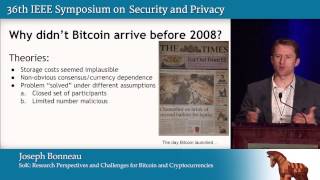
Research Perspectives and Challenges for Bitcoin and Cryptocurrencies
Comprehensive analysis of Bitcoin's design, properties, and challenges. Explores related cryptocurrencies, proposed modifications, anonymity issues, and disintermediation protocols in the evolving digital currency landscape.
Nom - A Byte-oriented, Streaming, Zero-copy Parser Combinators Library in Rust
Explore Rust's Nom library for efficient, safe parsing. Learn about byte-oriented, streaming, and zero-copy techniques in parser combinators for improved performance and security.
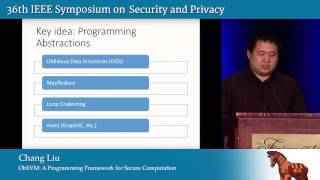
ObliVM - A Programming Framework for Secure Computation
Explore ObliVM, a framework for secure computation offering a domain-specific language, user-friendly abstractions, and efficient oblivious representations for various applications like data mining and genomic analysis.

Dark Matter - Driven By Data
Explore data-driven cybersecurity challenges and solutions with expert Dan Geer in this IEEE symposium keynote, addressing the complexities of modern digital threats and defenses.
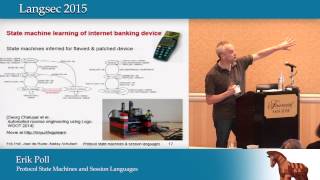
Protocol State Machines and Session Languages
Explores protocol state machines and session languages in security, discussing specification, implementation, and testing challenges. Proposes automated inference of formal specifications to improve security.
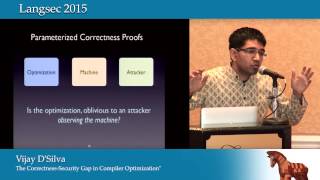
The Correctness-Security Gap in Compiler Optimization
Explores how compiler optimizations can preserve functionality but violate security guarantees, proposing research to identify and mitigate security errors introduced during optimization.
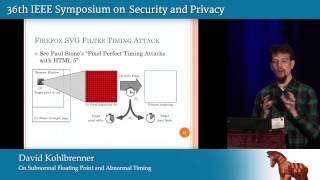
On Subnormal Floating Point and Abnormal Timing
Explores timing vulnerabilities in x86 floating-point operations, demonstrating practical attacks on Firefox and a privacy-focused database. Introduces a constant-time math library as a potential mitigation.
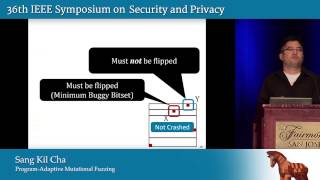
Program-Adaptive Mutational Fuzzing
Innovative algorithm maximizes bug detection in black-box mutational fuzzing by leveraging symbolic analysis to optimize mutation ratios, resulting in 38.6% more bugs found across 8 applications.
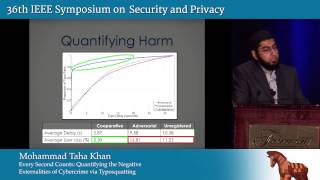
Every Second Counts - Quantifying the Negative Externalities of Cybercrime via Typosquatting
Quantifying harm from typosquatting using intent inference. New metrics and methodology reveal average time cost to users and traffic loss for legitimate sites. Some typosquatters unexpectedly improve latency.
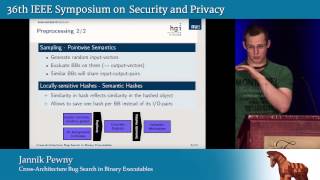
Cross-Architecture Bug Search in Binary Executables
Innovative method for identifying vulnerabilities across different CPU architectures using bug signatures and semantic analysis of binary code, enabling effective security assessments of closed-source software.
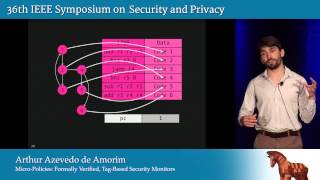
Micro-Policies - Formally Verified, Tag-Based Security Monitors
Explore formally verified tag-based security monitors for low-level policies. Learn about dynamic sealing, compartmentalization, control-flow integrity, and memory safety implementation.
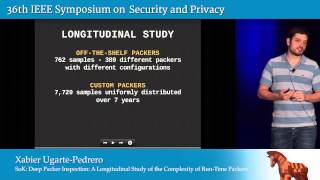
SoK - Deep Packer Inspection - A Longitudinal Study of the Complexity of Run-Time Packers
Longitudinal study analyzing run-time packers' complexity and evolution, proposing a taxonomy for measurement and presenting statistics on packer structures used in malware obfuscation.
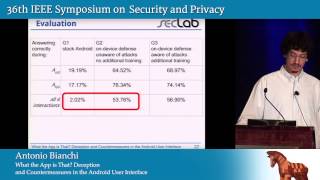
What the App is That? Deception and Countermeasures in the Android User Interface
Explores Android UI vulnerabilities, demonstrating how malicious apps can deceive users through GUI manipulation. Proposes defensive measures including static analysis and a secure app origin indicator.

Signing Me onto Your Accounts through Facebook and Google - A Traffic-Guided Security Study of Commercially Deployed Single-Sign-On Web Services
Explores security vulnerabilities in popular web-based single sign-on systems, uncovering critical flaws that allow unauthorized access to user accounts on major platforms.
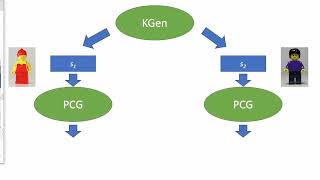
Low-Bandwidth Threshold ECDSA via Pseudorandom Correlation Generators
Explore efficient threshold ECDSA using pseudorandom correlation generators, reducing bandwidth requirements for secure distributed signing protocols.
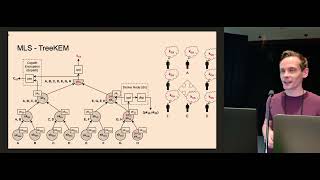
Security Analysis of the MLS Key Derivation
Explore the security aspects of MLS key derivation, focusing on analysis techniques and potential vulnerabilities in this cryptographic process.