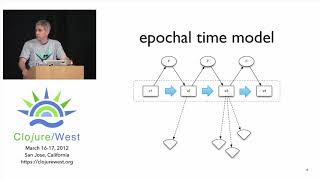
Evident Code, at Scale
Practices for creating clear, understandable code in large-scale projects, with insights from a multi-year Clojure product development experience.
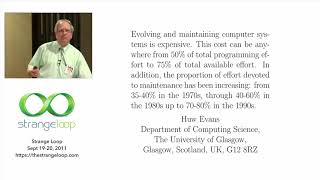
We Really Don't Know How to Compute!
Exploring computational limitations and future design principles for complex systems, drawing insights from neuroscience and genomics to revolutionize engineering approaches.
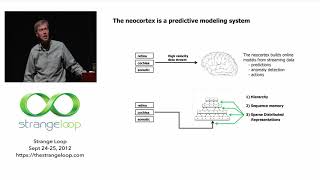
Computing Like the Brain
Explore principles of neocortex-inspired computing, sparse distributed representations, and their impact on future machine intelligence with Numenta founder Jeff Hawkins.
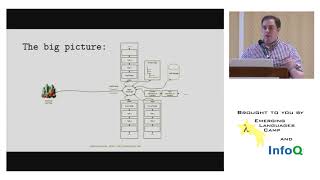
Babel - An Untyped, Stack-based HLL
Explore Babel, an untyped stack-based language with unique features for containerization, code execution policies, and data visualization. Learn its philosophy and capabilities for efficient programming and cloud computing.
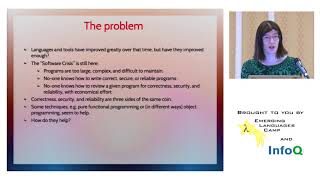
Noether - Symmetry in Programming Language Design
Exploring symmetry in programming language design to enhance security, robustness, and efficiency. Introduces Noether, an experimental language with layered structure and strong symmetries for improved reasoning and analysis.
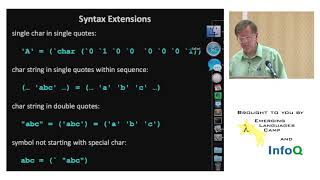
Axiomatic Language
Explore a theoretical programming language focused on pure specification, minimalism, and extensibility, designed to define program behavior through symbolic expressions.
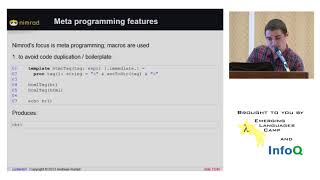
Nimrod - A New Approach to Meta Programming
Introducción a Nimrod: lenguaje de programación estáticamente tipado con potentes capacidades de metaprogramación, sintaxis amigable y eficiencia en tiempo de ejecución.
The J Programming Language
Explore J, a unique array-based language that transforms problem-solving approaches. Learn tacit form, verb trains, and array manipulation for sleek, simple solutions in this functional programming paradigm.

Zip Code - Unpacking Data Compression
Explore data compression algorithms, from basic techniques to advanced tools, and learn how to design efficient protocols and data formats for various applications, including embedded systems.
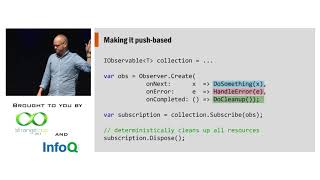
Curing Your Event Processing Blues with Rx
Explore Reactive Extensions (Rx) for taming asynchronous code complexity in modern applications. Learn to compose and query observable sequences for improved event processing and maintainability.
Tracking Millions of Ganks in Near Real Time
Explore Riot Games' transition to Riak for real-time statistics in League of Legends, discussing data modeling, scalability challenges, and strategies for handling eventually consistent data in gaming.
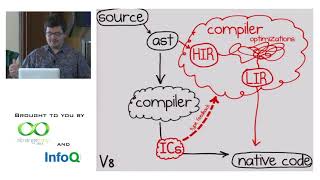
Building Optimising Compiler for Dart
Explore the development of Dart VM's new compilation pipeline, focusing on language features' impact and lessons from V8. Learn about JIT compiler design for object-oriented languages with optional static typing.
The History of Women in Technology
Explore the pivotal contributions of women in computing, from Ada Byron to Grace Hopper, highlighting their innovations in programming, documentation, and compiler design that shaped the industry.
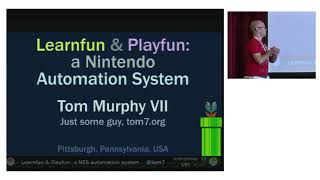
Learnfun and Playfun - A Nintendo Automation System
Explore an innovative approach to automating NES gameplay using lexicographic ordering and time travel. Learn how a program deduces winning strategies by observing human players and searches for optimal button sequences.
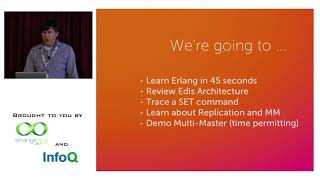
Building a Multi-Master Distributed Redis in Erlang
Explore the development of Edis, a highly available NoSQL database using Redis protocol and Erlang. Learn about multi-master architecture, paxos algorithm, and distributed computing concepts.
Continuum - A JS - ES6 - VM Written in JS - ES3
Explore an ECMAScript 6 VM built in ECMAScript 3, covering parsing, compilation, linking, and interpretation. Dive into Continuum's architecture, compatibility, and self-hosted standard library implementation.

CodeGen with Types, for Humans, by Humans
Explore a code generation engine built in Elm for creating readable, typesafe, and maintainable code, featuring automatic imports, formatting, and built-in type checking.
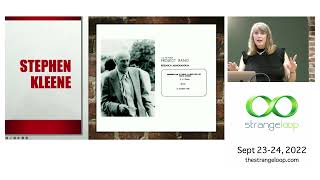
All About Regular Expressions
Explore the history, implementations, and best practices of regular expressions in programming, including their origins, language-specific variations, and strategies for efficient usage.
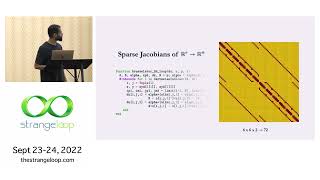
Symbolic Numeric Programming in Julia
Explore Symbolics.jl for computer-algebra metaprogramming in Julia, enabling powerful code transforms, optimization, and automatic differentiation with symbolic techniques.
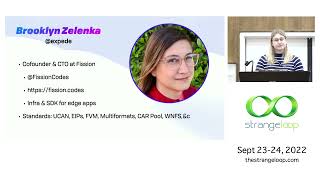
A Distributed File System for Secure P2P Applications
Explore WebNative File System: a content-addressed, encrypted forest of blocks enabling secure, user-centric collaborative software without platform dependence. Learn its applications in decentralized, multiuser scenarios.
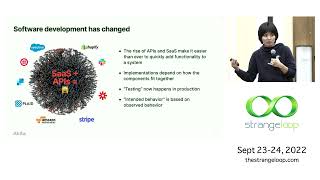
Building Observability for 99% Developers
Exploring techniques for simplified observability in modern web applications, focusing on API-layer visibility and control for small engineering teams without extensive DevOps resources.