
SRE in the Third Age
Explore the evolution of Site Reliability Engineering (SRE) from its Google origins to widespread adoption, and ponder its future as the field matures and faces new challenges in the tech industry.
Zero-Downtime Rebalancing and Data Migration of a Mature Multi-Shard Platform
Explore zero-downtime techniques for rebalancing and migrating data in multi-shard platforms, focusing on MySQL binlog-based tools for load distribution and tenant isolation.

The SRE I Aspire to Be
Explore the importance of high-quality reliability measurements in SRE, learn tips for effective implementation, and understand why it's crucial for engineering work in SRE organizations.
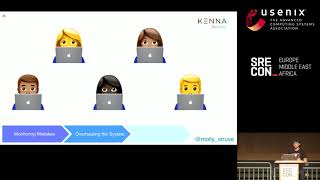
Building a Scalable Monitoring System
Learn how to overhaul and centralize a complex monitoring system, creating a user-friendly solution that encourages developer engagement and continuous improvement.
Latency SLOs Done Right
Explore effective methods for implementing Latency Service Level Objectives (SLOs), addressing common pitfalls in latency measurement and aggregation for improved service quality tracking.
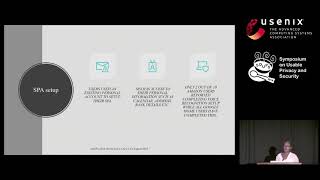
More than Smart Speakers - Security and Privacy Perceptions of Smart Home Personal Assistants
Explores users' perceptions of security and privacy in smart home assistants, revealing incomplete mental models and limited understanding of data handling, leading to inadequate threat models and coping strategies.
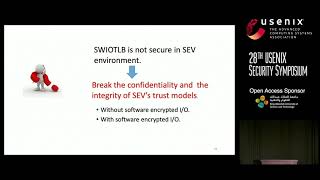
Exploiting Unprotected I/O Operations in AMD's Secure Encrypted Virtualization
Explores vulnerabilities in AMD's Secure Encrypted Virtualization, demonstrating attacks on I/O operations and constructing primitives to breach VM memory encryption, highlighting security risks in emerging technology.
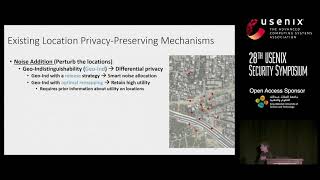
On - The Lack Of - Location Privacy in Crowdsourcing Applications
Explores limitations of location privacy mechanisms in mobile crowdsourcing, revealing inadequate protection and significant utility impact. Proposes new research directions for privacy-preserving solutions.
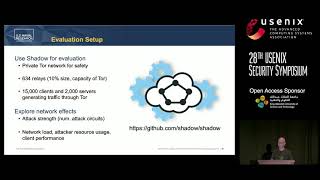
Point Break - A Study of Bandwidth Denial-of-Service Attacks against Tor
Explores bandwidth denial-of-service attacks against Tor, demonstrating feasibility and impact on network performance through experimentation and simulation. Analyzes costs and effects of various attack strategies.
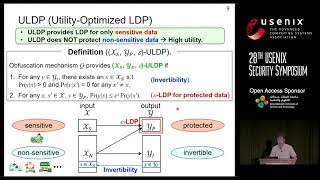
Utility-Optimized Local Differential Privacy Mechanisms for Distribution Estimation
Explores utility-optimized local differential privacy mechanisms for distribution estimation, enhancing data utility while maintaining privacy for sensitive information.
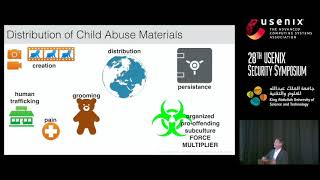
Shining Light on Internet-based Crimes Against Children
Explores Internet-based child exploitation crimes, their long-term impact on victims, and forensic tools for proactive rescue. Discusses privacy technology's role in both protection and potential misuse.
The Spies Hacking Our Phones Are Going Dark, and We're All in Trouble
Explore the alarming rise of commercial spyware tools used by nation-states for covert surveillance and sabotage. Learn about Citizen Lab's methodology for uncovering abuses and the challenges posed by zero-click attacks.

CSI NN - Reverse Engineering of Neural Network Architectures Through Electromagnetic Side Channel
Reverse engineering neural networks through electromagnetic side channels, revealing architecture details like activation functions, layers, neurons, and weights using non-invasive techniques on ARM Cortex-M3 microcontrollers.
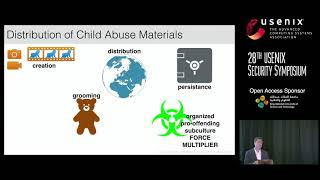
Shining Light on Internet-based Crimes Against Children
Explores Internet-based child exploitation crimes, their long-term impact on victims, and forensic tools for proactive rescue. Discusses privacy technology's role in both protection and potential misuse.

Embracing the Hack - A Better Strategy for Team-Defense
Explore how embracing "hacky" solutions in cybersecurity can enhance enterprise defense. Learn innovative strategies and custom detection techniques to gain an advantage over attackers.
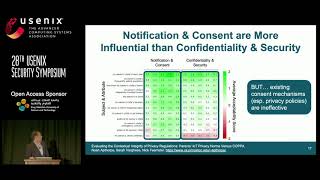
Evaluating the Contextual Integrity of Privacy Regulation - Parents' IoT Toy Privacy Norms Versus COPPA
Explores alignment between COPPA regulations and parents' privacy expectations for smart toys, using contextual integrity surveys to quantify regulatory effectiveness and identify nuanced privacy concerns.
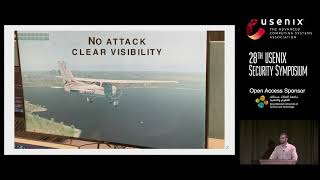
Wireless Attacks on Aircraft Instrument Landing Systems
Investigates vulnerabilities in aircraft instrument landing systems to wireless attacks using software-defined radio, demonstrating potential for spoofing signals and causing off-runway landings in low-visibility conditions.
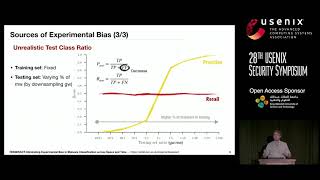
TESSERACT - Eliminating Experimental Bias in Malware Classification Across Space and Time
Unveils TESSERACT framework to eliminate spatial and temporal biases in Android malware classification, improving real-world robustness and revealing counterintuitive performance insights.
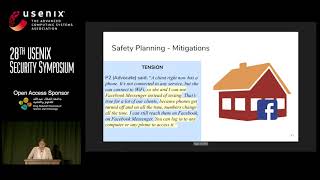
Computer Security and Privacy in the Interactions Between Victim Service Providers and Human Trafficking Survivors
Exploring technology's role in victim service provider-survivor interactions, balancing trust-building and risk mitigation for human trafficking survivors' recovery and empowerment.
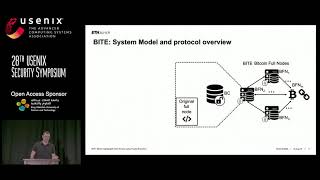
BITE - Bitcoin Lightweight Client Privacy Using Trusted Execution
Innovative approach to enhance privacy for Bitcoin lightweight clients using SGX enclaves, combining trusted execution and private information retrieval techniques for improved security without compromising performance.
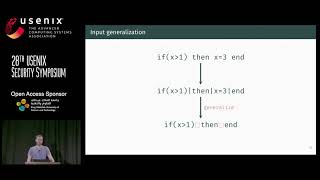
GRIMOIRE - Synthesizing Structure while Fuzzing
Innovative fuzzing technique for programs with structured inputs, synthesizing complex structures on-the-fly without pre-configuration, outperforming existing methods and uncovering 19 memory corruption bugs.