
Generate Studio Quality Realistic Photos With Kohya LoRA Stable Diffusion Training - Full Tutorial
Comprehensive guide to generating studio-quality AI photos using Kohya LoRA Stable Diffusion training, covering installation, parameter settings, dataset preparation, and advanced techniques for optimal results.

ControlNET - What You Need to Know
Comprehensive guide on ControlNET 1.1, covering installation, new models, OpenPose features, and Tile-Resampling for enhanced image quality and detail in AI-generated visuals.
From Network Dissection to Policy Dissection - Emergent Concepts in Deep Representations
Explore emergent concepts in deep neural networks, from image classification to reinforcement learning, revealing inner workings and enabling meaningful human-AI interactions for content creation and robotics control.
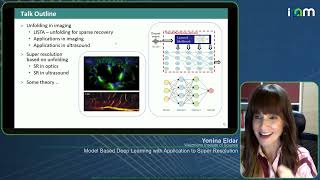
Model Based Deep Learning with Application to Super Resolution - IPAM at UCLA
Explore model-based deep learning for super-resolution microscopy, merging parametric models with optimization tools to create efficient, interpretable networks from limited training data.
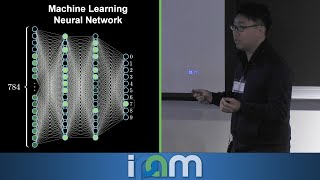
AI Inroads in Imaging Sciences for Materials Research - IPAM at UCLA
Explore deep learning applications in materials research, focusing on convolutional neural networks for transmission electron microscopy and tomographic imaging advancements.
3D Phase Imaging with Scattering Samples - IPAM at UCLA
Innovative microscopy techniques for 3D phase imaging in thick, scattering samples using computational algorithms and neural networks to reconstruct refractive index maps from angle-coded illumination.
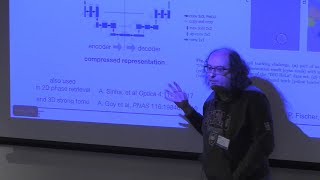
On the Use of Machine Learning for Computational Imaging
Exploring machine learning applications in computational imaging, focusing on inverse problems, regularization, and challenges in phase retrieval, 3D structure reconstruction, and surface analysis.
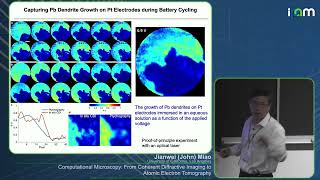
Computational Microscopy: Coherent Diffractive Imaging to Electron Tomography
Explore computational microscopy techniques from coherent diffractive imaging to atomic electron tomography with UCLA expert Jianwei Miao in this insightful presentation on cutting-edge imaging methods.
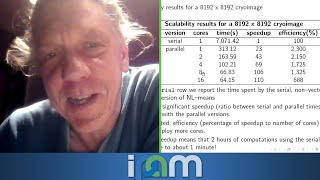
Algorithms for Non-Local Filtering - Application Cryo-Electron and Biological Microscopy
Efficient algorithms for non-local filtering in microscopy, focusing on fast implementations of Non-Local Means Denoising and feature detection in biological images for improved image processing and analysis.
Machine Learning and Computational Imaging - IPAM at UCLA
Explore AI's role in computational imaging, focusing on deep learning for inverse problems in image recovery and restoration, from denoising to nano-scale imaging.
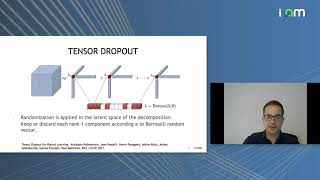
Efficient Tensor Representation for Deep Learning with TensorLy and PyTorch
Explore tensor methods for deep learning, improving performance, speed, and robustness. Learn practical implementation using TensorLy-Torch for video and image classification tasks.
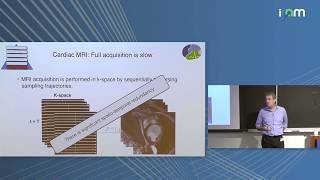
Deep Learning and Shape Modelling for Medical Image Reconstruction, Segmentation and Analysis
Explores deep learning techniques for MR image processing, incorporating anatomical shape information as prior knowledge to enhance reconstruction, super-resolution, and segmentation in medical imaging applications.
Tutorial on Deep Learning I
Explore deep learning foundations, from neural networks to advanced techniques, with insights on feature representation, optimization, and practical applications in computer vision and audio processing.

Adversarial Examples in Deep Learning
Exploring adversarial examples in deep learning: design, defense strategies, and the relationship between model size and robustness against attacks. Insights from experts on implications and challenges.
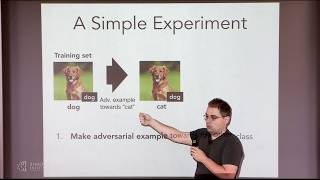
A New Perspective on Adversarial Perturbations
Explore adversarial perturbations in deep learning, their impact on ML models, and new perspectives on robustness, transferability, and data efficiency in AI systems.
Solving Inverse Problems With Deep Neural Networks - Robustness Included?
Exploring robustness of deep learning in inverse problems, focusing on resilience against statistical noise and adversarial perturbations in image reconstruction tasks.

Hugging Face Agents - Full Tutorial
Explore Hugging Face's new Transformers Agents API for natural language-driven multimodal tasks, including image generation and text-to-speech, with extensible tools and practical examples.
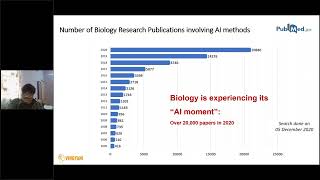
Coronavirus - Through The Lens Of AI
Explore AI applications in COVID-19 research: CT scan analysis, NLP for literature insights, and deep learning for drug candidate design. Learn how technology aids pandemic response.
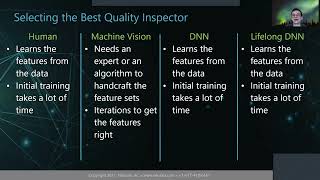
What Kind of AI Can Help Manufacturing Adapt to a Pandemic
Explore how AI, particularly DDNs and L-DNNs, can revolutionize quality inspections in manufacturing, adapting to challenges like COVID-19 and Industry 4.0 for improved efficiency and product quality.
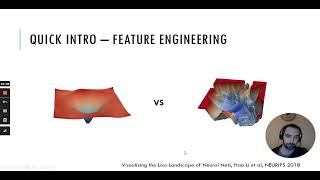
Dataset Management for Computer Vision - Important Component to Delivering Computer Vision Solutions
Explore dataset management's crucial role in computer vision solutions. Learn to align business goals, express assumptions, and maintain datasets for successful real-world implementations.
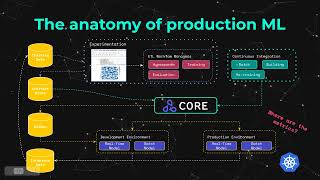
Production Machine Learning Monitoring- Principles, Patterns and Techniques
Practical deep dive on production monitoring of machine learning models, covering standard techniques and advanced paradigms like concept drift, outlier detection, and explainability, with hands-on examples and architectural patterns.