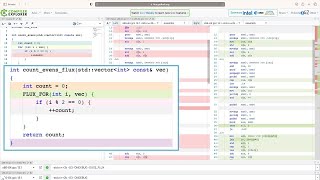
Iteration Revisited: A Safer Iteration Model for C++ - CppCon 2023
Explore a safer iteration model for C++ with Flux, a C++20 library offering improved safety, performance, and compatibility with existing code.
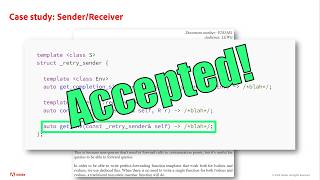
C++ Should Be C++ - Improving Lives Through Language Evolution
Pragmatic evaluation of C++'s challenges and future, emphasizing focus on improving lives through better libraries, talks, features, and understanding C++'s role in technology and society.
Exposing and Exploiting AACSv2 UHD DRM - Full AACSess
Exposing vulnerabilities in AACSv2 DRM for UHD Blu-ray, including side-channel attacks on Intel SGX, leading to the first full compromise and unofficial playback of UHD-BD discs.
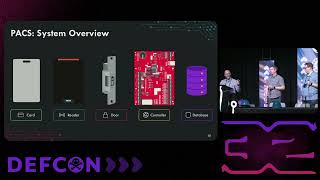
Hi-Intensity Deconstruction: Chronicles of a Cryptographic Heist
Delve into groundbreaking research revealing security vulnerabilities in HID's iCLASS SE platform, exploring reverse engineering techniques and critical mitigation strategies for electronic access control systems.
Unlocking Hardware Security - Red Team, Blue Team, and Trojan Tales
Explore hardware Trojan detection in ICs through a Red Team vs. Blue Team case study. Learn about imaging techniques, algorithm efficiency, and the impact of technology scaling on security.
Introducción a los CTFs - Fundamentos de Competencias de Ciberseguridad
Descubre el emocionante mundo de las competiciones CTF y aprende las bases para participar en desafíos de ciberseguridad, resolviendo retos que simulan escenarios reales de hacking.

UEFI and the Task of the Translator: Cross-Architecture UEFI Quines for Exploit Development
Explore UEFI exploit development using cross-architecture UEFI quines as a framework, enhancing your understanding of low-level system vulnerabilities.
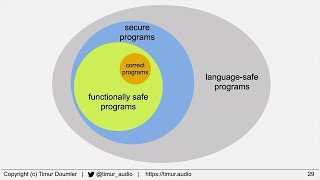
C++ and Safety - Exploring Memory Safety and Language Evolution
Explore C++ safety issues, their consequences, and potential solutions. Examine memory safety, language evolution, and comparisons with other programming languages. Discuss tools and proposals for improving C++ safety.
A Safer Iteration Model for C++ - Flux Library Introduction
Explore a safer iteration model for C++, introducing Flux library. Learn about reducing undefined behavior, performance implications, and quality-of-life improvements in C++20 Ranges.

Can C++ be 10x Simpler and Safer? - Exploring C++ Evolution
Explore potential improvements to simplify, safeguard, and enhance C++. Examine current limitations and innovative ideas for significant advancements in the language's evolution.
Undefined Behavior in the STL - Lecture
Explore undefined behavior in C++ STL, its dangers, and presence in containers and algorithms. Learn protective measures and understand its purposeful introduction.
Memory-Safe C++ - Addressing Common Vulnerabilities
Explore memory-safe C++ with a new compiler and runtime that detects vulnerabilities without source code changes. Learn static analysis techniques and runtime checks for enhanced software security.
Splitting the Difference on Adversarial Training - A Method for Robust Neural Networks
Discover a novel approach to adversarial training that enhances neural network robustness while maintaining optimal accuracy by splitting data classes into clean and adversarial categories.
DNN-GP: Diagnosing and Mitigating Model's Faults Using Latent Concepts
Explore an innovative fault diagnosis tool for Deep Neural Networks that interprets latent concepts to detect and mitigate various model vulnerabilities, from adversarial attacks to concept drift.
Secure and Encrypted Boot in Zephyr RTOS Using Hardware Keys and TrustZone
Explore secure booting implementation in Zephyr RTOS using MCUboot, hardware keys, and encryption features like HAB and TF-M for enhanced embedded system security and tamper protection.

Secure by Design Principles - Building Security into Network Architecture
Master essential network security principles focusing on minimization, compartmentalization, and simplicity to build robust, inherently secure systems and prevent vulnerabilities from the ground up.

Building a Browser Rendering Engine in Rust - The Servo Project
Explore the evolution of Servo, a web rendering engine built in Rust, and discover how its memory safety and concurrent design are revolutionizing browser technology and web standards implementation.
Secure Your Systems Using Policy-as-Code
Discover how policy-as-code bridges the gap between development and security teams, improving developer experience while maintaining robust system security. Learn implementation best practices and overcome common challenges.
Compile-Time Validation in C++ Programming
Master advanced compile-time validation techniques in C++ to enhance code safety and reliability through functional programming approaches, unit testing, and upcoming C++26 reflection features.
CISSP 2024 - Complete Exam Guide and Domain Overview
Discover the essential components of CISSP certification, including exam structure, eight domains, eligibility criteria, and preparation strategies for cybersecurity career advancement.

Responsible AI Innovation on Windows Copilot+ PCs
Discover how Windows approaches responsible AI innovation through privacy, security, safety, and fairness principles while implementing AI-powered experiences in Copilot+ PCs.