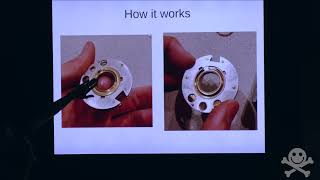
Safecracking Fundamentals: Understanding Mechanical Combination Safe Locks
Master the art of mechanical safe manipulation through expert techniques, wheel isolation methods, and vulnerability analysis for Group 2 locks, enhancing your locksport knowledge.
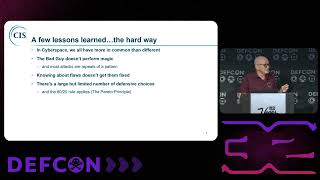
Cybersecurity Evolution at NSA: From Cryptography to Global Internet Defense
Gain insights into cybersecurity evolution through a 35-year NSA veteran's journey, exploring vulnerability analysis, defense strategies, and the complex interplay between defense and intelligence operations.

Solving the Lover Stalker Killer Murder Case Using Digital Forensics Tools
Delve into forensic digital investigation techniques used to solve a real murder case, exploring how basic Unix tools and Perl programming helped crack a complex cyberstalking homicide investigation.
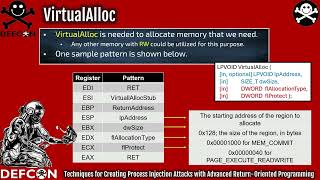
Process Injection Attacks with Return-Oriented Programming - Advanced Techniques and Methodologies
Discover advanced process injection techniques using return-oriented programming (ROP), including unique string comparison solutions, multiple WinAPI patterns, and practical methodologies for reliable implementation.
Securing Frontends at Scale - Paving the Way to Post-XSS World
Discover cutting-edge strategies for defending against XSS vulnerabilities, exploring Google's proven security implementations and future-focused approaches for protecting web applications at scale.
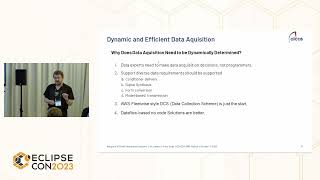
Data Collection and IoT for Vehicles in Practice - Using OSGi and Realtime Java
Discover how OSGi technology and realtime Java VM create robust IoT data collection systems for vehicles, featuring proven architecture insights from 10+ million car implementations.

AI for Cybersecurity - Understanding Today's Landscape
Explore how Generative AI transforms cybersecurity through real-world examples of AI-driven attacks and defensive strategies, based on Google's frontline experience.

Face Spoofing Detection: Theory and Practice
Explore face spoofing detection methods from foundational approaches to modern implementations, covering theoretical frameworks and practical applications in security and authentication systems.
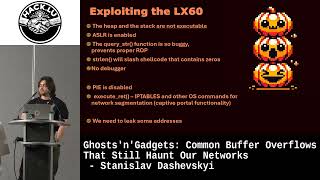
Ghosts and Gadgets - Common Buffer Overflows That Still Haunt Our Networks
Explore common buffer overflow vulnerabilities in network systems, their detection methods, and practical mitigation strategies for securing modern networks.
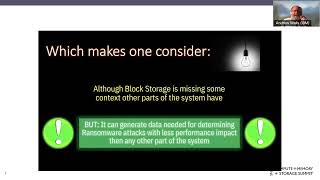
Computational Storage: Detecting Ransomware Using Flash Control Modules
Discover how computational storage in SSDs can detect ransomware attacks through IBM's Flash Control Modules, exploring key statistical indicators and security implementation across different system layers.

From Novice to Catalyst - Scaling Security Tools with Metrics
Discover how to implement and scale security metrics effectively, from data extraction to visualization, while learning to leverage the Multivac framework for enhanced threat management and risk reduction.
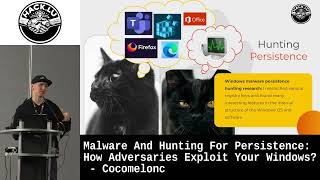
Malware and Hunting for Persistence - How Adversaries Exploit Windows
Discover how adversaries exploit Windows systems through malware and persistence techniques, enhancing your cybersecurity defense capabilities and threat detection skills.
Trusted I/O: Architectures and Implementations for Confidential Computing
Explore architectures and implementations for confidential computing, focusing on trusted I/O in secure environments.

Lessons from the Buzz
Explore insights and key takeaways from the Buzz phenomenon, examining its impact and implications for technology and society.
Runtime Detection of Data Races in OCaml with ThreadSanitizer
Explore runtime detection of data races in OCaml using ThreadSanitizer. Learn core principles, challenges, adaptations, and practical application for reliable parallel code development.

A Grounded Conceptual Model for Ownership Types in Rust
Explore a systematic approach to teaching Rust's ownership types, featuring a new assessment tool, conceptual model, and visualizations to improve learner understanding of memory safety concepts.

Verus: Verifying Rust Programs Using Linear Ghost Types
Explore Verus, an SMT-based tool for formally verifying Rust programs. Learn how it leverages Rust's linear types and borrow checking to prove functional correctness in low-level, high-assurance systems.

Indexed Types for a Statically Safe WebAssembly - POPL 2024
Explore Wasm-prechk, a WebAssembly extension using indexed types for enhanced static safety. Learn about performance gains, type safety proofs, and implementation trade-offs in this innovative approach.

Flux: Liquid Types for Rust
Explore Flux, a refined type system for Rust that enhances verification of low-level pointer programs. Learn how it combines logical refinements with Rust's ownership mechanisms for efficient and ergonomic type-based verification.
RefinedRust: A Type System for High-Assurance Verification of Rust Programs
Explore RefinedRust, a novel type system for verifying both safe and unsafe Rust code. Learn about its implementation, evaluation, and potential impact on high-assurance software development.

Supporting Trusted Virtual Machines with Hardware-based Secure Remote Memory
Explore hardware-assisted secure memory disaggregation, combining trusted VMs with a dedicated engine for efficient isolation and protection of remote memory pages, ensuring confidentiality and integrity.