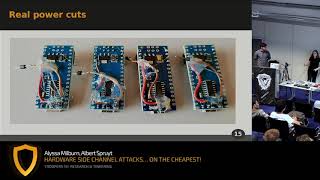
Hardware Side Channel Attacks on the Cheapest
Explore side channel attacks on low-cost hardware, covering power analysis, encryption vulnerabilities, and practical demonstrations. Learn acquisition techniques and countermeasures.
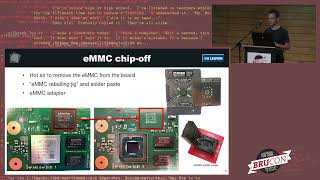
A Black-Box Security Evaluation of the SpaceX Starlink User Terminal
Exploración de seguridad del terminal Starlink: vulnerabilidades, ataques de inyección de fallas y acceso root. Análisis de la red Starlink y sus implicaciones para futuras investigaciones.

Thunderbolts and Lightning - Snare
Explore Thunderbolt DMA attacks beyond FireWire adapters, discussing novel approaches and potential vulnerabilities in current hardware systems with Thunderbolt ports.
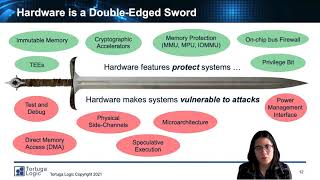
Hardware - A Double-Edged Sword for Security
Explore hardware's dual role in security: as a trust anchor and potential vulnerability. Learn about system-level threats, real-world examples, and promising solutions for detecting and preventing hardware vulnerabilities.

The Limits of Sandboxing and Next Steps
Exploring sandboxing limitations in Chrome security, discussing OS constraints, and introducing memory safety as a complementary approach to enhance software resilience.

The State of the Stalkerware - Eva Galperin - USENIX Enigma Conference - 2020
Eva Galperin discusses recent efforts to combat stalkerware, a covert surveillance tool often used in domestic abuse. She highlights initiatives by security companies, tech giants, and support organizations to protect victims.
Machine Learning vs. Hardware Integrity Protection - Dominik Sisejkovic - Ekoparty 2021: Hardware Hacking Space
Explora el impacto del aprendizaje automático en la protección de integridad del hardware, analizando ataques basados en datos y discutiendo el diseño de esquemas de bloqueo resistentes al aprendizaje automático.

Experiencias en Google VRP - Yesenia Trejo y Adrián Pedrazzoli - Ekoparty - 2021: Bug Bounty Space
Expertos en seguridad comparten experiencias en el Programa de Recompensas por Vulnerabilidades de Google, abordando aspectos positivos, desafiantes e inesperados del proceso de reporte y explotación de vulnerabilidades.
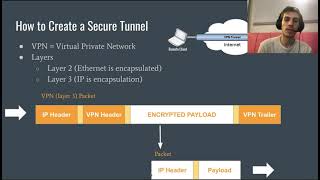
All Roads Lead to OpenVPN Pwning Industrial Remote Access Clients - Sharon Brizinov - Hack in Paris - 2021
Uncover critical vulnerabilities in industrial remote access solutions using OpenVPN, potentially leading to remote code execution. Learn about the risks and implications for cybersecurity.
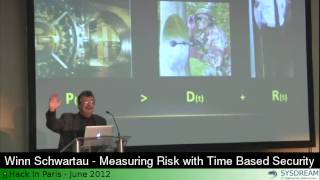
Measuring Risk with Time Based Security - Winn Schwartau - Hack in Paris
Explore time-based security with Winn Schwartau, covering risk measurement, protection mechanisms, and defensive strategies for effective cybersecurity management.
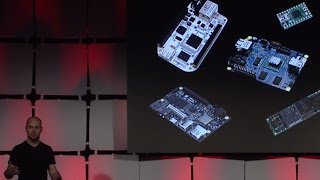
Defending, Detecting, and Responding to Hardware and Firmware Attacks - Teddy Reed - USENIX Enigma Conference - 2016
Explore firmware security, attack surfaces, and defense strategies. Learn to detect vulnerabilities, monitor integrity, and implement deep systems defense for enterprise protection against hardware and firmware attacks.
Learning the Power of the -Not My Responsibility- Mindset
Discover how shifting security responsibility to the business can improve accountability, reduce friction, and prevent burnout among security engineers while enhancing overall company security.
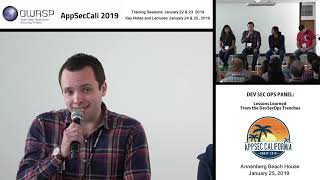
Lessons Learned from the DevSecOps Trenches
Panel discussion on scaling AppSec programs, featuring insights from security leaders at major tech companies. Covers high-ROI efforts, effective tools, and lessons learned to help organizations improve their security practices.
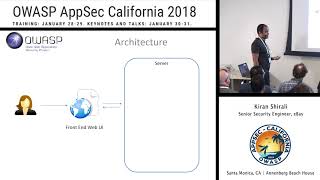
Optimize Your Pentesters Time
Optimize pentesting resources with Hunter, an open-source tool grading websites for low-risk security issues. Learn how eBay saved 10-15% of their pentesting budget and improved efficiency.
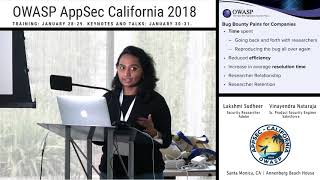
ReproNow - Save Time Reproducing and Triaging Security Bugs
Discover ReproNow, an open-source tool streamlining security bug reproduction and triage. Learn how this browser extension captures vulnerability walkthroughs, saving time for security engineers and enhancing bug bounty programs.

Applying Security Engineering Principles to Complex Composite Systems
Explore security engineering principles for complex systems, focusing on composite elements, interactions, and dependencies across the system lifecycle, illustrated with a Smart City transit example.
Dissecting Mobile Application Privacy and Analytics
Explore mobile app data collection, privacy concerns, and analytics practices. Learn to assess and safeguard personal and client information in popular applications.

Spectre, Meltdown, & Linux
Explore Meltdown and Spectre security issues, their impact on Linux, and learn how the kernel community addressed these vulnerabilities to ensure system protection.
Introduction to Reverse Engineering
Explore techniques used by crackers to bypass security, access firmware, and find vulnerabilities in hardware and software. Learn to protect your products from reverse engineering.
Trusted Execution Environments - A Technical Overview of Intel SGX, Arm TrustZone, and RISC-V PMP
Explore key trusted execution environments: Intel SGX, Arm TrustZone, and RISC-V PMP. Learn their architectures, security features, and implementation processes for robust data protection.
Writing Linux Kernel Modules in Safe Rust
Explore safe Rust for Linux kernel module development, addressing memory vulnerabilities, binary compatibility, and C integration. Learn techniques for creating secure kernel APIs and potential upstream integration.