Designing Event-First Microservices and APIs
Explore event-driven microservices architecture, focusing on domain-driven design, event storming, and cloud-native principles for scalable and autonomous systems.
From Chaos to Calm - Improving Service Mesh Reliability
Explore service mesh observability and reliability using Chaos Engineering. Learn to enhance performance with Litmus Chaos and Kiali, preventing issues and improving troubleshooting in complex microservice architectures.
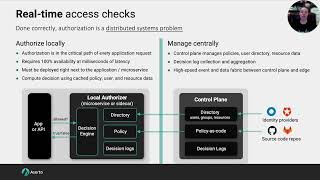
The Current State of Cloud-Native Authorization
Explore the latest developments in cloud-native authorization, examining key trends, challenges, and best practices for securing modern distributed systems.
CNL - Supercharge Your Infrastructure Management with OPA
Explore OPA for efficient infrastructure management, enhancing security and compliance across cloud-native environments. Learn implementation strategies and best practices.
Leveraging User Traffic for Automated Load Testing During Holiday Season
Automate load testing using real user traffic for improved holiday season performance and scalability.

Cloud Native Policy-Based Governance for Internal Developer Platforms
Explore policy-based governance for internal developer platforms, enhancing control and efficiency in cloud-native environments.
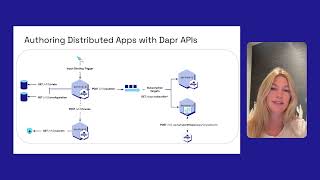
Dapr - The Ultimate Developer API for Authoring Microservices
Explore Dapr's developer API for efficient microservice creation, simplifying distributed application development and enhancing productivity in cloud-native environments.
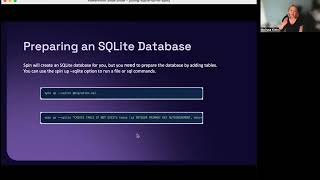
Using the Built-in SQL Database with Spin 1.4
Explore Spin 1.4's built-in SQL database capabilities for efficient data management in cloud-native applications.
Introduction to Tetragon - CNCF Security Tool
Explore Tetragon, a powerful eBPF-based security observability and runtime enforcement tool for cloud-native environments.
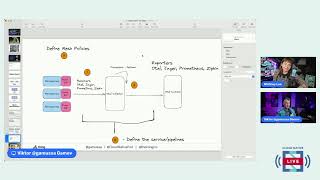
Streamline Service Mesh Observability with Kuma and OpenTelemetry
Streamline service mesh observability using Kuma and OpenTelemetry. Learn to enhance monitoring, tracing, and metrics collection for improved cloud-native application performance and reliability.
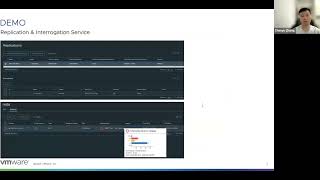
Reshape Enterprise Cloud Native Security with Harbor and Narrows
Explore cutting-edge solutions for enhancing cloud native security in enterprise environments using Harbor and Narrows technologies.
Securing Requests with Keycloak and Istio through Request-Level Authentication
Explore request-level authentication using Keycloak and Istio to enhance security in cloud-native environments. Learn implementation techniques for robust access control.
What's New with Open Policy Agent Gatekeeper
Explore recent updates and advancements in Open Policy Agent Gatekeeper, enhancing Kubernetes security and policy enforcement capabilities.
Cultivating Cultural Cooperation in Cloud Native Computing
Explore cultural cooperation in Cloud Native ecosystems. Learn to strengthen project ties, integrate contribution styles, and foster idea exchanges across APISnoop, K8s Conformance, and etcd.
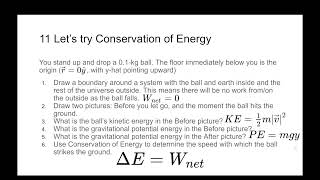
Graphing Energy Using VPython for Physics 1
Learn to visualize energy concepts through VPython coding, enhancing your understanding of physics principles and computational skills.
Modeling Data in Jupyter Notebook
Harness Python's power in Jupyter to analyze lab data, create models, and visualize results. Learn essential data manipulation techniques for physics research and experimentation.
FTL Beam Optimizer - Maximizing Room Strikes in Starship Battles - Episode 2
Optimize beam weapons in FTL game by coding a subroutine to maximize room hits. Includes error analysis and corrections, with additional resources for learning.
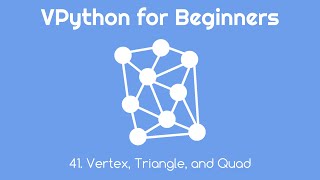
VPython for Beginners - Vertex, Triangle, and Quad - Lesson 41
Learn to create custom 3D shapes using VPython's vertex, triangle, and quad functions. Explore advanced techniques for building complex geometries in 3D animations.
Self-Driving Car Simulation 1 - On the Rails
Explore the potential of self-driving car coordination through a simulation, examining how autonomous vehicles can improve traffic flow and revolutionize transportation.
Black Hole Battles: Enemy Controls - Part 5
Explore enemy AI development in physics-based game design, focusing on chase mechanics and spatial awareness in a black hole-filled environment.
Black Hole Battles - Enemy Controls IV - Lecture 12
Improved enemy ship navigation through black hole fields, enhancing geometry considerations for more realistic and challenging gameplay in physics-based space simulation.