Project Demos: Syntect, dlib-rs, and Arbitrary Self Types - Rust KW Meetup
Explore three innovative Rust projects in quick demos: Syntect for syntax highlighting, dlib-rs for machine learning, and a unique approach to arbitrary self types in Rust.
Graph Mining in Rust - Comparing Performance with Python and Java
Explore graph mining implementation in Rust, comparing it with Python and Java. Learn about Rust's unique features, community, and advantages for complex data processing tasks.

How Chalk-Engine Works - Part 2
Explore the inner workings of chalk-engine, delving into practical challenges and potential solutions for this Rust-based tool.
Parallel Programming with Thread Pools and Iterators in Rust
Learn concurrent programming techniques using ThreadPool and Iterator with rayon in Rust. Master basic building blocks for efficient thread and task management.

How Rust Taught Me to Think About Systems
Explore how Rust's unique features challenge and reshape thinking about systems programming, offering insights for newcomers and those seeking motivation to dive into Rust.
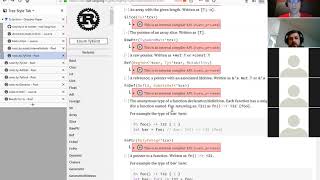
Representing Types in Rustc - Type System Internals
Explore rustc's type representation, covering Ty type, generics, substitution, and type folding. Gain insights into Rust's internal type system implementation.
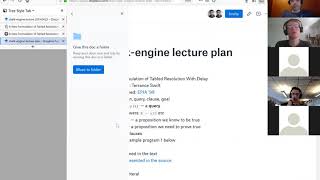
How the Chalk-Engine Crate Works in Rust
Explore the inner workings and functionality of the chalk-engine crate in Rust programming, gaining insights into its design and implementation.
WebAssembly with Rust - From Basics to Advanced Applications
Explore WebAssembly with Rust: fast, type-safe code for browsers and embedded devices. Learn basics, JavaScript integration, website building, and even control LEDs on a Raspberry Pi through live demos.

What's Unique About Rust - RustLatam 2019
Explore Rust's unique features, history, and future with Mozilla researcher Niko Matsakis. Learn about ownership, performance, and how Rust prevents common programming errors.
Defense Against the Wrong Logic: Proactive Rust Coding - Rust Techniques and Patterns
Explore Rust techniques for safer coding, including new types, builder patterns, and input conversion. Learn to prevent logic bugs and strengthen assumptions for more reliable software.

Zero-Cost Async IO in Rust - RustLatam 2019
Explore zero-cost async I/O in Rust with insights on futures, async/await syntax, and efficient non-blocking operations for improved performance and resource management.
Interoperability with Android, iOS, and WASM in Rust Projects
Explore cross-platform development in Rust, compiling a single library for Android, iOS, and WASM simultaneously, enhancing code reusability and efficiency.
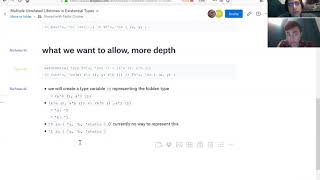
Rust Region Inferencer Discussion - Async-Await Working Group
Rust developers discuss region inferencer changes to address limitations, uncovering unexpected issues while exploring multiple unrelated lifetimes in existential types.

Rust and WebAssembly Working Group Meeting - March 2019
Explore Rust and WebAssembly integration, covering futures, NPM dependencies, compiler targets, and web technologies in this working group meeting.
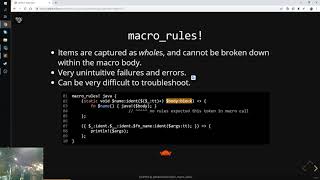
Procedural Macros in Rust: An Overview
Explore Rust's procedural macros: their types, use cases, and implementation. Learn to extend Rust's syntax and create powerful code generation tools.

Rust and WebAssembly Working Group Meeting - March 2019
Explore the latest developments and discussions from the Rust and WebAssembly Working Group, focusing on advancements in web technologies and programming languages.
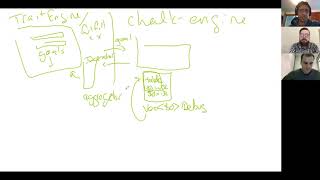
Rustc-Chalk Integration Overview: Plans and Implementation
Overview of rustc-chalk integration plans and implementation, covering answer tables, search strategies, inference contexts, and key components like the trait engine and canonicalization.
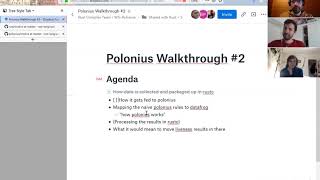
Polonius and Rustc Code Walkthrough
Explore rustc and Polonius codebases, understanding their connection and key components like IntroFax, compute regions, and liveness computation in this comprehensive walkthrough.
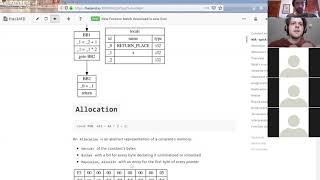
Miri and Constant Evaluation in Rust
Explore miri, Rust's MIR interpreter, and its role in compile-time evaluation. Learn about its architecture, memory representation, and capabilities for interpreting safe and unsafe Rust code.

Async-Await Implementation Strategies for Rust - 2019.02.26 Meeting
Rust developers discuss implementation strategies for async-await, covering issues like explicit lifetimes, existential types, and generator artifacts to improve the language's asynchronous programming capabilities.
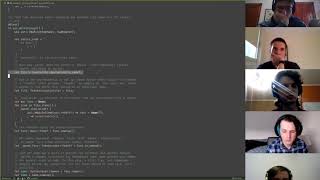
Rust Analyzer Syntax Trees Implementation - 2019 Overview
Explore rust-analyzer's syntax tree implementation, covering API design, incremental parsing, and memory efficiency techniques for Rust development.