
HTML CSS Javascript Website Tutorial - Responsive Beginner JS Project with Smooth Scroll
Build a responsive website with HTML, CSS, and JavaScript, featuring smooth scroll and dynamic navbar. Learn step-by-step from setup to advanced features in this comprehensive tutorial.

HTML, CSS, and Javascript Website Design Tutorial - Beginner Project Fully Responsive
Step-by-step tutorial for building a responsive website using HTML, CSS, and JavaScript. Covers navbar, hero section, services, footer, and navigation between pages.

Cryptocurrency Finance Price Tracker App Using Hooks and Axios
Build a cryptocurrency price tracker using React Hooks and Axios. Learn to fetch and display live price data, implement search functionality, and create a responsive UI for monitoring digital currency markets.

CSS Navbar Dropdown Mega Menu Tutorial
Create a CSS Navbar dropdown mega menu using HTML and CSS. Learn to design an interactive navigation panel with multiple sections, icons, and hover effects for an enhanced user experience.
CSS Custom Variables and Dark Mode - CSS Tutorial for Beginners
Learn to create custom CSS variables and implement a dark mode for web pages, enhancing design flexibility and user experience with practical examples and step-by-step guidance.
CSS Pseudo-Classes vs Pseudo-Elements - Pseudo-Selectors Tutorial
Explore CSS pseudo-classes and pseudo-elements with practical examples. Learn to enhance web designs using selectors like :active, :target, ::before, and ::after for more dynamic and interactive styles.
CSS Responsive Card Design - Mini-Project Tutorial for Beginners
Learn to create a responsive card design using CSS, covering HTML structure, styling, media queries, and breakpoints for various screen sizes.
CSS Media Queries and Responsive Web Design Tutorial for Beginners
Learn CSS media queries and responsive web design techniques to create adaptable layouts for different screen sizes. Covers syntax, breakpoints, mobile-first approach, and practical implementation using dev tools.
CSS Background Images and Responsive Image Properties for Beginners
Learn CSS background images and responsive image properties to create visually appealing web designs with properly sized images, effective backgrounds, and standout text content.

CSS Grid Intro and Basic Layout Tutorial for Beginners
Learn CSS Grid basics and create layouts with properties like grid-template-columns, grid-auto-rows, and grid-template-areas. Hands-on practice building a responsive grid layout for web pages.

CSS Position Property Tutorial for Beginners - Absolute, Relative, Fixed, Sticky
Learn CSS positioning with hands-on examples. Covers static, absolute, relative, fixed, and sticky positions. Includes mini-project and accessibility considerations for web layout mastery.
CSS Columns Tutorial for Beginners - Multicolumns Without Grid or Flexbox
Learn to create multi-column layouts using CSS without grid or flexbox. Covers column properties, rules, gaps, breaks, and spans. Ideal for beginners seeking to enhance their web design skills.
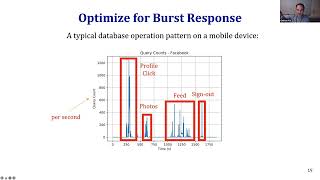
Workload Modeling for Security and Privacy in Databases
Explore database security through workload modeling, focusing on performance metrics, behavioral patterns, and insider threat detection techniques.

Python for AI - Dev Environment Setup
Learn to set up a Python development environment for AI, including installing Python, managing packages, and configuring VS Code and Jupyter notebooks.

Functions and Determinism in Property-based Testing - Lecture 9
Explore property-based testing, its implementation, and advanced techniques. Learn to create robust test suites using generators, determinism, and invariants for more effective software validation.

Getting Swifty - A Tale from the Front Lines of Breaking Changes and Legacy Code
Explore the challenges and benefits of integrating Swift into existing Objective-C projects, focusing on interoperability, migration strategies, and evolving coding practices.

The Swift Melting Pot - Embracing Multiple Programming Paradigms
Swift's multi-paradigm approach: functional, OO, and protocol-oriented programming. Explore code examples to write more readable, idiomatic Swift by incorporating aspects of these paradigms.

Rust in Production: Case Studies and Value Proposition - Philly ETE 2016
Explore Rust's value proposition and real-world applications through case studies, focusing on its safety, speed, and concurrency features for systems programming.

Move Deliberately and Don't Break Anything: Lessons from Java Evolution
Explore Java's evolution, challenges in language design, and future directions with insights on maintaining compatibility while adding new capabilities for millions of developers.

The World of Swift 3 - Lecture 32
Explore Swift 3's evolution, community involvement, and key changes. Learn about idiomatic Swift, design principles, and the reasoning behind language choices.

Unleash Your Data with Clojure: Using Transducers and Sequences - Lecture 16
Explore Clojure's functional approach to data transformation using sequences, reducers, and transducers. Learn how immutable values and persistent collections lead to more efficient, reusable, and bug-free code.