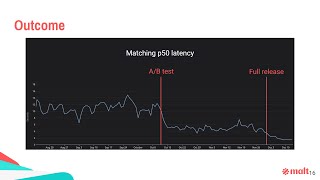
Superpower Your Semantic Search Using Vector Database - From Model Architecture to Deployment
Discover how to enhance matching systems using vector databases, focusing on implementation, deployment, and optimization for improved search performance and scalability in production environments.
Binary Quantization Methods for Vector Database Optimization
Dive into vector database optimization through binary quantization, exploring compression techniques, search speed improvements, and practical implementation strategies for efficient vector similarity search.
Building a Semantic Search App for Music Using Qdrant Cloud
Learn to develop a semantic search application using Qdrant Cloud's Python SDK to efficiently search through thousands of songs across different music genres.
Music Recommendation System with Qdrant Vector Search and Audio Embeddings
Learn to build a music recommendation engine using Qdrant's vector search capabilities, audio embeddings, and metadata to create personalized song suggestions.
Image Classification with Qdrant Vector Semantic Search for Medical Diagnosis
Learn to build an image-based semantic search engine for skin condition diagnosis using Qdrant, covering embedding generation and vector database implementation.
Natural Language Processing with Qdrant for Vector Similarity Search
Master vector similarity search using Qdrant to create embeddings from text data, perform contextual searches, and build recommendation systems for enhanced natural language processing applications.
Getting Started with Qdrant - Introduction to Vector Database and Similarity Search
Master vector similarity search using Qdrant to build semantic search and recommendation systems through hands-on practice with sample datasets and practical implementations.
Qdrant Vector Database and Search Engine Implementation in Rust
Dive into vector database technology with Qdrant, exploring its architecture, implementation in Rust, and applications in similarity search, matching, and recommendations systems.

Embeddings and Similarity Search with Qdrant Vector Database
Explore vector embeddings and similarity search concepts through hands-on demonstrations using Qdrant database, with practical examples for implementing efficient search solutions.
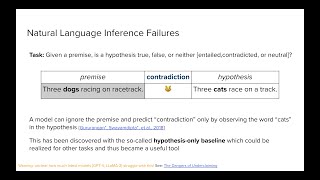
Taskification and Valid Benchmarks in Data Science
Explore the concept of taskification and its role in creating valid benchmarks for data science applications, focusing on practical implementation and evaluation methods.
Enhancing Developer Experience with VSCode Extensions and AI Tools
Explore how AI and VSCode extensions revolutionize development workflows, from LLM integration to database management, with practical tips for maximizing IDE productivity and efficiency.
The European Computing Continuum - Initiatives, Community, and Directions
Explore the evolving landscape of European computing initiatives, examining key developments in cloud, edge, and IoT technologies while understanding future directions and community impact.
Joining SUMO and Unreal Engine to Create a 360-Degree Narrow Passage Driving Simulator
Discover how to create an advanced driving simulator by combining SUMO and Unreal Engine, focusing on realistic narrow passage scenarios with intelligent vehicle behavior and immersive 3D graphics.
Using SUMO for Test Automation and Demonstration of Digitalized Railway Concepts
Discover how SUMO simulation environment enables test automation and visualization of digital railway operations, focusing on cloud-based train dispatching and network traffic analysis.
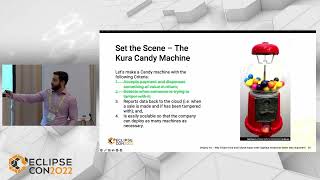
Eclipse Kura and Eclipse Kapua for Streamlined EdgeOps Deployment
Discover how Eclipse Kura and Kapua simplify EdgeOps deployment, streamline container management, and enable versatile edge applications - from AI processing to Web3 technologies, making deployment hassle-free.
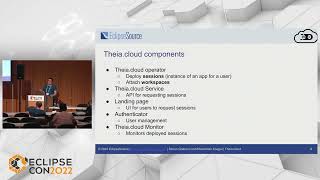
Theia.cloud - Running Theia-based Products in the Cloud
Discover how to deploy and manage Theia-based IDEs in the cloud using a lightweight Kubernetes framework, focusing on scalability, user isolation, and efficient resource management for custom web tools.
Theia Cloud - Building and Hosting Cloud-Based IDEs and Development Tools
Discover how to orchestrate developer containers and build cloud-based IDEs using Theia.cloud's Kubernetes-native framework for hosting Theia applications and development tools.
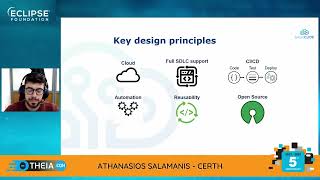
Eclipse OpenSmartCLIDE - Automation Through Innovation for Cloud Development
Discover how Eclipse OpenSmartCLIDE revolutionizes cloud development with an innovative IDE that automates and streamlines the entire software development lifecycle through integrated tools and features.
AI on the Edge with Eclipse Kura - From Data Collection to Model Deployment
Discover how to build and deploy machine learning applications on edge devices using Eclipse Kura, from data collection through Kura Wires to model training and inference with Nvidia Triton Server.
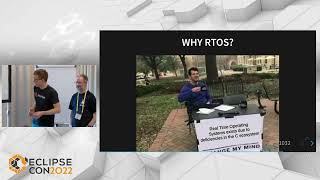
Embedded Rust Development with Async Programming and IoT Integration
Explore cutting-edge embedded Rust development featuring async programming, actor-based designs, networking stacks, and IoT capabilities through practical demonstrations and real-world applications.
NabLab Development Environment Migration - From Eclipse to VSCode with LSP and Sirius Web
Discover how to create VSCode extensions using LSP & Sirius Web to port NabLab DSL from Eclipse, enabling seamless numerical analysis development in VSCode/VSCodium environments.