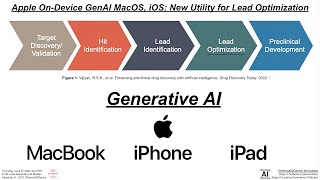
Apple On-Device GenAI for Lead Optimization in Drug Discovery - MacOS and iOS
Explore on-device GenAI capabilities for lead optimization in drug discovery using Apple devices. Learn about performance, speed, and memory for running AI models locally.
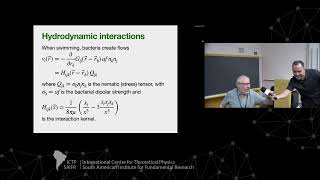
Computational Modeling of Active Systems - Class 4
Explore computational modeling techniques for active systems, focusing on advanced concepts and practical applications in the field of active matter.
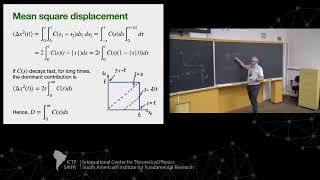
Computational Modeling of Active Systems - Class 3
Explore computational modeling techniques for active systems, focusing on advanced concepts and practical applications in the field of active matter.
Seismic Velocity and Depth Conversion
Explore seismic velocity and depth conversion techniques in petroleum engineering, enhancing geological interpretation and petrophysical analysis skills.

Some Results for Hard Rods of Inhomogeneous Size
Explore results for hard rods of varying sizes in particle systems. Analyze hydrodynamic equations, Cauchy problems, and effective velocities in comparison to soliton gas models.
Modelling Physical Phenomena in Alloys and Polymers with Quantum Mechanical Accuracy
Explore data-driven interatomic potentials and Hyperactive Learning for modeling alloys and polymers with quantum accuracy. Gain insights into precipitate formation and chemical ordering.
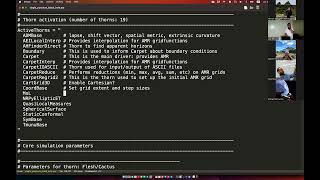
Tutorial on Simulation Analysis
Explore advanced techniques for analyzing gravitational wave simulations, focusing on data interpretation and visualization in computational relativity research.
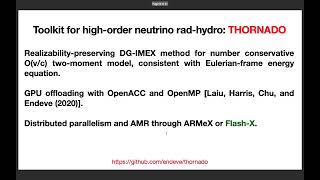
ExaStar: Multi-Physics Stellar Astrophysics Simulations at the Exascale
Explore cutting-edge multi-physics simulations for stellar astrophysics at exascale computing levels, focusing on the ExaStar project and its applications in computational relativity.
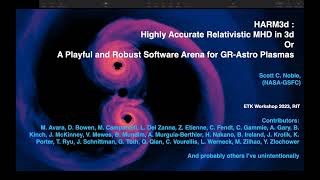
Harm3D: Highly Accurate Relativistic MHD in 3D
Explore highly accurate relativistic magnetohydrodynamics in 3D with Harm3D, a cutting-edge computational tool for astrophysical simulations.
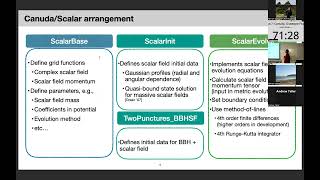
Canuda Tutorial
Explore gravitational wave analysis using the Canuda toolkit in this comprehensive tutorial from the 2023 North American Einstein Toolkit School and Workshop.
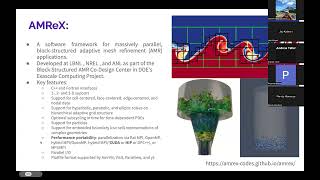
AsterX and GPU Simulations in Computational Relativity - Tutorial
Explore AsterX and GPU simulations for computational relativity and gravitation, enhancing understanding of advanced numerical techniques in astrophysics.
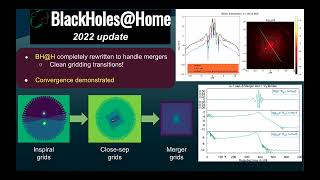
BlackHoles@Home - Citizen Science in Computational Relativity
Explore cutting-edge research on black holes through citizen science, contributing to gravitational wave detection and understanding cosmic phenomena.
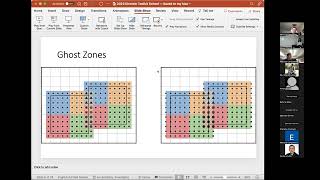
CarpetX and the Future of the Einstein Toolkit
Explore CarpetX and its impact on the Einstein Toolkit's future in computational relativity and gravitation research with Erik Schnetter.
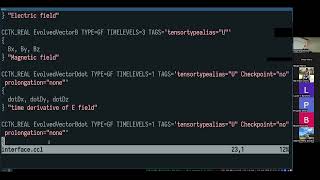
Tutorial on Writing a Physics Thorn - Einstein Toolkit
Learn to create a physics thorn in the Einstein Toolkit, exploring computational techniques for relativistic astrophysics and gravitational wave research.
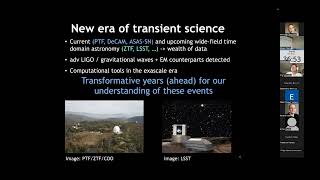
GRaMX: A New GPU-Accelerated Dynamical Spacetime GRMHD Code
Explore GRaMX, a cutting-edge GPU-accelerated dynamical spacetime GRMHD code, and its applications in computational relativity and gravitation.
Combinatorial Quantization and BV Structures of Moduli of Flat Connections - Part 1
Explore quantization of moduli spaces through combinatorial methods and BV structures, focusing on flat connections in mathematical physics.
Quantum Analytic Langlands - Quantisation of Moduli Spaces
Explore quantisation of moduli spaces through diverse perspectives, delving into the intricacies of Quantum Analytic Langlands theory.
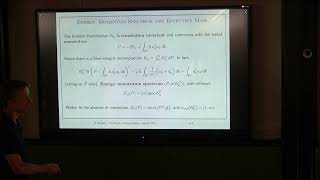
Ground State Energy and Effective Mass of a Strongly Coupled Polaron
Explore effective theories in particle systems, focusing on ground state energy and effective mass of strongly coupled polarons.
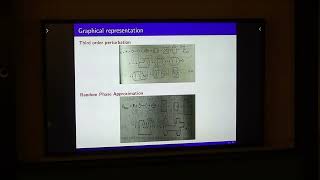
Correlation Energy of the Electron Gas in the Mean Field Regime
Explore effective theories in classical and quantum particle systems, focusing on correlation energy of electron gas in the mean field regime.
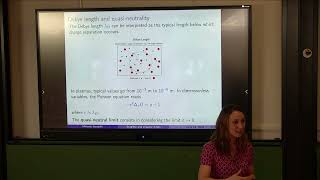
Stability and Singular Limits in Plasma Physics
Explore effective theories in classical and quantum particle systems, focusing on stability and singular limits in plasma physics.
Discovering Dynamic Laws from Observations: The Case of Self-Propelled Particles
Explore machine learning techniques for uncovering forces in active matter systems, from cellular to animal scales. Learn to extract local dynamics crucial for understanding collective phenomena.