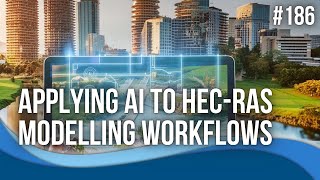
Applying AI to HEC-RAS Modeling Workflows
Explore AI-powered coding for HEC-RAS workflows, including terrain modifications, custom data exports, and GIS scripts. Learn to leverage ChatGPT's code interpreter for efficient hydraulic modeling tasks.
Computation with Sequences of Neuronal Assemblies
Explore neuronal assembly sequences in computation, bridging AI, psychology, and neuroscience for insights into higher-level intelligence.
Space is a Latent Sequence - A Theory of Hippocampus and PFC
Explore a theory linking hippocampus and prefrontal cortex, examining spatial cognition as a latent sequence for insights into higher-level intelligence.
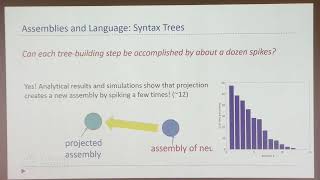
Coin-Flipping in the Brain - Probabilistic Computation and Learning in the Assembly Model
Explores how brain noise enables probabilistic computation and statistical learning, using the Assembly Model to demonstrate biologically plausible mechanisms for handling uncertainty and making predictions.
What Neural Machinery is Needed for Language Acquisition
Explore the neural mechanisms underlying language acquisition, integrating insights from AI, psychology, and neuroscience to understand higher-level intelligence.
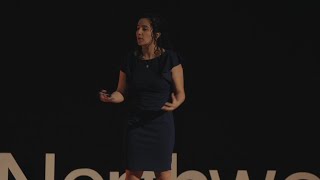
Cracking the Code of Genius - The Mind Behind the Magic
Explore the fascinating intersection of neuroscience and genius, delving into the complexities of human intelligence and creativity through the lens of a young researcher's journey and insights.
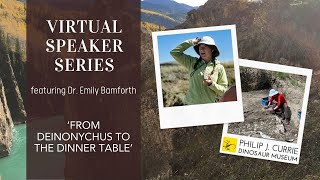
From Deinonychus to the Dinner Table: The Link Between Birds and Dinosaurs
Explore the evolutionary link between dinosaurs and birds, uncovering fascinating clues and shared characteristics that connect these ancient creatures to modern avian species.
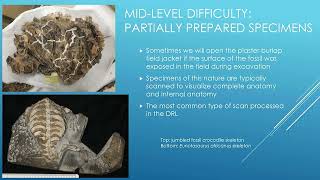
Revealing Ancient Secrets in the Digital Research Lab - CT Imaging for Fossil Analysis
Explore CT imaging in paleontology: visualize fossils, uncover hidden features, and create 3D models. Learn about data collection, animations, and 3D printing in fossil research.
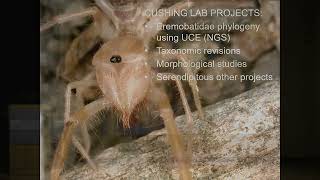
Camel Spiders - 20 Years of Research
Explore two decades of camel spider research, including discoveries by students and scientists at various academic levels.
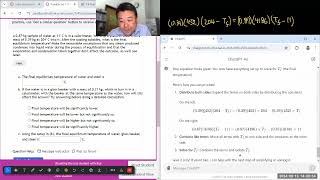
Physics 4B - Problem Solving with ChatGPT - Set 1
Explore problem-solving techniques in physics using ChatGPT 4.0, enhancing your analytical skills and understanding of complex concepts.
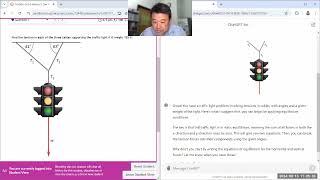
Physics 4A - Problem Solving with ChatGPT - Set 4
Enhance problem-solving skills in physics using ChatGPT 4o, focusing on Set 4 concepts from Physics 4A.

Transport Across Cell Membranes - Passive and Active Transport, Osmosis
Explore passive and active transport mechanisms, including osmosis, across cell membranes in this concise biology lesson.
Scientists in Action - Imaging the Ancient World
Explore cutting-edge paleontology techniques using microCT scanners and digital imaging to reveal hidden details in fossils and ancient specimens at the Denver Museum of Nature & Science.
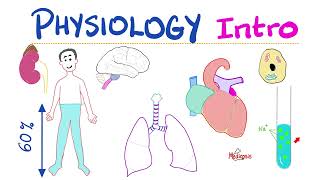
Physiology Introduction: Cell Membrane, Diffusion, Osmosis, and Transport Mechanisms
Comprehensive overview of cell membrane physiology, covering homeostasis, fluid compartments, transport mechanisms, and cellular structures. Ideal for medical students and biology enthusiasts.

The Outer Solar System and Life - Lecture 2
Explore the possibility of extraterrestrial life as Carl Sagan examines organic chemistry in the outer solar system, drawing parallels with Earth's early atmosphere and molecular origins.
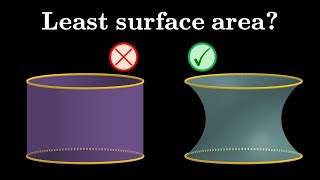
How Physics Solves Plateau's Problem - Applications in Math and 3D Graphics
Explore how physics and mean curvature flow solve Plateau's problem, with applications in mathematics, soap films, and 3D graphics. Discover connections between minimal surfaces and active research areas.
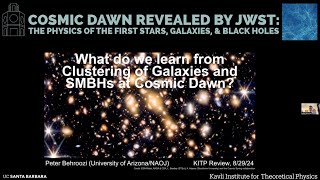
What Do We Learn from Clustering of Galaxies and SMBHs at Cosmic Dawn?
Explore galaxy and supermassive black hole clustering at cosmic dawn. Gain insights into early universe structure formation and the interplay between galaxies and their central black holes.

Top Stories: Greenhouse Gas to Food, Mental Health Cities, AI Tutoring, Climate and Kids' Health
Explore innovative solutions: greenhouse gas to food, mental health-friendly cities, AI-powered education, and protecting children's health from climate change impacts.
A Fast and Flexible CFD Solver with Heterogeneous Execution - JuliaCon 2024
Explore WaterLily.jl: a fast, flexible CFD solver for CPUs and GPUs. Learn about its meta-programming approach, performance, and potential for ML integration and differentiability.

Optimize LLM Workflows with Smart Infrastructure Enhanced by Volcano
Insights on managing large-scale LLM platforms using Kubernetes and Volcano, addressing challenges in training efficiency, fault tolerance, resource optimization, and topology-aware scheduling for GPU workloads.
Materials Modeling - Bonding Across Atoms, Code, and People - JuliaCon 2024 Keynote
Exploring computational materials modeling for 21st-century challenges, integrating Julia with existing tools to advance physics, chemistry, and data-driven approaches in materials design.